World War II
Breakfast at Tiffany'sWorld War II gives the early New York episodes their historical frame: it shapes the conditions of daily life and supplies the approaching end against which Holly Golightly’s temporary attachments are measured. The war is not narrated as a battlefield story; it enters through the narrator’s memory of a first apartment, the shortage of private telephones, and a brief conversation about what peace will mean.
The War in the Narrator’s New York
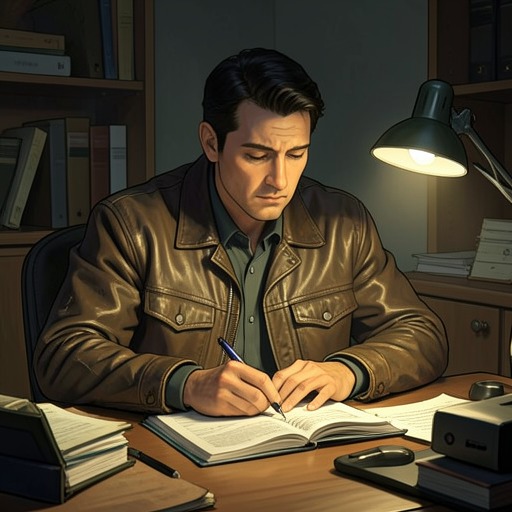
The narrator locates his first New York apartment in a brownstone in the East Seventies, during the early years of the war. The room was crowded with attic furniture, including a sofa and fat chairs upholstered in red velvet; its tobacco-colored stucco walls and aged prints of Roman ruins made it gloomy. Yet the apartment’s key in his pocket gave him a sense of possession and possibility. It was his first place of his own, with his books and jars of pencils, and he imagined it as the setting in which he might become a writer. The war dates this formative period, while the remembered room makes its importance personal rather than military.
The same wartime setting is visible in an everyday constraint: a private telephone was hard to obtain. Holly and the narrator therefore went to Joe Bell’s bar, around the corner on Lexington Avenue, as often as six or seven times a day to make calls. They did not always order a drink. Joe also took messages, a practical kindness that mattered especially because Holly received so many. The bar functioned as a shared communications point, where the inconvenience of wartime life met the routines of the neighborhood.
Holly’s Wartime Routine
Holly lived in the apartment below the narrator’s, and the repeated calls to Joe Bell’s connected their neighboring lives. Her visits to Sing Sing on Thursdays form another regular feature of the period. The account places those prison visits alongside the narrator’s workday and Holly’s late hours: unless it was Thursday or she had gone horseback riding in the park, she was hardly awake when he returned from his nine-to-five job. The war’s historical setting thus surrounds sharply different daily schedules, rather than producing a single shared experience.
The narrative also shows Holly moving through a social world organized around evenings out. She was usually on her way somewhere with Rusty Trawler, and often with Mag Wildwood and José Ybarra-Jaegar. Against that pattern, the war appears as a pressure acknowledged in conversation, not as the subject of sustained public or military description. Its presence makes the characters’ private habits and uncertain plans part of a larger historical interval.
The Approaching End and Conflicting Loyalties
In a conversation about Rusty Trawler’s American identity, the narrator remarks that Rusty’s nationality is one thing in his favor, then Holly points to the war: there is a war on. She follows that observation with a declaration that, when it is over, the other speaker will have seen the last of her. The remark makes the war’s end a threshold in Holly’s personal life: she presents her continued presence as temporary and imagines departure once the conflict has passed.
The exchange sets that impulse beside Mag Wildwood’s patriotic family memory. Mag says she is proud of her country and recalls that the men in her family were great soldiers, including Papadaddy Wildwood, whose statue stands in the center of Wildwood. Holly answers by invoking her brother Fred, who is a soldier, but doubts that he will become a statue; she adds a mordant observation about bravery and stupidity. The contrast is not simply between patriotism and indifference. Mag gives military service a commemorative family tradition, while Holly brings the conversation back to the unidealized person she knows.
Historical Frame and Narrative Perspective
The war remains a frame recalled by the narrator, not a chronicle of campaigns. The opening movement looks back from a later moment: a conversation with Joe Bell sets the memory of Holly in motion, and the narrator then returns to the years when they shared a neighborhood and depended on the bar’s telephone. That structure makes the war part of a personal recollection assembled through places and routines. The apartment, the key, and the daily calls carry more narrative weight than an account of military events would.
The period also helps explain the scale of the characters’ local arrangements. Scarce telephones make Joe Bell’s message-taking a recurring service; Holly’s Sing Sing Thursdays and changing hours mark her routine within the city; and the war’s anticipated conclusion enters their conversation as a possible point of departure. In this way, World War II is both historical background and a measure of suspended time: it shapes ordinary life while Holly speaks of the day beyond it.