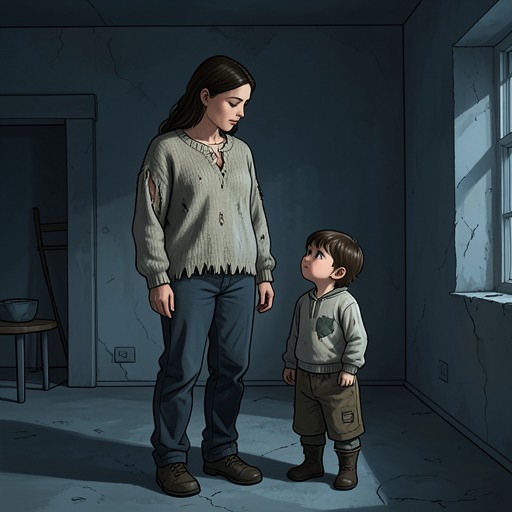
Billie and Annette's mother
Cœur de slushBillie and Annette's mother is the absent parent whose departure reshapes the Fay household without severing every tie. She leaves to pursue a life elsewhere, while her husband and daughters continue in the family home; Billie’s mixture of speculation, avoidance, and affection makes the mother less a fully known presence than a figure the family must live around.
Identity and Background
The mother’s departure is described by Billie as a response to feeling uncomfortable in her own skin. As Billie understands it, her mother saw herself growing older and her daughters growing up and moving away, and resented her husband’s long hours at work. Billie connects this crisis to her mother’s wish to become an adolescent again in warm countries, seeking attention elsewhere rather than confronting the life of an adult woman.
That account is Billie’s interpretation, not a confirmed explanation from her mother. She does not know where her mother has gone or what she is actually doing there. Instead, Billie pictures her jogging on a beach or braiding hair, an image she says is enough for her. The imagined details preserve a tender, manageable version of someone whose real circumstances remain beyond Billie’s reach.
Departure and Its Effects at Home
The mother’s absence becomes tangible in the routines and objects left behind. One morning, Billie finds a folded note on the kitchen table bearing her name. Her father has written that her mother called early and that Billie should call her back. Billie throws the note into the garbage. The small action is a refusal of contact in that moment, and the discarded message makes the distance between mother and daughter concrete without establishing that the relationship has ended altogether.
Her father’s life at home offers a contrasting picture of the separation’s consequences. He works as a doctor, tending to serious injuries and illnesses, and Billie imagines him alone in the large, old house when he has rare time off: reading, cooking for himself, waiting for the phone to ring, and playing video games. She considers whether she might have left home too, but recognizes that her father would then have been even more alone. The mother’s departure therefore weighs not only on Billie’s private feelings but on how she understands her responsibility to her remaining parent.
Billie also perceives a change in her father after the separation. He has slowed down, spends time with his daughters, relaxes, reflects, and gets bored. His effort to be more present does not resolve the family’s altered circumstances; it leaves him with more time to inhabit the house and its memories. Billie’s attention to his solitude shows the departure’s continuing effect even in scenes where the mother herself is not present.
Contact, Refusal, and Uncertainty
The mother’s attempts to reach Billie recur through calls and correspondence, but Billie does not readily accept them. After the morning call, her father later tells her that a letter from her mother is on her bedside table and suggests it contains beautiful things. Billie says she does not feel like reading it. Her father rubs his beard in discouragement, registering the difficulty of mediating between a daughter who resists contact and a mother who continues to send messages.
The letter is not summarized, and Billie does not read it in the evidence shown. Its contents therefore remain unknown; what matters is the decision not to receive them. Billie can wonder sympathetically about why her mother left and still decline the words her mother has actually sent. The gap between imagining her at a distance and refusing a letter from her defines the relationship’s unresolved, uneven intimacy.
Family and Narrative Significance
Billie’s view of her mother is bound up with her own passage toward adulthood. At seventeen, Billie wants to become neither a child nor fully a woman, but something between the two. She associates her mother’s departure with the fear of aging and with resistance to the adult role of a wife and mother, while also seeing that her father’s work had left her mother feeling neglected. The daughter’s account is empathetic but incomplete: she can name possible pressures without claiming to know her mother’s full reasons.
The mother’s absence also sharpens Billie’s attachment to Annette and their father. Billie remembers her sister as effortlessly radiant, while describing sisterhood as a mixture of fierce love and gentle jealousy that may become simple love with time. In considering a move to the city, she imagines having Annette nearby but worries about leaving her father alone; she ultimately feels at home in the white house, with its sunny bedroom, clean sheets, garden, summer lemonade, and the familiar smell of her father’s coffee. These domestic particulars give the absent mother’s departure a lasting shape: home remains a source of comfort, but also a place organized around who has gone and who stayed.