“A whisper of love, a whisper of hate”
Casino Royale“A whisper of love, a whisper of hate” is the gypsy-magic name given to the nine of hearts that James Bond draws in his climactic baccarat coup against Le Chiffre. The card brings Bond close to victory at the moment his dwindling fortune and physical vulnerability have made the outcome seem precarious; its name gives that turn of chance an ominous, divided resonance.
The phrase and the card
The expression is attached to a particular card, not introduced as a general maxim: Bond turns over a nine of hearts, described as the card known in gypsy magic as “a whisper of love, a whisper of hate.” The wording casts the card as a quiet omen, joining opposed feelings in a single image. In the immediate game, however, its force is also mathematical. The nine gives Bond a strong possible count, but what it means depends on the cards already held and on what Le Chiffre chooses to do.
A turn in the baccarat contest
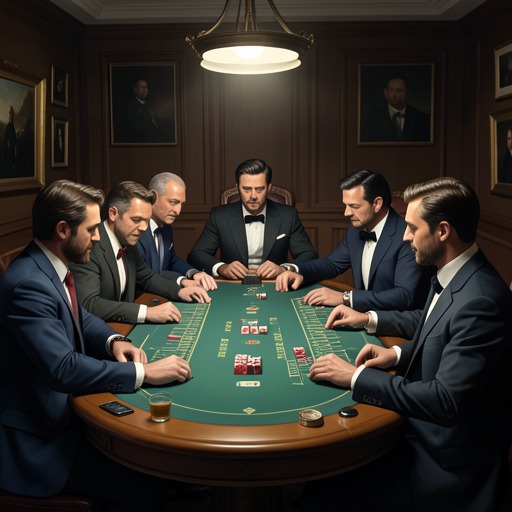
The phrase arrives after Bond has lost twelve million francs in two coups and has only sixteen million left, exactly the amount of the next banco. He nevertheless continues to challenge Le Chiffre’s bank, having resolved to attack it whenever the stakes allow until one of them breaks the other. When the bank grows to thirty-two million, Bond’s analysis of Le Chiffre’s position leads him to go for the whole stake rather than accept a smaller share; he believes Le Chiffre needs only another eight million. That decision is made under immediate threat as well as financial pressure. Bond grips the edge of the table and shifts back against the sharp gun-sight pressing into his coccyx. As the deal proceeds, Le Chiffre reveals a king and a black three, a count of three. Bond exhales tobacco smoke, and the next card is turned: the nine of hearts. It is “almost certain victory,” but not victory already secured. The banker still has to decide whether to draw, and Bond lets him endure the uncertainty.
Meaning within the novel
The phrase’s paired terms echo the contest’s structure: both players’ fortunes turn on concealed information, calculated choices, and chance, while the stakes are not merely monetary. Bond’s dwindling capital makes each successive coup a test of whether he can keep his position; the gunman’s presence makes the game a threat to his life as well. The nine changes the balance toward Bond, but the novel preserves suspense by distinguishing a favorable card from a completed outcome. Its ominous duality also suits the adversarial relation between Bond and Le Chiffre: the card’s name places affection and hatred side by side, while the scene itself is organized around antagonism and calculated attention. The phrase does not explain the game’s outcome by magic; it overlays the numerical logic of baccarat with a compact image of the emotional and mortal conflict concentrated at the table.