Stockholm
Casino RoyaleStockholm is the setting of a wartime killing that James Bond recalls as the second of the two operations qualifying him for a Double-O number. In recounting the mission, he connects the city to the personal cost of clandestine violence and to his larger unease about how readily political loyalties recast heroes and villains.
The Stockholm operation
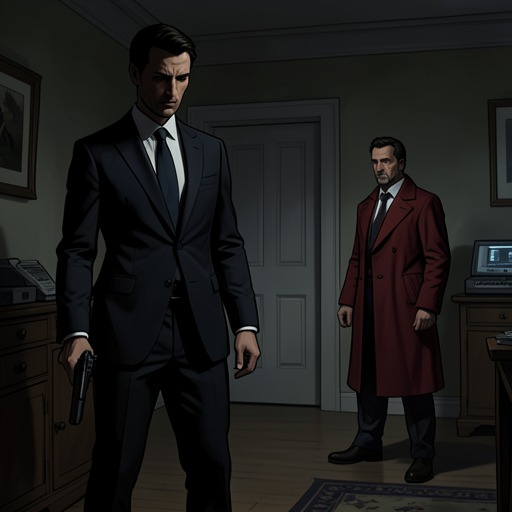
Bond says that he was sent to kill a Norwegian who was working against Britain for the Germans. The man had helped get two British agents captured; Bond adds that they might have been killed, though he does not know their fate. Because the task had to be carried out in complete silence, Bond chose the Norwegian’s bedroom and a knife. He remembers the operation not as a clean professional success but as an experience in which the target did not die quickly.
Bond’s Double-O status
Bond identifies the Stockholm killing as one of two jobs for which he received a Double-O number in the Service. The other, which he describes immediately before turning to Stockholm, was a long-range shooting in New York. He explains that a Double-O number means an agent has killed someone in cold blood during an assignment. Although the recognition initially made him feel clever and gave him a reputation for toughness, his account emphasizes that the credential rests on actual deaths rather than on the uncomplicated glamour of a heroic legend.
The place in Bond’s moral argument
Bond uses the contrast between the two operations to challenge the easy division between heroes and villains. He describes the problem of being a hero who kills people he understands as villains, then finding himself treated as a villain when Le Chiffre turns violence against him. Patriotism can make the distinction seem acceptable, Bond concedes, but he argues that political labels change with history: the ideology Britain fights in one period might, fifty years earlier, have been condemned under a different name. Stockholm therefore belongs not only to Bond’s professional history but also to his developing argument that the roles of hero and villain are unstable, shaped by the political moment rather than secured by a permanent moral boundary.