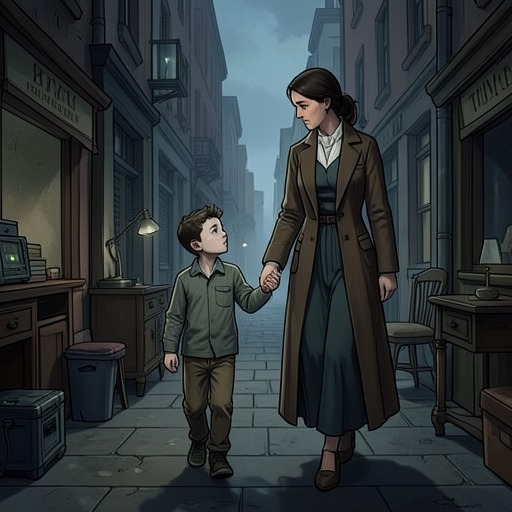
Recovery of Haley McWaid's body
CaughtThe recovery of Haley McWaid’s body at Ringwood State Park ends the long uncertainty surrounding her disappearance, but not the story of how she died. A location clue turns a vast, wooded landscape into the focus of a search involving police, rescue teams, volunteers, and Haley’s parents; the discovery in a shallow grave confirms that the missing teenager is dead, while later revelations show that the death began in a very different setting from the woods where her body was found.
From a phone location to a search area
Investigators examining location information identified a point in New Jersey beyond Haley’s own home. A map brought the group to Ringwood State Park, about forty miles away, where Skylands Manor stood amid at least five thousand acres of woods. The scale of the terrain made the clue both urgent and daunting: the location narrowed the search to a particular park, but left an immense stretch of forest in which a person or a body could be concealed.
Frank Tremont and the others immediately understood the possibility that the location might indicate where Haley had been taken. Frank recalled that a survivalist had once hidden in the surrounding woods for more than a month; the terrain could shelter a makeshift lodging or conceal a burial place. That recollection gives the search its grim logic. The park is not simply a point on a map but a landscape whose cover can protect someone from discovery.
When Frank told a woman with a personal connection to the park that police were looking for Haley’s body there, she remembered taking the Cupsaw Brook Loop with him years earlier, when they were married. The recollection makes the location intimate as well as operational: the search is directed through a place already held in private memory, now transformed by the possibility of a grave.
The search and the McWaids
Frank ordered an immediate, broad mobilization: helicopters, dogs, bulldozers, lights, shovels, rescue squads, park rangers, available personnel, and local volunteers. He then called Ted and Marcia McWaid. The scale of the response reflects the difficulty of searching thousands of wooded acres and the urgency of finding Haley before the landscape could continue to hide what had happened to her.
Marcia and Ted entered the woods together. Neither was drawn to hiking or camping; before Haley vanished, their pleasures had been museums, bookstores, and dinners out. The search therefore marks a rupture in the ordinary life they remember. Their daughter’s absence has redirected them into a landscape they would not otherwise have chosen, and into a task no parent should have to undertake.
The scene holds grief and mutual support together rather than presenting the couple as separately consumed by it. Ted reaches back to Marcia and pulls her up as a helicopter passes overhead. Earlier, amid the search, he tells her they will be okay; the words do not lessen the task or promise a recovery, but register an effort to endure it together. They resume looking for their daughter as the clouds darken over the park.
Discovery in a shallow grave
Two days after that search, the canine unit found Haley’s body in a shallow grave on the outskirts of Ringwood State Park. The discovery supplies the answer that the park search had been organized to find: Haley is no longer simply missing. The grave’s position near the park’s edge also gives the earlier location clue a concrete and terrible consequence, though it does not by itself explain how she died or who placed her there.
The recovery follows a prolonged absence. On the night Marcia first realized something was wrong, Haley’s clothes were not in the hamper, despite her nightly habit of putting them there, and her toothbrush, sink, and shower were all bone-dry. Haley had not appeared at captain’s practice. Her friends did not know where she was, and the local police initially treated her as a runaway despite her parents’ objections. The Federal Bureau of Investigation joined the case forty-eight hours later, yet a week passed without a sign of her. Months of silence made the discovery a decisive change in the family’s knowledge, not a resolution of their loss.
What the recovery clarifies—and what it does not
The park search takes shape under the suspicion that Dan Mercer had dumped Haley’s body in the woods. That belief helps explain the urgency of the operation, but the recovery itself establishes the location of the grave, not the truth of that accusation. Later, Jenna Wheeler describes the party she and Noel Wheeler hosted as an alternative to seniors driving home after drinking in the Bronx. She says Haley drank an entire unopened bottle of whiskey, that Amanda thought Haley had merely passed out, and that Noel tried to revive her after she was already dead. Jenna also acknowledges that they did not call emergency services.
This later account places Haley’s death at the center of a concealed chain of decisions, while the search scene remains bound to what investigators and her parents knew at the time: a missing girl might be somewhere in the woods, and the park’s size made every hour of searching uncertain. The recovery closes the question of where Haley was found and confirms her death. It does not erase the months of uncertainty, restore the life her parents had before, or make the grave a complete explanation of what happened.