Event 1
Haley McWaid disappearance case
The [Haley McWaid disappearance case](entity:event-recall-event-haley-mcwaid-c71cf06196a4) turns an ordinary absence into a prolonged search, then exposes the concealed death behind it. Haley’s empty, meticulously ordered bedroom initially offers no obvious explanation; the search that follows moves from family and police uncertainty to a grim answer about a party where adults believed they were making teenagers safer.
## The Morning She Vanished
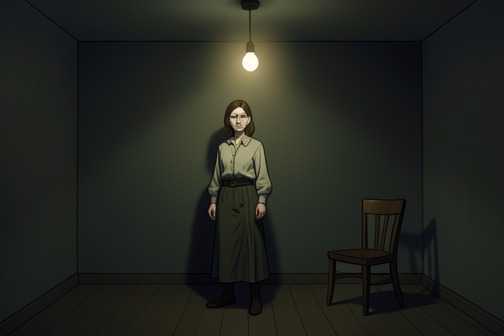
[Marcia McWaid](entity:character-recall-character-marcia-mcwaid-f528f8cf33a3) first noticed that Haley’s bed was empty. The room was unlike the untidy bedrooms of Haley’s younger siblings: the drawers were shut, the floor clear, and the many trophies arranged with deliberate balance across four shelves. Haley had divided the awards evenly after [Ted McWaid](entity:character-recall-character-ted-mcwaid-39cdecd008e0) installed a new shelf, unwilling to let it stand alone. Her care for order was part of a broader reputation for responsibility. She did her homework without being asked, was ambitious and intensely competitive, and had never given her parents reason to impose a curfew.
At first, Marcia was close to moving on. Then she went to put on laundry and found that Haley’s clothes were not in the hamper, where she put them every night. The bathroom offered a second, more troubling absence: Haley’s toothbrush, sink, and shower were all dry. The details mattered because they broke with a dependable routine. The empty bed could have meant that Haley had left early; the untouched clothes and bathroom made it harder to imagine that she had come home and prepared for the morning as usual.
Marcia and Ted drove to captain’s practice and learned that Haley had not shown up. Marcia called Haley’s friends while Ted sent an email to a wider group, but nobody knew where she was. The family contacted local police, who initially treated her as a runaway, perhaps a teenager taking time away. Marcia and Ted disputed that interpretation. Forty-eight hours after Haley vanished, the FBI was brought in. A week passed without a sign of her, and the absence stretched on: after one month there was still no word, then two. By the third month, news finally came, bringing a pause to the fear Marcia had carried in her chest, though the full truth of what had happened emerged later.
## A Search Between Hope and Fear
The first official explanation focused on familiar adolescent disappointments. Haley had not been admitted to the [University of Virginia](entity:organization-recall-organization-university-of-vi-c27427f28ad2), her first choice; she had not won the class essay contest or entered the AHLISA honors program; and she may recently have broken up with a boyfriend. Marcia regarded these as ordinary setbacks, not evidence that her daughter had secretly chosen to disappear for months. She understood the pull of hope, but from the first day she believed that something bad had happened to Haley.
The family’s uncertainty was sharpened by the contrast between the missing girl and the memories that remained. At school, Haley’s locker held a photograph of Ted, Haley, Patricia, and Ryan with Mickey Mouse at [Walt Disney World](entity:location-recall-location-0f0b7b19b85c), three weeks before she disappeared. Police had briefly considered whether someone Haley met on the trip could have followed her home, but that line of inquiry led nowhere. Marcia remembered the photograph as a spontaneous moment at Epcot Center: Haley noticed there was no line for Mickey, gathered her siblings for a quick picture, and smiled as the family came together. The image preserved a happy family scene, not an answer to the disappearance.
[Pete Zecher](entity:character-recall-character-pete-zecher-583854604f13), the school principal, also looked at the photograph. When Marcia asked whether he thought Haley had run away, he said he did not: he believed something had happened to her, and that it was bad. His judgment echoed what Marcia had believed from the beginning. The case therefore held two competing accounts in tension: the police’s early possibility of a runaway and the family’s conviction that Haley had not simply chosen to leave.
## The Party Behind the Disappearance
The later explanation connects Haley’s death to a decision [Jenna Wheeler](entity:character-recall-character-jenna-wheeler-c49085a00d36) described as an effort to manage teenage drinking. At a school gathering, parents encountered campaigns against hosting drinking parties, drinking-pledge contracts, and an agreement that teenagers could call at any hour for a ride rather than drive with someone who had been drinking. That public emphasis on prevention stands in stark contrast to the private arrangement Jenna later acknowledged.
Jenna said seniors had been driving to the Bronx to drink at a club that served underage teenagers, then driving home. She and Noel decided to host a party at their house instead. Their plan, as Jenna explained it, was to remain upstairs and leave a cooler of beer for the students, believing that drinking at home could be the safest available alternative. Her account frames the party as a response to a real danger—teenagers drinking and driving—but also reveals how the adults’ idea of supervision left the young people to manage alcohol largely on their own.
Jenna disclosed that Haley drank too much. Haley was small, found an unopened bottle of whiskey in a cabinet, and drank it all. [Amanda](entity:character-recall-character-amanda-f7c90eb37305) thought Haley had merely passed out. Jenna said Noel, a doctor, tried to revive her, but it was too late: Haley had died of alcohol poisoning. When Wendy Tynes asked whether they had called 911, Jenna said they had not. Thus the case’s hidden center is not an unexplained flight but a fatal emergency at the home where the party was held, followed by the adults’ failure to summon emergency services.
## Consequences and Significance
The disappearance first forces Haley’s family to live with an absence that offers no clear boundary between hope and dread. The dry bathroom, the missing clothes, the unanswered calls, and the weeks without news accumulate into evidence that something is wrong, while the possibility of a runaway leaves room for the more bearable hope that Haley might return. Pete Zecher’s refusal to accept that explanation gives voice to the family’s fear without resolving it.
The eventual disclosure changes the meaning of the search. The family had looked for Haley as someone missing from home; Jenna’s account reveals that she died after drinking whiskey at a party adults had chosen to host. The effort to keep teenagers away from a dangerous drive to the Bronx did not prevent a catastrophe inside the home, and the decision not to call 911 compounded the consequences. The case’s central reversal is the distance between the parents’ stated intention to create a safer setting and the fatal outcome that followed. It also explains why Haley’s disappearance could not be understood from the signs visible to her family: the decisive events had taken place in a setting and under circumstances they did not know about.
Event 2
Evidence excluded in the Dan Mercer case
The exclusion of evidence in the [Dan Mercer](entity:character-recall-character-dan-mercer-4a972170cf89) case is the legal reversal that collapses the prosecution built around Wendy Tynes’s investigation and televised sting. The court’s ruling makes the path by which evidence was obtained—and the publicity surrounding the case—as decisive as what that evidence appeared to show: material found in Dan Mercer’s home is excluded, all charges are dismissed, and Wendy loses her job.
## Background and Stakes
[Haley McWaid](entity:character-recall-character-haley-mcwaid-44180e5e980f)’s disappearance gives the case its urgency. [Marcia McWaid](entity:character-recall-character-marcia-mcwaid-f528f8cf33a3) knew her daughter as responsible and unusually conscientious: Haley put the clothes she had worn each day in the hamper, but one morning the hamper was empty. Her toothbrush, sink, and shower were dry as well. Marcia and [Ted McWaid](entity:character-recall-character-ted-mcwaid-39cdecd008e0) went to Haley’s captain’s practice and learned she had not appeared; calls to her friends brought no news. The local police initially treated her as a runaway, and the FBI joined the search forty-eight hours later. A week passed without a sign of her, then a month and two months. During the third month, news finally came, ending the awful uncertainty of not knowing where she was.
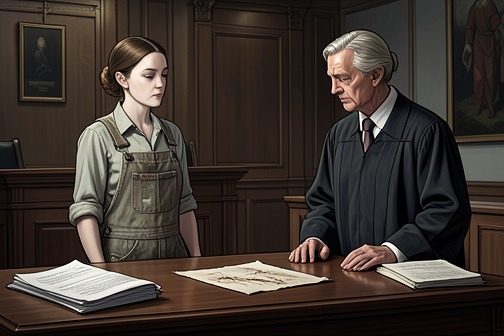
The prosecution against Dan grew out of Wendy’s involvement in the case. At the hearing, the lawyers dispute whether her conduct should taint the evidence later found in his home. [Flair Hickory](entity:character-recall-character-flair-hickory-b9f066d00b7c) argues that Wendy entered the house illegally and had both a motive and an opportunity to plant evidence; he maintains that the entire case against Dan stems from her attempt at entrapment. Lee Portnoi answers that Wendy was a private citizen, not an agent of the state, and that the home was searched under a signed warrant. The dispute is therefore not only about whether Wendy broke the law, but whether that breach makes the subsequent search and its findings unusable.
## The Hearing and Ruling
Portnoi urges the judge to separate Wendy’s possible offense from the admissibility of the evidence. If prosecutors believe Wendy committed breaking and entering, he says, they can charge her and try to prove it. But, in his argument, a private citizen is not held to the same standard as an officer of the court, and her possible misconduct does not automatically invalidate a warrant-backed search. He emphasizes that some photographs were hidden in the garage and behind a bookshelf, places he says Wendy could not have planted them during a brief visit. His position is that the warrant and the circumstances in which the material was found matter independently of the sting.
Hickory presses the opposite interpretation. Wendy had a compelling motive to plant evidence, he argues, and knew Dan’s home would soon be searched. In his view, the prosecution cannot treat the search as independent when Wendy’s actions set the case in motion; everything found in the house must be excluded. Portnoi counters that accepting this reasoning would make any witness or complainant who first brought information to prosecutors equivalent to a government agent. The hearing thus turns on competing accounts of responsibility: whether Wendy’s private-citizen status distinguishes her from law enforcement, or whether her role in initiating the case contaminates what followed.
Judge Howard ends the arguments without deciding immediately. She says she has heard enough, brings down her gavel, and promises a ruling by morning. When the decision arrives, it is broader than the exclusion of the items found in the home: the judge also throws out all charges, citing the prejudicial effect of the press and [NTC](entity:organization-recall-organization-ntc-8e7769a863fc)’s televised coverage. The result links two problems that had been argued separately—the provenance of the evidence and the public exposure of Dan—to the collapse of the prosecution.
## Consequences for Wendy and the Case
Wendy learns the outcome from [Vic Garrett](entity:character-recall-character-vic-garrett-faca7c85faca). She asks whether he is joking; he says nothing, and she understands that the case has failed. When she asks what happens to her, she supplies the answer herself: she is fired. Vic confirms it, adding that the network is laying people off in a bad economy and that she is an obvious person to dismiss. The legal ruling therefore has an immediate professional cost for Wendy, whose investigation had made her central to the case and whose televised role now figures in the decision to dismiss it.
The dismissal does not establish that Dan is innocent; it means the prosecution’s evidence and charges cannot stand after the ruling. Later investigative details underscore how the larger case continues to involve physical traces and their limits, but they should not be mistaken for the evidence excluded at this hearing. At the Wykertown trailer, investigators identify a recent bullet hole and a slug outside in a cinder block. They later report matching preliminary blood findings from the trailer and [Ed Grayson](entity:character-recall-character-ed-grayson-9335d9565c07)’s Acura, along with carpet fibers found in the trailer, the vehicle, and the bottom of Ed’s sneaker, as well as gun residue on his hands. Those findings belong to the later investigation into Dan’s disappearance, not to Judge Howard’s decision about the home search.
## Evidence, Uncertainty, and Significance
The novel’s wider investigation repeatedly distinguishes an observed trace from the conclusion someone wants it to prove. Haley’s iPhone, for example, displays a Google Earth search resolving to 50 W Market Street in [Newark](entity:location-recall-location-1cebf1167a37), but the history cannot show when the search was made, and Haley had not enabled the phone’s GPS feature for tracking where it went. In another evidentiary discussion, the medical examiner says no bullets were found at the scene or in Haley’s body and that examination revealed no bone marks indicating a bullet wound; she can say a shooting is unlikely, but cannot definitely rule it out. These later details do not determine the ruling in Dan’s case. They echo its central tension: evidence has a source, a scope, and limits, and certainty cannot be supplied simply by publicity or suspicion.
The exclusion marks a reversal in the public story of Dan as well as a legal setback for the prosecution. The material found in his home and the broadcast that exposed him had made the case appear conclusive; the judge’s ruling shows that apparent certainty is not the same as admissible proof. By making both the search’s origins and the press coverage consequential, the episode places Wendy’s investigative methods under scrutiny and leaves the underlying questions about Dan unresolved by this ruling.
Event 3
Dan Mercer shot and his body disappears
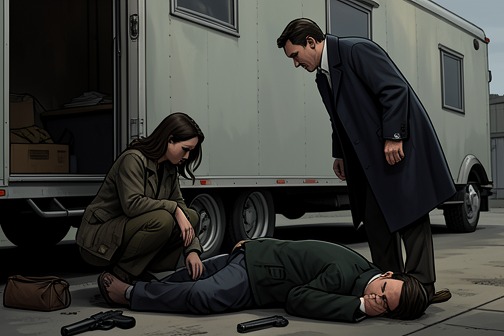
The shooting of [Dan Mercer](entity:character-recall-character-dan-mercer-4a972170cf89) and the disappearance of his body transform Wendy Tynes from a witness to an apparent killing into the person whose account must be tested against a scene that has been altered. The sequence links [Ed Grayson](entity:character-recall-character-ed-grayson-9335d9565c07) to the shooting through Wendy’s recognition of him, then makes the missing body—not the absence of evidence—the central question facing investigators.
## The shooting and its immediate aftermath
Wendy is with Dan in the trailer when a masked man enters carrying a pistol. Dan raises his hands and begins to speak, but the intruder fires without warning. Wendy retreats out of sight; once the shooting stops, she sees Dan lying motionless. The gunman approaches him, and Wendy recognizes Ed Grayson by his height, build, and Timex watch, similar to the one her father wore. Grayson fires again before Wendy can decide how to respond. The scene leaves her with the knowledge that she has witnessed an apparent execution and that the shooter is someone she knows.
## The Missing Body and the Altered Scene
When Wendy returns to the trailer with [Mickey Walker](entity:character-recall-character-mickey-walker-66247ae85eb2), the place where Dan had fallen is empty. Walker confirms that no body is there, and the absence cannot be explained by an ambulance or hearse having taken it away: Wendy saw no such vehicle leave. The scene has changed, but it has not been stripped of every trace. Walker identifies recent gunpowder, a bullet hole through the wall, and a slug recovered outside from a cinder block; he estimates that the bullet appears to be a .38 caliber, pending further examination.
The carpet is missing too. Wendy notices orange fibers left on the floor, and Walker points out blood among them. He says a witness saw a man placing a rolled carpet into a black Acura MDX with [New Jersey](entity:location-recall-location-new-jersey-25586b9a9d1c) plates. Investigators check the vehicle’s registration and connect it to Ed Grayson, of Fair Lawn, New Jersey. The physical traces and the witness account support Wendy’s report even as the missing body makes the central fact of the shooting harder to establish through ordinary investigation.
## Wendy’s Choices as a Witness
After the shooting, Wendy tries to regain clear thinking and considers how to respond to Grayson. Her first possibility is to talk to him and persuade him that she is on his side. The thought registers the danger she faces: she has identified the shooter, but must decide what to do while he remains in the trailer. The scene therefore turns not only on what Wendy has witnessed, but on the immediate problem of how to survive as its witness.
The event leaves two kinds of knowledge in tension. Wendy is certain that Grayson fired the shots, while the investigators who later examine the trailer find evidence of gunfire and blood but no body. The gap between her direct recognition and the altered scene makes the shooting more than a discrete act of violence: it becomes an unresolved investigative problem, with the missing body obstructing confirmation of what happened to Dan after Wendy fled.
## From Witnessed Shooting to an Unresolved Disappearance
The scene’s decisive reversal is that Wendy has seen what appears to be Dan’s killing, yet the place where it happened cannot supply his body as confirmation. What remains is indirect: signs of gunfire and blood, carpet fibers, and a witness’s account of a vehicle carrying the rolled carpet. The sequence shifts the question from who shot Dan—which Wendy answers by recognizing Ed Grayson—to what happened afterward. That distinction makes the event both an apparent killing and the beginning of a disappearance investigation.
Event 4
Haley McWaid's iPhone found in Dan Mercer's room
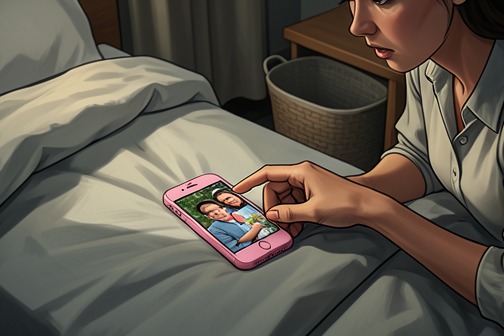
The discovery of [Haley McWaid’s iPhone](entity:object-recall-object-haley-mcwaid-s-iphone-81140a665663) beneath the bed in [Dan Mercer](entity:character-recall-character-dan-mercer-4a972170cf89)’s room is a decisive turn in the investigation: an ordinary personal device, identified by the family photograph on its screen, places the missing teenager in the same room investigators are searching. The find does not itself explain how the phone came to be there or what happened to Haley. Instead, its force comes from the sharp shift between a disappearance defined by absence and an object that makes her presence unmistakable.
## Before the Discovery
Haley’s disappearance first takes shape for her mother, [Marcia McWaid](entity:character-recall-character-marcia-mcwaid-f528f8cf33a3), through the small routines that no longer make sense. Haley was the dependable daughter who put her clothes in the hamper every night. When Marcia went to do laundry, the hamper was empty; Haley’s toothbrush, sink, and shower were all dry as well. Each absence contradicted the household pattern Marcia trusted. The evidence establishes that Haley was not simply late or neglecting a chore: the familiar traces of her morning and evening were missing together.
Marcia and [Ted McWaid](entity:character-recall-character-ted-mcwaid-39cdecd008e0) searched for an explanation. They went to Haley’s captain’s practice and learned she had not appeared, contacted her friends, and sent an email appeal to others. No one knew where she was. The local police initially treated the disappearance as a possible runaway case, despite the parents’ objections. The FBI joined the search forty-eight hours later; after a week, there was still no sign of Haley. The family endured a further stretch of uncertainty: a month passed, then two, before word finally arrived during the third month. Against this long period in which no reliable trace could be found, the later appearance of Haley’s phone in Mercer’s room gives a physical location to the question of where she had gone, without immediately answering the larger questions of how or why.
## Finding the Phone
Investigators [Tom Stanton](entity:character-recall-character-tom-stanton-64d29237ccaa) and [Mickey Walker](entity:character-recall-character-mickey-walker-66247ae85eb2) were searching Mercer’s room while Mercer was missing and presumed dead. Stanton looked beneath the bed and found a mobile phone. The discovery did not at once identify its owner. Walker’s first response was interrupted by a discrepancy he already knew from the investigation: using Mercer’s number and cell-tower triangulation, Walker had traced the last call from Mercer’s own mobile to Route 15, about three miles from the trailer park and at least an hour’s drive from the room they were searching. The handset beneath the bed therefore could not simply be treated as Mercer’s known phone or as an uncomplicated confirmation of his movements.
Stanton’s reaction changed the meaning of the find. He stared at the image on the phone’s screen, and Walker could see its bright pink case. When the screen went dark, Stanton pressed the button to light it again. The welcome screen displayed a family vacation photograph: three children and one adult, smiling around Mickey Mouse. Haley stood beside Mickey, smiling broadly. Walker recognized her as the girl whose disappearance had driven the search. Identification came not from a label or a forensic explanation in the scene, but from a familiar image that made the missing person visible on the device in front of the investigators.
## What the Screen Establishes
The photograph establishes whose phone Stanton has found: it belongs to Haley, not merely to an unidentified person associated with Mercer’s room. Its bright pink case and family image turn the phone into a particularly legible clue. A welcome screen designed for everyday personal use becomes evidence, and a vacation photograph—an image of the family together—now confronts investigators with Haley’s absence from that family’s present life. The screen provides recognition, not a complete account. The scene does not establish when the phone entered the room, who placed it there, or whether Mercer knew it was there.
That distinction matters because the find is powerful without being a solution. Walker had to hold together two separate facts: the phone under the bed was Haley’s, while the last call from Mercer’s mobile had been traced elsewhere. The text supplies no explanation that resolves this tension at the moment of discovery. Instead, the phone draws the search toward Mercer’s room while leaving the investigators to determine what the object can prove. It is a tangible connection, not by itself an account of the events that produced it.
## Later Context and Significance
Later disclosures about the high-school party provide context for Haley’s final hours, but they are distinct from the discovery scene. At a school gathering, parents encountered prevention measures that included drinking-pledge contracts: teenagers promised not to drive drunk or ride with an intoxicated driver, and parents agreed to pick them up at any hour. [Jenna Wheeler](entity:character-recall-character-jenna-wheeler-c49085a00d36) later told Wendy Tynes that she and [Noel Wheeler](entity:character-recall-character-noel-wheeler-fc3ec400559c) had hosted a party because seniors were traveling to the Bronx to drink and then driving home. They left beer for the teenagers, believing that a party at home would be safer. Jenna also disclosed that Haley drank an unopened bottle of whiskey, suffered an alcohol overdose, and was thought by [Amanda](entity:character-recall-character-amanda-f7c90eb37305) to have passed out. Noel tried to revive her, but it was too late; Jenna said they did not call emergency services.
These later facts clarify the circumstances surrounding Haley’s death, but they do not, in the evidence presented here, explain the phone’s placement in Mercer’s room. Keeping those questions separate preserves the discovery’s specific importance: it is the moment when the search acquires a recognizable object tied directly to Haley, not the moment when the whole case is solved. The contrast between an empty hamper at home and Haley’s smiling face on the phone screen also gives the investigation’s evidence a human scale. For Marcia, absence first appeared as ordinary routines abruptly missing; for Walker and Stanton, it became a family photograph found under a bed in the room of a missing man.
Event 5
Haley McWaid's disappearance
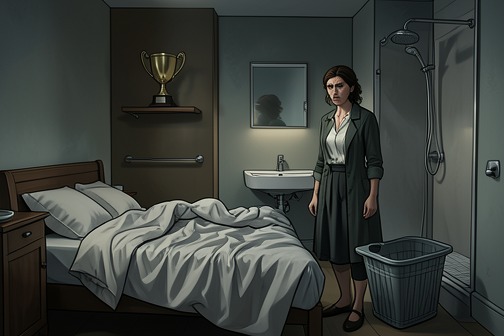
[Haley McWaid's disappearance](entity:event-recall-event-haley-mcwaid-s-disappea-d61955792e80) is the novel's central mystery and a prolonged test of the difference between the story adults tell themselves and the evidence they overlook. Her parents recognize from the first morning that her absence does not fit her habits, but the police initially classify her as a runaway. The later discovery of her phone in [Dan Mercer](entity:character-recall-character-dan-mercer-4a972170cf89)'s room appears to connect her to a suspected predator; only much later does [Jenna Wheeler](entity:character-recall-character-jenna-wheeler-c49085a00d36) disclose that Haley died after drinking whiskey at a party in the Wheeler home. The disappearance thus unfolds in two stages: first as an unexplained absence, then as the concealed consequence of a death.
## The First Signs and the Family's Alarm
The first evidence is not dramatic: [Marcia McWaid](entity:character-recall-character-marcia-mcwaid-f528f8cf33a3) finds Haley's bed empty. But the room is made, every drawer closed, and the trophies arranged with the careful spacing Haley maintained as she won more. That precision matters because it belongs to the routine of a responsible, highly organized senior, not to a daughter Marcia can readily imagine abandoning home without warning. When Marcia considers doing laundry, she finds no clothes in Haley's hamper. The bathroom sink and shower are dry, too. The ordinary traces of a morning routine are missing along with Haley herself.
Marcia and [Ted McWaid](entity:character-recall-character-ted-mcwaid-39cdecd008e0)'s search quickly widens. They drive to captain's practice and learn Haley never arrived; they contact her friends, while Ted sends an email blast, but nobody knows where she is. They call local police and insist that Haley has not simply run away. The officers nevertheless regard her as a teenager blowing off steam. Forty-eight hours later, the [Federal Bureau of Investigation](entity:organization-recall-organization-federal-bureau-o-f1c5664278d2) is brought in, and a week passes without a sign of her. For Marcia, the days do not soften the absence: it feels as if the earth has swallowed Haley whole.
The family is left to endure the uncertainty for months. After one month there is nothing; after two, still no word. Marcia's fear has become a physical burden, a rock in her chest that keeps growing and leaves her unable to breathe easily or sleep. In the third month, new information finally arrives, bringing a pause to that mounting dread without yet resolving what happened to Haley.
## Runaway Theory and the Evidence of a Hidden Life
The runaway explanation persists partly because it offers a familiar account of adolescent distress. Investigators point to ordinary disappointments: Haley did not get into the [University of Virginia](entity:organization-recall-organization-university-of-vi-c27427f28ad2), did not win the essay contest or make the AHLISA honors program, and may have recently ended a relationship. Marcia rejects the idea that such setbacks explain a three-month disappearance. She believes from the first day that something bad has happened to her daughter. When she asks [Frank Tremont](entity:character-recall-character-frank-tremont-3c1fa31f1767) to look at Haley's photograph, she challenges the notion that a smiling girl who never used her iPhone, ATM card, or credit cards could simply have left on her own and stayed gone by choice.
Haley did have a private life her family did not fully know. [Patricia McWaid](entity:character-recall-character-patricia-mcwaid-17239db8bfe8) tells Wendy Tynes that she thinks Haley had a boyfriend, though she is unsure; Haley kept such matters to herself. Patricia says Haley had slipped out to meet him two or three times. But the last such meeting was about a week before Haley vanished, and Haley did not ask Patricia to cover for her on the night she disappeared. The detail establishes that Haley sometimes concealed where she was going, but it does not support the claim that she had arranged a sustained flight.
## The Phone and the Suspected Connection
The investigation's most consequential early turn comes when [Mickey Walker](entity:character-recall-character-mickey-walker-66247ae85eb2) tells Frank Tremont that he has found something in Dan Mercer's room which he thinks belongs to Haley. Haley's iPhone has been found under Mercer's bed. Until then, the phone has yielded few clues: no new texts, emails, or calls, while [Tom Stanton](entity:character-recall-character-tom-stanton-64d29237ccaa) continues examining it. Investigators look for a connection between Mercer and Haley and learn that Haley attended [Kasselton High School](entity:organization-recall-organization-kasselton-high-s-7f9977aaf437) with [Amanda Wheeler](entity:character-recall-character-amanda-wheeler-1d2b3f1df6d4), Jenna Wheeler's stepdaughter. Mercer is Jenna's ex-husband and, according to the account investigators pursue, spent considerable time at the Wheeler home.
For Wendy, the phone's discovery is not uncomplicated vindication. She is sick with concern for the McWaid family and hopes the discovery will somehow lead to a good outcome. At the same time, she wonders whether it proves that her earlier suspicions about Mercer were right. Her response is troubled by memories of Mercer helping children at a shelter and of the injuries she saw on him at the trailer park. The phone changes the investigation, but it does not instantly settle what happened to Haley or what the evidence means. For the McWaids, its discovery revives the exhausting first days: Patricia watches the renewed activity of posters, calls to friends, visits to Haley's favorite places, updates to the missing-girl website, and the distribution of Haley's photograph at local malls.
## The Later Account of the Party
The eventual explanation places Haley's last known hours in the Wheeler home. Jenna tells Wendy that she and Noel decided to host a party because seniors had been driving to the Bronx to drink at a club and then driving home. Their plan was to stay upstairs and leave beer for the teenagers, which they regarded as directing the drinking toward a safer setting. The decision sits uneasily beside the language of parental safety circulating at a school event Wendy attends: booths promote drug-free homes, drinking pledges, and the promise that a teenager can call for a ride at any hour. The contrast is not simply between concern and indifference; it is between formal assurances of protection and adults' choice to accommodate underage drinking in their own house.
Jenna's account gives the disappearance its decisive reversal. She says Haley drank too much, found an unopened bottle of whiskey in a cabinet, and drank all of it. Haley was small, Jenna explains, and [Amanda](entity:character-recall-character-amanda-f7c90eb37305) thought she had passed out. Asked whether they called emergency services, Jenna shakes her head and says Noel, a doctor, tried to revive Haley, but it was too late. The confession replaces the imagined runaway with a death at a party and exposes why the absence had remained unresolved: the adults who could have explained what happened did not call for help. Haley's disappearance is therefore not only a search for a missing girl; it is also the delayed uncovering of a truth that the initial runaway assumption, the phone's ominous location, and the family's hope all obscured.
Event 6
Ed Grayson kills Dan Mercer
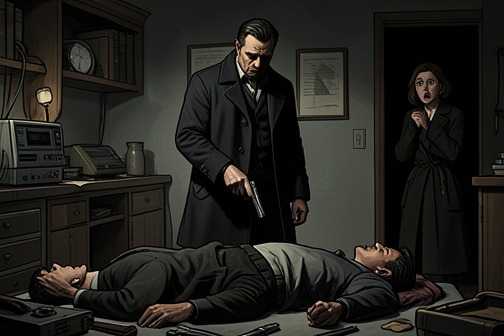
[Ed Grayson kills Dan Mercer](entity:event-recall-event-ed-grayson-kills-dan-me-859f81ebf810) in an act of vigilante justice that makes Ed both the avenger of his son and a law-enforcement veteran who has abandoned the legal process he once served. The killing does not settle the questions surrounding [Haley McWaid](entity:character-recall-character-haley-mcwaid-44180e5e980f)’s disappearance; instead, it may eliminate the one person who could have helped answer them. Its aftermath leaves Ed facing the personal cost of violence, the uncertainty of a prosecution, and a marriage strained by what he has done.
## Background and Stakes
By the time Ed acts, Haley has been missing for months. Her mother, [Marcia McWaid](entity:character-recall-character-marcia-mcwaid-f528f8cf33a3), first notices that Haley’s clothes are not in their usual place and that her bathroom is unused. When Haley also fails to appear at captain’s practice, her parents contact friends and police. The police initially treat her as a possible runaway; the FBI joins the search after forty-eight hours. A week passes without a sign of her, and months bring no word. This prolonged uncertainty forms the larger crisis around Ed’s decision: Haley is not simply absent but a missing teenager whose fate remains unknown.
Ed’s own stated justification is that justice had to be done. He believes that when courts fail, men like him may feel compelled to act. [Frank Tremont](entity:character-recall-character-frank-tremont-3c1fa31f1767) later offers a more specific account of Ed’s motive: he believes Ed killed Mercer because Mercer was escaping consequences for what he had done to Ed’s son, [E. J.](entity:character-recall-character-e-j-2d72fe5cb0f1) Frank presents this as his interpretation, not as a confession from Ed. His argument identifies the conflict at the heart of the event: a father’s desire to answer harm done to his child collides with the limits imposed by law.
## The Killing and Its Immediate Meaning
The evidence presented later establishes that Ed killed Mercer, but the account does not dwell on the mechanics of the encounter. Its emphasis falls instead on the reasoning and consequences attached to the act. Ed had told reporter Wendy Tynes that justice needed to be done. Afterward, he reflects on the violence he inflicted in justice’s name and recognizes that believing in his cause does not remove the personal cost of delivering punishment himself.
Frank makes that cost larger than Ed’s own guilt. He argues that Mercer may have been the only person who could have told investigators what happened to the seventeen-year-old Haley. By killing him, Ed may have damaged the search for her as well as taken punishment into his own hands. Frank acknowledges the emotional force of the impulse to retaliate for harm to a child, but insists that acting on it has consequences no avenger can reliably control. His accusation turns Ed’s self-appointed justice into a possible obstruction of the truth.
## Evidence and Legal Conflict
The aftermath is shaped not only by what happened but by what investigators can prove. They find Mercer’s blood in Ed’s car, evidence they initially regard, alongside testimony, as clear support for the murder case. [Hester Crimstein](entity:character-recall-character-hester-crimstein-8352225ea1f1) challenges that interpretation. Because a witness said Mercer had been beaten, she proposes that Ed and Mercer might have fought a day or two earlier, leaving blood in the car without proving that Ed killed him then. The argument does not erase the event; it exposes the distance between a known outcome and evidence that can establish when and how it occurred.
Frank rejects the comfort of treating the confrontation as a purely technical dispute. He invokes Ed’s status as a law-enforcement officer and presses him to consider his conscience and the possible effect on Haley’s case. Hester tries to protect her client and asks Frank to address her rather than Ed, but Frank insists on speaking to the moral responsibility he believes Ed bears. The exchange places two forms of judgment side by side: the legal defense’s scrutiny of evidence and the prosecutor’s appeal to the human consequences of the killing.
## Personal Consequences and Significance
Afterward, Ed sits alone, makes himself a Scotch and soda, turns on SportsCenter, and thinks about the blood and pain he caused. The ordinary television program does not dispel his awareness of what he has done. His belief that justice was necessary remains intact, but it no longer offers a complete defense against remorse or consequence. His short declaration that it is over can refer to the immediate ordeal, yet the narration also links it to the end of his relationship with [Maggie Grayson](entity:character-recall-character-maggie-grayson-20dce5053c5a).
Maggie’s reaction is horrified. Earlier, she had argued that people would define Ed by the killing and that keeping it quiet might protect him. Afterward, her response and Ed’s recollection of it reveal the rupture between them. The narration does not reduce their marriage’s collapse to this single act: it questions whether the tragedy created the fissures between them or merely made existing divisions visible. In that way, the killing becomes more than an act of retaliation. It tests whether a claim to justice can survive the damage it causes, and whether private loyalty can remain intact when one person decides that the law is not enough.
Event 7
Ed Grayson's arrest
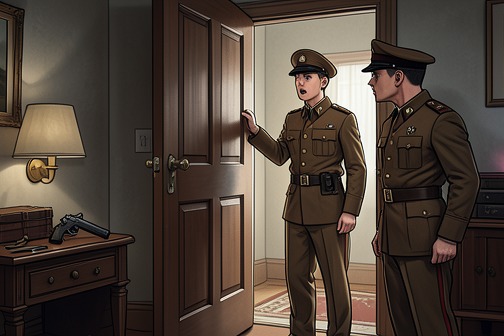
[Ed Grayson's arrest](entity:event-recall-event-ed-grayson-s-arrest-70c0bc34382f) marks a sharp reversal: the retired federal marshal who once belonged to law enforcement is taken into custody for [Dan Mercer](entity:character-recall-character-dan-mercer-4a972170cf89)'s murder. The arrest at Ed's home is followed by evidence that brings Dan's death into contact with [Haley McWaid's disappearance](entity:event-recall-event-haley-mcwaid-s-disappea-d61955792e80), but the material disclosed in the investigation remains evidence to be tested, not proof of guilt.
## The Arrest at Ed's Home
Late at night, Ed heard the doorbell, followed by a fist pounding impatiently against the door. He reacted before thinking, jumped up, and took a gun from his nightstand. When the bell rang and the pounding began again, a voice outside identified the callers as police and ordered him to open up.
Ed looked through a window and saw two officers in brown uniforms. Neither was [Mickey Walker](entity:character-recall-character-mickey-walker-66247ae85eb2), the sheriff Ed had apparently expected to encounter. Ed registered some surprise at how quickly the police had arrived, but was not shocked. He put the gun away, went downstairs, and opened the door. The officers appeared very young to him, a striking contrast with his own experience in federal law enforcement.
When an officer addressed him as Mr. Grayson, Ed corrected him by identifying himself as Federal Marshal Grayson. The correction did not alter the encounter: the officers told him he was under arrest for the murder of Dan Mercer, directed him to put his hands behind his back, and began reading him his rights. The scene places Ed's former professional identity beside his new legal position. His title can still shape how he responds to the officers, but it cannot shield him from their authority.
## Evidence Connecting Ed to Dan's Death
The investigation later presents a forensic link between Ed and Dan. During a discussion involving [Hester Crimstein](entity:character-recall-character-hester-crimstein-8352225ea1f1), Mickey Walker produces a file concerning a blood test. The blood found in Ed's car, Walker says, is a perfect match for Dan Mercer, the victim. This is a concrete and serious piece of evidence, but the passage records the investigators' claim rather than a judicial finding about what happened.
A second lead emerges when [Frank Tremont](entity:character-recall-character-frank-tremont-3c1fa31f1767) tells Hester and Ed that investigators searched Dan's motel room. He slides across a photograph of a pink iPhone. Tremont explains that it was found beneath the bed in Dan's hotel room in [Newark](entity:location-recall-location-1cebf1167a37), not far from where the conversation takes place, and that it belongs to [Haley McWaid](entity:character-recall-character-haley-mcwaid-44180e5e980f), a missing girl. The discovery binds the murder inquiry to the unresolved disappearance without establishing, by itself, how the phone came to be there or what it proves about either case.
Ed's response makes the revelation a turning point in the exchange. The retired marshal groans, and the color drains from his face. Hester puts a hand on his arm, first warning him not to react and later trying to steady him. She does not answer the investigators' disclosure with an immediate argument. Instead, she keeps silent, recognizing that they may be watching for a reaction and choosing not to supply one. The contrast between Ed's involuntary response and Hester's deliberate restraint gives the evidence scene its tension.
## Haley's Disappearance and the Phone's Significance
The phone's importance comes into view against the earlier search for Haley. [Marcia McWaid](entity:character-recall-character-marcia-mcwaid-f528f8cf33a3) had trusted her daughter to be responsible and had not needed to impose a curfew. One morning, however, Marcia found Haley's clothes absent from the hamper, then checked the bathroom: the toothbrush, sink, and shower were all dry. Those ordinary absences, measured against Haley's nightly routine, became the first signs that something was wrong.
Marcia and [Ted McWaid](entity:character-recall-character-ted-mcwaid-39cdecd008e0) discovered that Haley had not attended captain's practice. Calls to her friends and an email sent by Ted produced no information about where she was. The local police initially treated her as a possible runaway, despite the parents' objections. The [Federal Bureau of Investigation](entity:organization-recall-organization-federal-bureau-o-f1c5664278d2) was brought in after forty-eight hours, and a week passed without a sign of her. By the time the phone was identified in Dan's room, Haley's absence had already become a prolonged missing-person case, making the discovery consequential beyond its possible relevance to Dan's murder.
A later account from [Jenna Wheeler](entity:character-recall-character-jenna-wheeler-c49085a00d36) gives further context to the disappearance without resolving what the phone means in the murder investigation. Jenna tells Wendy Tynes that she and [Noel Wheeler](entity:character-recall-character-noel-wheeler-fc3ec400559c) hosted a party because seniors had been travelling to the Bronx to drink at a club and then driving home. She says Haley drank an unopened bottle of whiskey, that [Amanda](entity:character-recall-character-amanda-f7c90eb37305) thought Haley had passed out, and that Noel tried to revive her after realizing she was dead. Jenna also acknowledges that no emergency call was made. This account changes the reader's understanding of the circumstances behind Haley's disappearance, but it does not establish that Ed knew what happened or explain how Haley's phone reached Dan's motel room.
## Legal and Narrative Consequences
The arrest changes Ed from an observer of the investigation into its central accused figure. The blood match places Dan's blood in Ed's car, while Haley's phone places a missing teenager's property in Dan's room. Together, the disclosures create a disturbing chain of associations; they do not, in the scenes presented, settle the questions of responsibility or motive. Hester's restraint underscores that distinction: in an encounter where the investigators appear to seek a reaction, silence is itself part of the defense's response.
The episode also reverses the authority Ed invokes at his doorway. He introduces himself by his federal title, but the officers proceed to arrest him and read his rights. His surprise at the speed of their arrival, followed by his visible reaction to the phone, shows the pressure of the investigation without serving as an admission. The arrest therefore functions both as a concrete legal action and as a dramatic transfer of position: the former marshal is now subject to the same process he once represented, while the evidence against him remains to be weighed.
Event 8
Discovery of Haley McWaid's phone
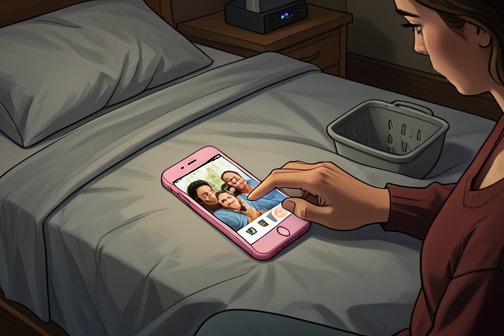
The discovery of [Haley McWaid](entity:character-recall-character-haley-mcwaid-44180e5e980f)’s phone is the investigation’s sharpest turn from absence to apparent evidence: her pink iPhone is found beneath [Dan Mercer](entity:character-recall-character-dan-mercer-4a972170cf89)’s bed in a [Newark](entity:location-recall-location-1cebf1167a37) motel room. The find makes Mercer the immediate focus of suspicion and sends investigators toward a second location, [Ringwood State Park](entity:location-recall-location-ringwood-state-park-334f3e84c393). Yet the phone does not provide a complete record of Haley’s movements, and its suggestive search history leaves a gap between what the evidence shows and what investigators fear it means.
## From absence to a physical clue
For [Marcia McWaid](entity:character-recall-character-marcia-mcwaid-f528f8cf33a3), Haley’s disappearance begins not with a dramatic message but with a breach in routine. Haley was the responsible senior who put her clothes in the hamper each night. When Marcia went to do laundry, the hamper was empty; Haley’s toothbrush, sink, and shower were all dry as well. These small absences, ordinary in themselves, became evidence that Haley had not come home.
Marcia and [Ted McWaid](entity:character-recall-character-ted-mcwaid-39cdecd008e0) checked the places and people that should have made Haley’s whereabouts easy to establish. She had not attended captain’s practice, and her friends did not know where she was. The local police initially treated the absence as a runaway situation, despite the parents’ protests. The FBI joined the search after forty-eight hours, but a week passed without a sign of Haley. A month brought nothing, then another. During the third month, news finally came, and the unbearable uncertainty that Marcia had carried began to change shape.
The phone’s discovery supplies a concrete answer to one question—where an important object belonging to Haley was found—while immediately raising a more troubling one. A call to Wendy Tynes tells her that investigators have found Haley’s cell phone in Mercer’s hotel room and asks her to return to the story. When Wendy learns that it was beneath his bed, her first response is sorrow for the McWaid family. She recognizes the apparent vindication of her earlier suspicions, but cannot take simple satisfaction in it: she remembers Mercer’s work helping children at a shelter, the children’s admiration for him, and his bruised face after their recent encounter.
## The evidence presented to Mercer’s lawyer
Investigators also present the discovery to [Hester Crimstein](entity:character-recall-character-hester-crimstein-8352225ea1f1) and [Ed Grayson](entity:character-recall-character-ed-grayson-9335d9565c07). [Frank Tremont](entity:character-recall-character-frank-tremont-3c1fa31f1767) says the police searched Mercer’s motel room and slides over an eight-by-ten photograph of a pink iPhone. He identifies its location as beneath Mercer’s bed in a hotel room in Newark, near the place where they are meeting, then says it belongs to the missing Haley McWaid.
The disclosure is framed as a question of possible responsibility after the fact rather than an accusation of murder. Even so, the photograph changes the temperature of the meeting. Hester keeps silent because she understands that the investigators are watching for a reaction. Ed, a retired federal marshal, groans; his face loses color, and Hester grips his arm in an attempt to steady him. The physical evidence gives the suspicion a new force, but the scene also emphasizes how much remains unproved: Hester refuses to supply the response the investigators are waiting for, and the find itself does not establish how or when the phone came to be in the room.
## A search history points to the woods
The phone’s Google Earth history gives investigators a possible next destination. [Tom Stanton](entity:character-recall-character-tom-stanton-64d29237ccaa) demonstrates the app by tapping the image of the earth. The globe spins and the view narrows from the United States to the East Coast and then [New Jersey](entity:location-recall-location-new-jersey-25586b9a9d1c), stopping at 50 W Market Street in Newark, the building where the group is gathered. The demonstration explains the app’s map function; it does not show where the phone has travelled. Haley had not turned on the feature that would track the device’s location, and the search history cannot show when a search was made.
Of the two searches investigators find, one is for Haley’s own home. Stanton supposes that she may have enabled the app when she first downloaded it and seen her own location, so he does not regard that search as significant. The other search lands on a wooded part of Ringwood State Park, around a building in the park’s interior. Stanton identifies it as [Skylands Manor](entity:location-recall-location-skylands-manor-ae97b64ca71b), roughly forty miles away and surrounded by at least five thousand acres of woods in the Ramapo Mountains.
The place is a clue, not a recovered answer. The history identifies a searched location but supplies neither a time nor proof that Haley went there. Still, the combination of a remote park and extensive woodland changes the investigators’ sense of what the search might mean. Frank Tremont recalls that a survivalist once hid in the surrounding woods for more than a month and imagines that someone could build a small shelter concealed by trees and brush, even lock someone away there. The possibility is alarming; it is not confirmation that such a place exists or that Haley was taken to it.
A woman reached by phone recalls that, years earlier when she and Frank were married, they often walked the Cupsaw Brook Loop in the park. Frank ends the call and turns the search into an immediate operation: helicopters, dogs, bulldozers, lights, shovels, rescue squads, park rangers, available officers, and local volunteers are all summoned. He then calls Ted and Marcia McWaid. The phone has therefore done more than redirect suspicion toward Mercer; its unexplained search history has mobilized a large-scale search in a landscape vast enough to sustain both hope and fear.
## What the discovery does—and does not—settle
The novel later supplies a different account of the circumstances surrounding Haley’s death. At a school gathering, Wendy encounters campaigns against underage drinking, including a program urging parents not to host drinking parties and pledge contracts promising that teenagers can call for a ride at any hour. Later, [Jenna Wheeler](entity:character-recall-character-jenna-wheeler-c49085a00d36) explains that she and Noel hosted a party because seniors had been driving to the Bronx to drink and then driving home. They left beer for the students while remaining upstairs, believing that a party at home would be safer.
Jenna also says that Haley drank an entire unopened bottle of whiskey, that [Amanda](entity:character-recall-character-amanda-f7c90eb37305) thought she had passed out, and that Noel tried to revive her. Jenna admits that no one called emergency services. This later account places Haley’s death amid a party and a failed response, rather than confirming the suspicion that first gathers around Mercer when the phone is found. It does not, by itself, explain how the iPhone ended up beneath his bed. That distinction is central to the event’s meaning: the phone is a powerful investigative lead, but its force as an object should not be confused with a complete explanation of Haley’s disappearance or death.
Event 9
Recovery of Haley McWaid's body
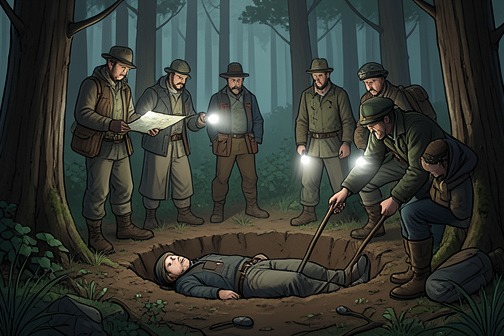
The recovery of [Haley McWaid](entity:character-recall-character-haley-mcwaid-44180e5e980f)’s body at [Ringwood State Park](entity:location-recall-location-ringwood-state-park-334f3e84c393) ends the long uncertainty surrounding her disappearance, but not the story of how she died. A location clue turns a vast, wooded landscape into the focus of a search involving police, rescue teams, volunteers, and Haley’s parents; the discovery in a shallow grave confirms that the missing teenager is dead, while later revelations show that the death began in a very different setting from the woods where her body was found.
## From a phone location to a search area
Investigators examining location information identified a point in [New Jersey](entity:location-recall-location-new-jersey-25586b9a9d1c) beyond Haley’s own home. A map brought the group to Ringwood State Park, about forty miles away, where [Skylands Manor](entity:location-recall-location-skylands-manor-ae97b64ca71b) stood amid at least five thousand acres of woods. The scale of the terrain made the clue both urgent and daunting: the location narrowed the search to a particular park, but left an immense stretch of forest in which a person or a body could be concealed.
[Frank Tremont](entity:character-recall-character-frank-tremont-3c1fa31f1767) and the others immediately understood the possibility that the location might indicate where Haley had been taken. Frank recalled that a survivalist had once hidden in the surrounding woods for more than a month; the terrain could shelter a makeshift lodging or conceal a burial place. That recollection gives the search its grim logic. The park is not simply a point on a map but a landscape whose cover can protect someone from discovery.
When Frank told a woman with a personal connection to the park that police were looking for Haley’s body there, she remembered taking the Cupsaw Brook Loop with him years earlier, when they were married. The recollection makes the location intimate as well as operational: the search is directed through a place already held in private memory, now transformed by the possibility of a grave.
## The search and the McWaids
Frank ordered an immediate, broad mobilization: helicopters, dogs, bulldozers, lights, shovels, rescue squads, park rangers, available personnel, and local volunteers. He then called Ted and [Marcia McWaid](entity:character-recall-character-marcia-mcwaid-f528f8cf33a3). The scale of the response reflects the difficulty of searching thousands of wooded acres and the urgency of finding Haley before the landscape could continue to hide what had happened to her.
Marcia and Ted entered the woods together. Neither was drawn to hiking or camping; before Haley vanished, their pleasures had been museums, bookstores, and dinners out. The search therefore marks a rupture in the ordinary life they remember. Their daughter’s absence has redirected them into a landscape they would not otherwise have chosen, and into a task no parent should have to undertake.
The scene holds grief and mutual support together rather than presenting the couple as separately consumed by it. Ted reaches back to Marcia and pulls her up as a helicopter passes overhead. Earlier, amid the search, he tells her they will be okay; the words do not lessen the task or promise a recovery, but register an effort to endure it together. They resume looking for their daughter as the clouds darken over the park.
## Discovery in a shallow grave
Two days after that search, the canine unit found Haley’s body in a shallow grave on the outskirts of Ringwood State Park. The discovery supplies the answer that the park search had been organized to find: Haley is no longer simply missing. The grave’s position near the park’s edge also gives the earlier location clue a concrete and terrible consequence, though it does not by itself explain how she died or who placed her there.
The recovery follows a prolonged absence. On the night Marcia first realized something was wrong, Haley’s clothes were not in the hamper, despite her nightly habit of putting them there, and her toothbrush, sink, and shower were all bone-dry. Haley had not appeared at captain’s practice. Her friends did not know where she was, and the local police initially treated her as a runaway despite her parents’ objections. The [Federal Bureau of Investigation](entity:organization-recall-organization-federal-bureau-o-f1c5664278d2) joined the case forty-eight hours later, yet a week passed without a sign of her. Months of silence made the discovery a decisive change in the family’s knowledge, not a resolution of their loss.
## What the recovery clarifies—and what it does not
The park search takes shape under the suspicion that [Dan Mercer](entity:character-recall-character-dan-mercer-4a972170cf89) had dumped Haley’s body in the woods. That belief helps explain the urgency of the operation, but the recovery itself establishes the location of the grave, not the truth of that accusation. Later, [Jenna Wheeler](entity:character-recall-character-jenna-wheeler-c49085a00d36) describes the party she and [Noel Wheeler](entity:character-recall-character-noel-wheeler-fc3ec400559c) hosted as an alternative to seniors driving home after drinking in the Bronx. She says Haley drank an entire unopened bottle of whiskey, that [Amanda](entity:character-recall-character-amanda-f7c90eb37305) thought Haley had merely passed out, and that Noel tried to revive her after she was already dead. Jenna also acknowledges that they did not call emergency services.
This later account places Haley’s death at the center of a concealed chain of decisions, while the search scene remains bound to what investigators and her parents knew at the time: a missing girl might be somewhere in the woods, and the park’s size made every hour of searching uncertain. The recovery closes the question of where Haley was found and confirms her death. It does not erase the months of uncertainty, restore the life her parents had before, or make the grave a complete explanation of what happened.
Event 10
Wendy Tynes uncovers the Princeton roommates' scandal pattern
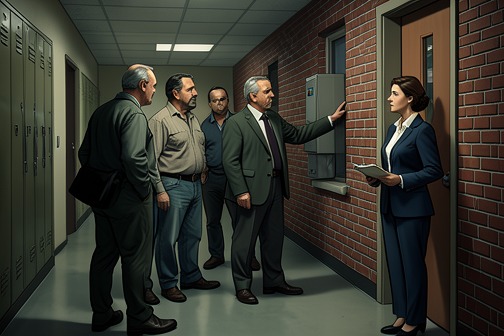
Wendy Tynes’s discovery of a scandal pattern among former [Princeton University](entity:location-recall-location-princeton-university-e6368e89e5e4) roommates turns a collection of apparently separate cases into a question about common history and possible coordination. An alumni photograph and a room number give her a concrete link between five men; a chronology of public disgrace and the traces of suspicious online campaigning then make coincidence harder to dismiss, without proving either that all the men were guilty or that one hand directed every scandal.
## Following the alumni trail
While working through a [Princeton](entity:location-recall-location-07a2c673578e) graduating-class page, Wendy remembers that [Haley McWaid’s iPhone](entity:object-recall-object-haley-mcwaid-s-iphone-81140a665663) had been found in [Dan Mercer](entity:character-recall-character-dan-mercer-4a972170cf89)’s motel room. The thought brings the missing girl’s case close to the screen in front of her, but it offers no immediate lead. Wendy instead searches the class’s ninety-eight listed members and finds no Dan Mercer, [Phil Turnball](entity:character-recall-character-phil-turnball-2e119cf96b38), or [Farley Parks](entity:character-recall-character-farley-parks-ffa1221806d6). She reasons that men keeping a low profile might no longer be on Facebook, then checks the discussion boards and follows a link to freshman-year dorm photographs.
The fifth photograph shows about a hundred students outside a brick building identified as Stearns House. Wendy recognizes Dan Mercer first. Farley Parks stands at the front, while Phil Turnball is on the right. Their clothes distinguish them from Dan: the two are dressed in khakis, collared shirts, and loafers, while he wears jeans and a T-shirt. The image gives Wendy more than a glimpse of the three men together; its caption supplies the dorm name she needs to continue.
The freshman listing narrows the location to [Stearns House Suite 109](entity:location-recall-location-stearns-house-109-f28fd6d4ac1e). Wendy checks the entries individually and finds that Farley Parks and Philip Turnball shared the suite with Dan Mercer. A search for the suite produces five names altogether: those three, [Kelvin Tilfer](entity:character-recall-character-kelvin-tilfer-be80e7d30266), and [Steven Miciano](entity:character-recall-character-steven-miciano-14f66840f819). Kelvin’s profile is nearly absent from the web beyond a Princeton graduates list, while the search yields no evident social-media presence. At this stage he is not a proven participant in any scandal, but the shared address makes him a necessary person to find.
## A sequence of public scandals
Wendy lays out a chronology for Phil Turnball, beginning with his own arrest a year earlier on charges of embezzling more than two million dollars. Phil is startled that she knows the amount and insists that the charges are false. Wendy explicitly says she is not asserting his guilt; she wants him to consider the sequence. Two months after his case, Farley Parks is ruined by a political scandal involving a prostitute. About a month later, Dan Mercer is exposed on Wendy’s television program. Roughly two months after that, Steven Miciano is arrested for illegally possessing prescription drugs.
The order matters to Wendy because the scandals touch former members of the same Princeton class and follow one another within about a year. When [Doug](entity:character-recall-character-doug-b7cf01363529) challenges Phil to take the pattern seriously, Wendy states the shared facts plainly: four men from the class lived together and became involved in scandals in that period. Phil points out the gap in her account—Kelvin Tilfer has not yet been connected to a scandal. Wendy does not fill that gap with an assumption. She says they will have to find him before they can know whether the pattern includes him.
That caution distinguishes a developing theory from a solved case. Wendy has a common dormitory, overlapping college histories, and a sequence of damaging events. She does not have proof from these details alone that the men acted together, that every public accusation was true, or that each scandal had the same cause. Her discovery is therefore both a connection and a new uncertainty: the history shared by the roommates gives her a reason to investigate, not a verdict.
## The digital campaign behind the scandals
Wendy brings the material to Phil and compares the cases with him. Ten-A-Fly explains how commercial viral marketing can manufacture the appearance of widespread approval by seeding comments and discussion online. In the cases concerning Steven Miciano and Farley Parks, he argues, the same techniques have been used in reverse: blogs and tweets were created, and search engines were paid so that hostile material would appear prominently when people searched for the men.
The distinction between authentic reporting and manufactured repetition is visible in the examples Ten-A-Fly shows Wendy. One item about Steven Miciano comes from a legitimate newspaper site; other pages accusing him of drug dealing, and a page presented as coming from the woman involved in Farley Parks’s prostitution scandal, are simple Blogger pages. Their authors have written no other entries beyond the condemnations. Wendy identifies them as smear jobs. Ten-A-Fly does not claim that the men were innocent of every underlying allegation; his narrower point is that someone wanted the scandals to dominate what the public found about them.
This evidence gives Wendy a possible mechanism for the pattern without settling who used it or why. Search results, anonymous email, tweets, and social-networking posts can make repetition look like corroboration, while the placement of a real newspaper report among questionable pages can lend the surrounding material an undeserved air of reliability. The online campaign may have amplified genuine scandals, fabricated or distorted parts of them, or done both; the material presented at this stage supports suspicion of manipulation, not a complete account of its authorship.
## The missing link and the stakes of the theory
Kelvin Tilfer remains the unresolved name. Wendy’s first searches return almost nothing, and Phil’s observation that he has not yet been implicated forces the investigation to preserve that uncertainty. Finding him would test whether the apparent pattern extends across the suite, but his absence from the known scandals is not evidence that a scandal exists. The room list is a lead, not proof of participation.
The wider story gives Wendy’s work a human cost beyond reputations and search results. When [Marcia McWaid](entity:character-recall-character-marcia-mcwaid-f528f8cf33a3) notices that Haley’s clothes are not in her usual hamper and finds her bathroom dry, a routine act of laundry becomes the first sign that something is wrong. Haley misses captain’s practice; Marcia and [Ted McWaid](entity:character-recall-character-ted-mcwaid-39cdecd008e0) contact friends, while Ted sends an email to a wider circle. Local police initially regard Haley as a runaway, the [Federal Bureau of Investigation](entity:organization-recall-organization-federal-bureau-o-f1c5664278d2) joins the search after forty-eight hours, and a week passes without a trace. Word finally comes in the third month. That chain of absence, delay, and fear is why Wendy cannot treat the phone discovered in Dan Mercer’s room as merely another detail in a media story.
Other evidence in the surrounding plot exposes the social conditions behind Haley’s disappearance without establishing that they explain the Princeton roommates’ scandals. At a school event, parents encounter drinking-prevention materials, including pledge contracts under which teenagers promise not to drive drunk or ride with an impaired driver and parents promise to collect them at any hour. Yet [Jenna Wheeler](entity:character-recall-character-jenna-wheeler-c49085a00d36) later tells Wendy that she and [Noel Wheeler](entity:character-recall-character-noel-wheeler-fc3ec400559c) hosted a party because seniors had been driving to the Bronx to drink and then driving home. The couple left beer for the students while staying upstairs. Jenna says Haley drank an unopened bottle of whiskey, that [Amanda](entity:character-recall-character-amanda-f7c90eb37305) thought she had passed out, and that Noel tried to revive her after it was too late. The contrast between formal safeguards and adults’ improvised judgment underscores how a scandal can conceal several different kinds of responsibility.
Wendy’s investigation does not collapse these stories into one conspiracy. Instead, it makes the question of orchestration more precise: the roommates’ shared suite and clustered scandals justify looking for a connection, while the evidence of online smearing shows how reputations can be deliberately shaped. The pattern is compelling because its chronology and digital traces reinforce each other; it remains provisional because neither the full membership of the alleged pattern nor the campaign’s source has yet been established.
Event 11
Kelvin Tilfer's warning about the hunt
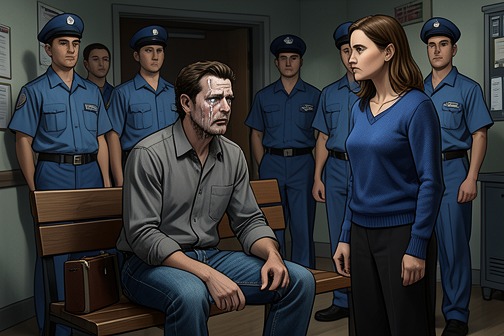
[Kelvin Tilfer](entity:character-recall-character-kelvin-tilfer-be80e7d30266)’s warning about the hunt emerges when Wendy Tynes asks him to remember his former roommates. The exchange turns a conversation into a scene of alarm: at the names of [Dan Mercer](entity:character-recall-character-dan-mercer-4a972170cf89), [Phil Turnball](entity:character-recall-character-phil-turnball-2e119cf96b38), [Steven Miciano](entity:character-recall-character-steven-miciano-14f66840f819), and [Farley Parks](entity:character-recall-character-farley-parks-ffa1221806d6), Kelvin’s laughter stops, his face crumbles, and he begins to cry. His abrupt change suggests that the roommates’ troubles are bound up with a frightening memory he cannot initially explain.
## The Warning
Kelvin first cries out, “[Scar face](entity:expression-recall-expression-scar-face-221e5bf00c66)!” and says, “I told them! I warned them!” As orderlies move in and restrain him, Wendy stays close and asks what he had warned them about. Kelvin repeats that he had warned them, then gives the warning itself: “Not to hunt.” He adds, “We should have never gone hunting,” and again invokes Scar face as someone who could explain why. The medication takes effect as he speaks, leaving the warning unresolved: the scene identifies a hunt and Kelvin’s earlier attempt to stop it, but does not yet explain what the hunt involved or who Scar face was.
## The Breakdown and Its Witnesses
Kelvin’s warning becomes more urgent as he loses control of the room. When he cries “Scar face!” and repeats that he had warned them, his brother Ronald tries to reach him, but Kelvin’s scream stops him. Ronald tells Wendy to leave his brother alone; Kelvin, with his eyes shut and his hands pressed against his head, insists that he had warned them. When two orderlies arrive, he screams “[Stop the hunt](entity:expression-recall-expression-stop-the-hunt-fd971d845fd5)! Stop the hunt!” and drops to the floor, scrambling on all fours. The orderlies tackle him and try to restrain him while Ronald, tearful, begs them not to hurt him. Wendy ignores an orderly’s command to get away and crawls closer, continuing to ask what Kelvin meant. After a third orderly injects him in the shoulder, Kelvin looks directly at Wendy and, suddenly calm, says they should not hunt anymore. As the drug takes effect, he softens the warning into regret: they should never have gone hunting, and Scar face could tell her why. The shift from a chaotic struggle to this brief, lucid insistence gives the warning force without making its meaning clear; Kelvin identifies a past hunt and an unheeded danger, but the scene leaves the identity of Scar face and the hunt’s consequences unexplained.
## The Warning as a Narrative Clue
The scene’s language moves from a cryptic name to an urgent command and finally to collective regret: “Scar face!” gives way to “Stop the hunt!” and then to “We should have never gone hunting.” That progression makes the warning more legible without resolving its cause. Kelvin first describes himself as someone who warned “them,” then includes himself in the group that went hunting; the shift suggests his own connection to the episode, but does not establish what role he played. The hunt thus enters the story as a shared past whose danger Kelvin remembers and whose decisive details remain withheld.
## From Banter to Warning
Immediately before the recollection breaks through, Kelvin turns the word “Roommates” into a joke about mating with a room, laughing at his own pun; Wendy privately considers it preferable to his earlier digression about Himmler’s fish preferences. The comic register sharpens the turn when her question about his old roommates brings the laughter to an abrupt stop. What follows is not a composed account but a sequence of fragments, each more urgent than the last. The contrast marks the warning as something Kelvin can repeat with conviction but cannot yet explain: his distress makes the memory impossible to dismiss, while the missing details leave its meaning open.
Event 12
Princeton scavenger-hunt night and Krista's injury
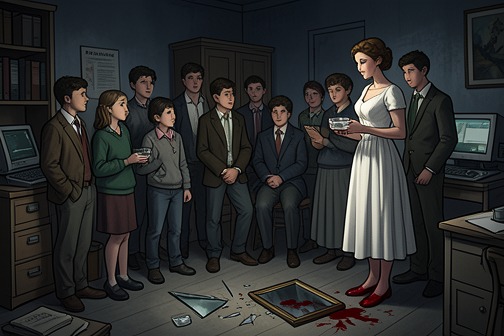
The [Princeton](entity:location-recall-location-07a2c673578e) scavenger-hunt night and Christa’s injury began as a student prank but became a lasting source of injury, blame, and concealed responsibility. [Phil Turnball](entity:character-recall-character-phil-turnball-2e119cf96b38)’s later account revealed that [Dan Mercer](entity:character-recall-character-dan-mercer-4a972170cf89), not Phil, had thrown the ashtray that led to [Christa Stockwell](entity:character-recall-character-christa-stockwell-f3a3abb344e3)’s injury—and that Mercer had allowed Phil to bear the consequences for years.
## Background and Circumstances
The students were inside the dean’s house as part of a Princeton scavenger hunt. One prize was the dean’s boxer shorts, worth sixty points. Phil hid behind a bed when Christa entered the room. When she reached for the light switch, he threw a large glass ashtray to distract her and create a chance to escape; it struck an antique mirror, which shattered and injured her. Phil later described the incident as an accident during an attempted escape, not an effort to hurt Christa.
## Immediate Aftermath
Campus police heard Christa scream and caught Phil in the dean’s front yard. Her blood was on his shoes, and the scavenger hunt had involved other students, but Phil said he had been alone; his friends supported that version. Christa was unable to contest their account at the time and questioned what she herself could reliably know.
Christa remained in the hospital for three months, undergoing repeated surgeries. She lost one eye, and damage to the other left her legally blind, with limited vision and difficulty in bright light. The lasting consequences of the prank therefore extended far beyond the night itself, while the question of who had caused her injury remained obscured by the students’ shared silence.
## The Concealed Role of Dan Mercer
Years later, Phil Turnball told Wendy Tynes that Dan Mercer had thrown the ashtray. Phil had hidden behind the bed, while [Farley Parks](entity:character-recall-character-farley-parks-ffa1221806d6), [Steven Miciano](entity:character-recall-character-steven-miciano-14f66840f819), and [Kelvin Tilfer](entity:character-recall-character-kelvin-tilfer-be80e7d30266) were already slipping out of the house. Dan’s throw was meant to distract Christa Stockwell and give Phil time to escape; the ashtray struck the antique mirror, causing the injury that had been attributed to Phil. Dan later concealed his role, telling Phil that he had been frightened as a poor student on scholarship and believed disclosure would ruin him without helping Christa.
Phil said he had not known the truth at the time. He believed the other students, including Dan, assumed Christa’s family had enough money and connections to pay for her injuries, so they left Phil to take the blame. The revelation recast the incident from a prank followed by a straightforward accusation into a chain of silence and misplaced responsibility: Phil was caught at the scene, but Dan’s concealed action helped shape the account that endured. For Phil, learning years later that Dan had let him bear the consequences made Dan, in his view, the most culpable of the students.
## Retrospective Significance
The incident’s meaning changes as its account is pieced together: what Christa Stockwell remembered as a freak accident during a prank was later explained by Phil Turnball as an attempted escape, then further revised when Wendy Tynes learned that Dan Mercer had thrown the ashtray. These disclosures distinguish intent from responsibility without dissolving either: Phil said he had panicked and never meant to hurt Christa, while Dan’s effort to help him escape was followed by years of silence that left Phil carrying the blame. The scavenger hunt’s sixty-point prize had made the students’ intrusion seem like a game; the concealed truth turned that night into a lasting conflict over who acted, who knew, and who was left to answer for the consequences.
Event 13
Phil Turnbull's revenge plot
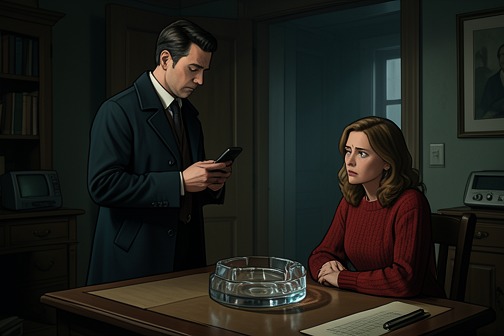
[Phil Turnbull's revenge plot](entity:event-recall-event-1953b8f9d895) is a campaign of fabricated exposure that grows out of [Phil Turnball](entity:character-recall-character-phil-turnball-2e119cf96b38)’s conviction that he alone paid for a disastrous [Princeton](entity:location-recall-location-07a2c673578e) scavenger hunt. After losing his job, his family’s support, and the trust of those closest to him, he targets former roommates who have prospered, staging scandals and manipulating Wendy Tynes into helping expose [Dan Mercer](entity:character-recall-character-dan-mercer-4a972170cf89). His confession reveals both the mechanics of the schemes and the contradiction at their center: he calls them revenge, yet insists that some targets were guilty of other wrongdoing.
## Background and Grievance
Phil traces his collapse to the scavenger hunt and the injury to [Christa Stockwell](entity:character-recall-character-christa-stockwell-f3a3abb344e3). He says another participant threw the ashtray that shattered the mirror, but the others present denied responsibility. Phil had taken the blame, he explains, and believed that if all five men had come forward, the school might have treated them more leniently and shared the consequences among them. Instead, in his account, he was left to bear the punishment alone.
The consequences extended beyond Princeton. When Phil’s parents learned he had been fired, they disowned him; his wife, [Sherry Turnball](entity:character-recall-character-sherry-turnball-dffd2589c2fb), and his children began looking at him differently. He describes himself as lost and at rock bottom. His old roommates, [Farley Parks](entity:character-recall-character-farley-parks-ffa1221806d6) and Steve Miciano, expressed gratitude for his having taken the fall but said they could do nothing to change what had happened. Seeing them successful while he felt abandoned sharpened his grievance into a plan to bring them down.
Wendy recognizes that Phil’s social position complicates his sense of exclusion. He could resent his wealthy family and see himself as aligned with his struggling friends, but, as Wendy understands it, neither side fully accepted him as belonging to it. That divide gives the revenge plot a personal history beyond the immediate dispute: Phil sees himself as the person who absorbed the cost while others moved on, yet his family’s wealth remains an explanation his former friends can point to rather than a resource that restores his place among them.
## Fabricated Scandals and the Dan Mercer Sting
Phil says he learned about viral marketing through the Fathers Club. Wendy realizes that the online attacks against his former roommates did not treat all their secrets alike. Farley and Steve had been smeared, and Dan already had damaging material circulating online, but Phil’s own embezzlement was absent. He had told the Fathers Club he was laid off; Wendy learned from her friend Win that Phil had actually been fired for stealing two million dollars. Once he knew Wendy was investigating Princeton, he also got ahead of the story by telling the men he had been expelled.
The schemes depended on impersonation, planted evidence, and staged encounters. Phil hired a woman to play two roles: Chynna, presented as Dan’s teenage contact, and a prostitute associated with Farley. For Steve, Phil says, the method was to plant drugs in his trunk and direct police to search it. These admissions expose the apparent scandals as coordinated setups rather than independent discoveries.
To frame Dan, Phil wrote the initial email under the name Ashlee, a thirteen-year-old in the SocialTeen chat room, then posed as Dan in the same room. During a visit to Dan’s home, he hid photographs and a laptop there. Wendy, believing she was pursuing Dan, arranged a time and place for him to appear; Phil’s hired accomplice separately asked Dan to meet at that same time and place. Dan arrived while Wendy’s cameras were recording. Phil thus used Wendy’s sting as the public mechanism of his own deception: she believed she was exposing Dan, while he had arranged the evidence and the encounter that made the exposure possible.
## Wendy as Target and Instrument
Phil says that seeing Wendy’s television show gave him the idea to use her against someone. He describes choosing her as a way to get back at a person, and later acknowledges that he used her. The scheme exploited her professional role and the force of a filmed confrontation, turning her reporting into a tool she did not know Phil had designed.
The harm to Wendy was not limited to the Dan operation. Phil admits that he started rumors about her, says he went too far, and apologizes for involving her. He claims that he has come to make it up to her. His repeated emphasis on being there for Wendy frustrates her, because the personal apology sits beside a broader pattern in which he has manipulated people and damaged reputations. His remorse does not undo the fact that he deliberately made her part of the plot.
## [Revenge](entity:concept-recall-concept-revenge-fb37b408b68e), Exposure, and the Limits of His Justification
When Wendy asks whether Phil acted simply to take his former roommates down a peg, he rejects that as the whole explanation. He argues that Farley really did sleep with prostitutes and was a womanizer, and that Steve used his position as a doctor to sell and dispense prescription drugs illegally. Phil says the police knew about Steve’s conduct but could not make a case against him. He therefore distinguishes, in his own account, between inventing the evidence used to expose his targets and revealing misconduct he believes was real.
That distinction does not resolve the ethical problem the confession lays bare. Phil’s methods include a planted drug accusation, a fabricated online identity, hidden material in Dan’s home, and the deliberate use of Wendy’s cameras. His claim that he exposed wrongdoing competes with the evidence that he manufactured circumstances designed to produce public suspicion. The plot’s central reversal is that the man presenting himself as the lone victim of an unfair reckoning has created new, private reckonings of his own. His grievance explains why he acted; it does not make the staged evidence reliable or the damage to Wendy and Dan incidental.
Event 14
Haley McWaid's death and the Wellers' cover-up
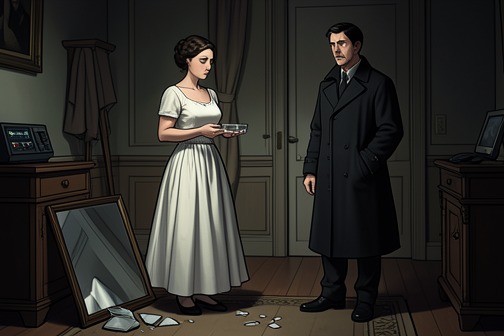
[Haley McWaid](entity:character-recall-character-haley-mcwaid-44180e5e980f)’s death and the Wellers’ cover-up are the hidden events behind her disappearance: after Haley died at a party in the home of Noel and [Jenna Wheeler](entity:character-recall-character-jenna-wheeler-c49085a00d36), the couple concealed what had happened instead of contacting the authorities. Jenna later recounts the death to Wendy Tynes as an accident followed by panic, but the account also makes clear that the concealment prolonged the uncertainty endured by Haley’s parents, [Marcia McWaid](entity:character-recall-character-marcia-mcwaid-f528f8cf33a3) and [Ted McWaid](entity:character-recall-character-ted-mcwaid-39cdecd008e0).
## Background and the party
Jenna explains that she and Noel hosted the party because their daughter, [Amanda Wheeler](entity:character-recall-character-amanda-wheeler-1d2b3f1df6d4), was unhappy and socially isolated. [Amanda](entity:character-recall-character-amanda-f7c90eb37305) was often picked on, rarely invited to parties, and frequently cried alone in her room. Jenna says that she and Noel did not know how to help her. She mentions that Amanda’s difficulties worsened after Jenna defended [Dan Mercer](entity:character-recall-character-dan-mercer-4a972170cf89), while acknowledging that this may not have been a major factor in Amanda’s isolation.
The parents’ decision was also a response to what they understood as a broader safety problem. According to Jenna, seniors had been driving to the Bronx to drink at a club that served underage teenagers, then driving home. Noel and Jenna thought a party in their own house would be safer: they planned to remain upstairs and left beer available to the teenagers. This was a deliberate choice to host drinking, not an event that took place without the parents’ knowledge.
That rationale echoes an earlier scene at a school event Wendy attended as [Charlie Tynes](entity:character-recall-character-charlie-tynes-11c7d7b390b7)’s mother. The event included a campaign against parents hosting drinking parties, as well as pledges in which teenagers promised not to drive drunk or ride with an intoxicated driver, while parents promised to collect them at any hour. A father beside Wendy dismissed such precautions as overprotective. When Jenna later describes the party as a safer alternative to teenagers driving back from the Bronx, Wendy recalls that exchange. The contrast places the Wellers’ plan inside a familiar argument about parental protection, while showing how their chosen safeguard failed to address the danger of alcohol itself.
## Haley’s death
Haley was among the small number of teenagers who came to the house. Jenna says Haley did not particularly like Amanda and had only visited once before; in Jenna’s view, Haley may mainly have wanted access to alcohol. Haley was also upset about not getting into Haley’s preferred [University of Virginia](entity:organization-recall-organization-university-of-vi-c27427f28ad2) and had a serious argument with [Kirby Sennett](entity:character-recall-character-kirby-sennett-090c664cd617), who left the party early.
Jenna tells Wendy that Haley drank an entire unopened bottle of whiskey and died from alcohol overdose. Amanda believed Haley had merely passed out. Jenna describes Haley as small, but the account does not establish exactly when the others understood that she was in immediate danger or how long it took them to recognize that she had died. What Jenna does say is that Noel, a doctor, tried to revive her, including by performing CPR, but was unable to do so. The couple did not call emergency services.
## Concealment and its rationale
After Haley’s death, Jenna says, she and Noel panicked. They put Haley’s body in the trunk of their car. Their first idea, as she recounts it, was to take her to a city such as Irvington and leave her somewhere she would be found quickly. They abandoned that plan when they realized that an autopsy could identify alcohol poisoning and lead investigators back to their home. They then decided to hide her body. Jenna acknowledges that Haley’s parents would be left not knowing what had happened, but says she could not see another way forward.
Jenna presents fear of prosecution and the ruin of the family’s lives as the reason for the concealment. She argues that Haley was already dead and that calling the police would not bring her back; she also emphasizes that the teenagers had not been forced to drink. Wendy answers that the consequences for the Wellers would have been preferable to Haley’s death. Their exchange exposes the difference between explaining the couple’s fear and excusing their actions: their choice protected them from immediate scrutiny at the cost of withholding the truth from Haley’s family and obstructing the response to her death.
## The disappearance and its consequences
The secrecy initially left a vacuum in which Haley’s absence could be misread. At home, Marcia had trusted her responsible senior daughter enough not to impose a curfew. One night, when Marcia began a load of laundry, she found that Haley’s clothes were not in the hamper, although Haley ordinarily put them there every night. Haley’s toothbrush, sink, and shower were all dry. These small absences suggested that Haley had not returned home at all, rather than simply forgotten her routine.
Marcia and Ted checked Haley’s swim practice, contacted her friends, and called the police. No one knew where she was, and the local police initially treated her as a runaway, despite her parents’ objections. The FBI joined the search forty-eight hours later; after a week, there was still no sign of her. A month passed, then two, before news came during the third month. Jenna’s later confession supplies the concealed cause of the disappearance that the family and investigators had been trying to understand. The contrast between Marcia’s increasingly urgent search and the Wellers’ hidden knowledge gives the cover-up its lasting human consequence: the family’s uncertainty was not simply the result of having no answers, but of another household’s decision to keep them secret.
## Significance of the disclosure
Jenna tells Wendy about the death in the backyard, after leading her outside and asking her to understand as a mother. The scene connects the private confession to the earlier public debate Wendy witnessed about parents, drinking, and safety. Jenna’s account is essential evidence, but it is also her explanation of her own choices: she stresses the accident, the family’s fear, and the fact that Haley could not be brought back. Wendy’s responses keep the consequences in view, especially the difference between a death that cannot be reversed and a concealment that remains a choice.
The event therefore changes the meaning of Haley’s disappearance. What had looked to the local police like a teenager temporarily leaving home was, in reality, the aftermath of a death concealed by adults who had hosted the party. The sequence also reveals the limits of the Wellers’ safety reasoning: moving drinking away from the road did not make the gathering safe, and once the danger became real, their attempt to protect their family compounded the harm to Haley’s parents.
Event 15
Jenna Weller frames Dan Mercer
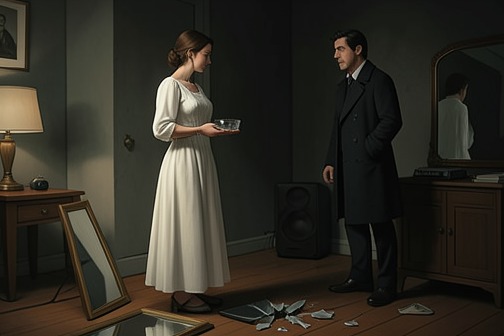
[Jenna Weller frames Dan Mercer](entity:event-recall-event-025260ef7f16) by turning his presumed death into cover for the truth about [Haley McWaid](entity:character-recall-character-haley-mcwaid-44180e5e980f). In Wendy Tynes’s confrontation with her, the case against Dan is recast not as a discovery of his guilt but as a deliberate use of his reputation and absence: a dead man could be blamed without being able to answer. The revelation also joins two previously separate mysteries—the circumstances of Haley’s death and the way evidence came to point toward Dan—to Jenna’s account of an accidental death and her stated wish to spare Haley’s parents the anguish of not knowing.
## Background: A disappearance and a growing search
The consequences of the framing become clearer against the McWaid family’s search for Haley. [Marcia McWaid](entity:character-recall-character-marcia-mcwaid-f528f8cf33a3) knew her daughter as responsible and unusually conscientious: Haley put her clothes in the hamper each night, so its emptiness was an alarming departure from habit. The bathroom offered the same unsettling absence of ordinary use; the toothbrush, sink, and shower were dry. Marcia’s sense of danger grew as the family learned that Haley had not attended captain’s practice, friends could not account for her, and the local police initially treated her as a runaway rather than a missing person in need of an urgent search.
[Ted McWaid](entity:character-recall-character-ted-mcwaid-39cdecd008e0) and Marcia contacted Haley’s friends, and Ted sent an email to a wider circle. The [Federal Bureau of Investigation](entity:organization-recall-organization-federal-bureau-o-f1c5664278d2) became involved after forty-eight hours, but a week passed without a sign of Haley. The uncertainty continued through the first and second months. By the third month, news finally came, bringing an end to the state of not knowing that had weighed on Marcia. That prolonged search matters to Jenna’s later explanation: she points not only to what happened to Haley, but to the suffering caused by the absence of an answer.
## The party and Haley’s death
Jenna describes the circumstances that preceded the disappearance as a decision made by her and [Noel Wheeler](entity:character-recall-character-noel-wheeler-fc3ec400559c). She says that seniors had been driving to the Bronx to drink at a club that served underage patrons, then driving home. She and Noel decided to host a party at their house instead. Their plan, as Jenna recounts it, was to remain upstairs and leave beer available, reasoning that drinking would happen anyway and could be moved into what they considered a safer setting. The account frames the gathering as an attempted intervention in a risky pattern, while also exposing the limits of the adults’ chosen supervision: they made alcohol accessible and stayed apart from the teenagers below.
Jenna says Haley drank an entire unopened bottle of whiskey that she found in a cabinet. Haley was small, and [Amanda](entity:character-recall-character-amanda-f7c90eb37305) thought she had merely passed out. Wendy asks whether anyone called emergency services. Jenna says Noel, a doctor, tried to revive Haley, but that it was too late. The detail that no emergency call was made is central to the gap between the party’s stated purpose—keeping teenagers safer—and the response after Haley was found unresponsive. Jenna presents the death as an accident, not a killing, while acknowledging that the adults’ actions afterward shaped the investigation and the family’s long wait for the truth.
## Why Dan became the target
Wendy confronts Jenna with the phone records: Dan’s only calls had been to Jenna and his lawyer, [Flair Hickory](entity:character-recall-character-flair-hickory-b9f066d00b7c). Wendy reasons that Jenna was the person Dan trusted and that she knew where he was. She also still had [Haley McWaid’s iPhone](entity:object-recall-object-haley-mcwaid-s-iphone-81140a665663). In Wendy’s interpretation, these circumstances gave Jenna the opportunity to direct suspicion toward a man who had already been declared dead. Jenna does not dispute the logic by offering a different account of the phone evidence; she says Dan could not be hurt any further. Her response makes the framing’s rationale legible without establishing every practical step by which evidence was placed or presented.
The device’s location history provides another link. Wendy points out that [Ringwood State Park](entity:location-recall-location-ringwood-state-park-334f3e84c393) had been entered into Google Earth on Haley McWaid’s iPhone. If Dan had killed Haley and buried her there, Wendy argues, Haley would have had no reason to search for the park herself. Wendy draws the opposite inference: whoever wanted the location known wanted Haley’s body found. Jenna corrects the description of the death, insisting that it was an accident. When Wendy asks why the park was entered, Jenna says she had seen Ted McWaid and Marcia McWaid suffering through the uncertainty and wanted them to have some measure of peace and their daughter to receive a proper burial. The search history therefore works in two directions: it initially raises suspicion about Dan, but, read alongside Jenna’s admission, it points toward someone who knew where Haley was and wanted the body discovered.
## Exposure and significance
Jenna tries to reduce the confrontation to a contest of credibility, telling Wendy that the matter would be her word against Jenna’s. Wendy reveals that the conversation has been recorded: she is wearing a wire. [Frank Tremont](entity:character-recall-character-frank-tremont-3c1fa31f1767) and two other detectives arrive at the gate, transforming Jenna’s attempted private explanation into material that can be heard and acted upon by the police. The scene ends with Jenna caught, though the evidence presented here does not detail the subsequent legal outcome.
The framing depends on Dan’s inability to defend himself and on the force of a public accusation that had already made him an available suspect. But the clues Wendy sets out—the limited phone contacts, Jenna’s access to Haley McWaid’s iPhone, and the search for Ringwood State Park—redirect attention from the presumed culprit to the person who could explain the evidence. Jenna’s stated compassion for the McWaids complicates the motive without undoing the deception: wanting Haley’s parents to find her does not make it truthful to let Dan bear blame. The reversal turns the phone from an apparent link to Dan into a record of the concealed truth, and turns Jenna’s appeal for understanding into the moment her account is documented.
Event 16
Arthur Lehman shooting
[Arthur Lehman shooting](entity:event-recall-event-d6bb945bc976) is the attack on Arthur Lemaine that Wendy Tynes connects to [Ed Grayson](entity:character-recall-character-ed-grayson-9335d9565c07)’s discovery that Lemaine had victimized Grayson’s son, [E. J.](entity:character-recall-character-e-j-2d72fe5cb0f1) The shooting exposes a family secret and complicates the apparent logic of Grayson’s earlier violence: Wendy believes he acted against Lemaine after recognizing that [Dan Mercer](entity:character-recall-character-dan-mercer-4a972170cf89) was innocent, but also stopped short of killing his brother-in-law.
## Background and Discovery
Arthur Lemaine was Grayson’s brother-in-law and had coached the hockey team of his nephew, E. J. Wendy identifies E. J. as the victim of child pornography, making the family relationship central to her account of the attack. Lemaine’s place within Grayson’s family also creates a conflict between seeking justice for E. J. and protecting him from the consequences of publicly accusing a relative.
The shooting is first pieced together through circumstantial details. Wendy notes that Lemaine had been shot in the knees from a distance, and that the owner of [Gun-O-Rama](entity:location-recall-location-gun-o-rama-4815dc2ac6c2) had described Grayson as an expert marksman. Those details point toward Grayson, but at this stage Wendy presents a reconstruction rather than a witnessed account. She reasons that after Dan Mercer was freed, Grayson killed him and concealed the evidence; when he returned home, his wife, Maggie, told him that Lemaine—not Mercer—had taken the pictures of E. J. The shooting of Lemaine follows in Wendy’s account as a different response to that revelation.
## Motive and Aftermath
Wendy’s reconstruction links the attack to the truth about E. J. and to Ed Grayson’s remorse over killing Dan Mercer. She imagines Maggie telling Ed that Arthur Lemaine, her brother, had taken the pictures of E. J. and that Ed had killed the wrong man. In Wendy’s account, Ed then faced a second choice: Lemaine might escape justice, but exposing him could force the family through another public scandal. She believes Ed attacked rather than killed him because, after Mercer’s death, he could not bring himself to kill again.
Ed later confirms the crucial family disclosure. Maggie saw him covered in blood, told him that Lemaine was responsible, and pleaded with him to stop; she also said that E. J. was moving past what had happened and that her brother was getting help. Ed says he would not let the matter go, but he also did not want E. J. to testify against his own uncle. The account frames the shooting as an act of retaliation constrained by family ties and concern for E. J., not as a route to public prosecution.
When Wendy suggests that Ed may have contacted Dan to apologize, Ed does not answer. The silence leaves that possible act unresolved, while sharpening the contrast between the two episodes: Grayson had pursued Mercer publicly and then killed an innocent man, but his response to Lemaine stopped short of another killing. The shooting thus reveals both the persistence of his vigilante impulse and the limit he claims to have set after recognizing the consequences of his earlier mistake.
## The Evidence and Its Limits
Wendy’s exchange with [Mickey Walker](entity:character-recall-character-mickey-walker-66247ae85eb2) separates the established family facts from her inference about the shooter: Arthur Lemaine was a convicted child pornographer, Ed Grayson’s brother-in-law, and the coach of Ed’s son E. J.’s hockey team. Walker’s successive expressions of surprise register how sharply those facts change the meaning of the case. The shooting itself adds a further clue: Lemaine was hit from a distance, while the owner of Gun-O-Rama had identified Grayson as an expert marksman. Together, these details make Grayson the implied shooter, but Wendy presents them as circumstantial support for her reconstruction, not as a witnessed account.
## Accountability and the Unresolved Outcome
The shooting does not resolve the harm done to E. J. or establish a public reckoning with Lemaine. Ed’s account makes clear that he rejected both letting the matter go and requiring his son to testify against a family member; Maggie’s report that her brother was getting help further complicates any simple division between punishment and protection. The evidence identifies Grayson as the implied shooter, but does not establish a prosecution of Lemaine or describe what followed for him. That gap matters: the attack may have interrupted Grayson’s own pattern of lethal retaliation, yet it left accountability outside a process that the story shows no one carrying through to its conclusion.
Event 17
Phil Turnbull's suicide at Wendy's home
[Phil Turnball](entity:character-recall-character-phil-turnball-2e119cf96b38)’s suicide at Wendy Tynes’s home ends his effort to explain what he knows about [Dan Mercer](entity:character-recall-character-dan-mercer-4a972170cf89) and [Haley McWaid](entity:character-recall-character-haley-mcwaid-44180e5e980f). His final disclosure changes Wendy’s understanding of the iPhone evidence and of her own role in Dan’s exposure; his death turns that attempted explanation into an irreversible farewell.
## The Crisis Behind the Encounter
The stakes of Phil’s disclosure reach back to Haley’s disappearance. [Marcia McWaid](entity:character-recall-character-marcia-mcwaid-f528f8cf33a3) knew her daughter as responsible and meticulously dutiful: Haley put her clothes in the hamper every night. When Marcia went to do laundry and found it empty, then checked Haley’s bathroom and found the toothbrush, sink, and shower dry, ordinary absences began to look like evidence that something was wrong. The signs mattered because they broke a reliable routine, not because they explained where Haley had gone.
Marcia and [Ted McWaid](entity:character-recall-character-ted-mcwaid-39cdecd008e0) learned that Haley had not attended captain’s practice. Calls to her friends and an email sent by Ted produced no answer about her whereabouts. Local police initially treated her as a runaway, despite her parents’ objections; the FBI joined the search forty-eight hours later, and a week passed without a sign of her. By the third month, news finally came, though the account of Phil’s encounter does not specify what Marcia learned then. The extended uncertainty gives weight to Wendy’s fear that the case against Dan had rested on a false interpretation of the phone.
## Phil’s Disclosure
In the exchange immediately before the suicide, Phil answers Wendy’s question about why he would set Dan up for murder with a whispered denial: “I didn’t.” Wendy tests the claim against what she knows. Phil could not have planted the iPhone in Dan’s room, she realizes, because he did not know where Dan was. Her reasoning brings her to a conclusion she had resisted: “It couldn’t have been you.” The scene turns not on new physical evidence being produced, but on Wendy fitting Phil’s denial to the circumstances of the phone’s discovery.
Phil confirms her conclusion and explains why he came to see her. He says he came for Wendy, not for himself, and calls the truth his “final gift” to her. The gift is a specific correction to her guilt: if Phil did not plant the phone, and the phone was in Dan’s room, Phil says there is only one explanation—Dan had possessed it the whole time. The disclosure does not make Wendy’s earlier actions disappear. Instead, it changes what she understands them to have accomplished: she had feared helping to ruin an innocent man, but Phil tells her that this fear is misplaced.
## The Suicide
After telling Wendy that she now knows everything and is free, Phil apologizes for what he has done to her. His words are both explanation and leave-taking; he does not ask Wendy to answer or offer a way to repair the harm. He turns instead to [Sherry Turnball](entity:character-recall-character-sherry-turnball-dffd2589c2fb), asking Wendy to tell her he is sorry. The request brings his attention beyond the room, to the person who will remain after his death, while making Wendy the bearer of one last message.
Phil lifts his gun, closes his eyes, and looks almost peaceful. Wendy raises her hands, shouts for him to stop, and starts toward him, but she is too far away. He places the muzzle under his chin, aims upward, and pulls the trigger. The concrete sequence makes the ending starkly immediate: Wendy understands what he is doing and tries to intervene, yet cannot reach him in time. His death cuts off any further explanation or response, leaving the truth he has just disclosed—and his apology—to stand without the possibility of follow-up.
## Aftermath and the Wider Case
The disclosure shifts the meaning of the iPhone without resolving every part of Haley’s death. In a later account, [Jenna Wheeler](entity:character-recall-character-jenna-wheeler-c49085a00d36) explains that she and [Noel Wheeler](entity:character-recall-character-noel-wheeler-fc3ec400559c) hosted a gathering because seniors had been driving to the Bronx to drink and then driving home. They left beer available at the house, believing they could make the situation safer. Jenna says Haley drank an entire unopened bottle of whiskey, that [Amanda](entity:character-recall-character-amanda-f7c90eb37305) thought Haley had passed out, and that Noel tried to revive her after she was already dead. Jenna also admits they did not call emergency services. This later account identifies a hidden chain of events behind Haley’s death that Phil’s words about Dan and the phone do not themselves supply.
The school’s public safety messaging makes the contrast sharper. At a parent event, a campaign called [“Not in Our House”](entity:expression-recall-expression-not-in-our-house-490d8b71bc3c) opposed parents hosting drinking parties, and pledge contracts promised that teens could call for a ride rather than drive drunk or ride with someone who had been drinking. Jenna’s account describes a household making the opposite practical choice—hosting alcohol in hopes of reducing the danger elsewhere—and the fatal result. Read alongside Phil’s death, these revelations expose two different consequences of concealed judgment: Wendy’s fear that she helped condemn Dan, and the Wellers’ decision to manage an unsafe situation privately rather than summon outside help. Phil’s final act gives Wendy an answer about the phone, but it cannot undo the losses or substitute for the remaining truth to be told.
Event 18
Dan Mercer's faked death and escape to Angola
[Dan Mercer](entity:character-recall-character-dan-mercer-4a972170cf89)’s faked death and escape to Angola turn a public disappearance into a deliberately constructed refuge. [Ed Grayson](entity:character-recall-character-ed-grayson-9335d9565c07) arranged the apparent killing, leaving enough evidence to make the authorities believe Dan was dead and Wendy Tynes’s account of the shooting, while ensuring the trail did not expose Dan’s survival. In Angola, Dan begins again under the name Dan Mayer, with the truth known only to a small circle.
## The Staged Death
Wendy pieced together the deception after going to Ed’s home. She pointed out that an expert marksman had fired several rounds toward her car without leaving a mark, and that the only slug found in the park had gone through the wall—the first, conspicuous shot. The apparent failure to hit Dan or the car made more sense as a ruse than as a genuine attempt to kill.
The explanation also changed the meaning of Ed’s earlier actions. At the Wykertown trailer, Dan had been beaten, and [Hester Crimstein](entity:character-recall-character-hester-crimstein-8352225ea1f1) had used Wendy’s testimony to argue that Ed was responsible. Wendy recognized that this account was true: Ed had found Dan and beaten him in an effort to make him confess. Dan did not confess; instead, Ed began to believe that he might be innocent. That shift laid the groundwork for Ed to protect the man he had first treated as a suspect.
## Constructing the Evidence Trail
The deception depended on making Dan’s disappearance look like a murder that could be investigated, while leaving no body to identify. Wendy reasoned that Ed’s experience as a federal marshal gave him knowledge of how people could disappear, and that he needed a witness who would not willingly protect Dan. She had become that witness through the television sting and her public account of the shooting. Ed therefore left a carefully calibrated trail: one real round through the trailer wall, Dan’s blood, a witness who saw Ed carry out a carpet, Ed’s car at the scene, a GPS tracker on Wendy’s car, and his visit to the shooting range. Together, these details supported Wendy’s account; in her reconstruction, they were arranged to implicate Ed without providing enough evidence to secure his conviction.
The gun itself embodied the distinction between appearance and proof. Wendy concluded that the first shot, into the wall, was the only live round and that the later shots were blanks. She proposed that Dan had supplied blood or deliberately cut himself to account for the traces left behind. The choice of a trailer park without cell-phone service also served the plan: Wendy would have to drive away to make contact, giving Ed time to get Dan out. When Haley’s phone was found in Dan’s motel room, Ed returned to the park for information, worried that he might have helped an actual killer escape. The discovery exposed the risk in the carefully staged story, even as the absence of a body kept Dan’s survival concealed.
## Wendy’s Responsibility and the Passage to Angola
Wendy’s reconstruction of the shooting leads not to an attempt to prove her theory but to an admission of responsibility. She tells Ed that she has no recording device and does not want evidence against him. Her purpose is personal: she believes she is responsible for what happened to Dan because she set him up on television and helped make the world regard him as a pedophile. Her decision to seek Ed out therefore reverses the roles established by the sting. She had once made Dan’s public exposure her work; now she asks the man who arranged his disappearance to help her reach him, while accepting that she may never receive his forgiveness.
Ed responds by dialing a long telephone number, speaking a code, waiting for a click, and handing the phone to Wendy. The exchange provides a route to Dan without undoing the death the public believes occurred. The epilogue clarifies how that route works: Dan lives in a village in Angola’s [Cabinda Province](entity:location-recall-location-cabinda-province-65fd8524a78f), where there is no telephone service and contact is possible only by radio. Ed’s friend Terese Collins works in a nearby village, and she and Ed are the only people besides Dan who know the truth. To everyone else, Dan Mercer is dead.
Dan has taken the name Dan Mayer and teaches children to read through the [LitWorld](entity:organization-recall-organization-litworld-e37456905bc9) program in a tent that also serves as their school. The place is not wholly unfamiliar to him: after graduating from [Princeton University](entity:location-recall-location-princeton-university-e6368e89e5e4) and working for the Peace Corps, he served not far away years earlier. His new life is thus both an escape from the identity destroyed by the scandal and a return to work he recognizes. The modest name change marks a sharp break in public identity, while the hidden continuity of his service gives the new beginning a practical shape.
Dan understands this work as atonement, though he cannot reduce his calling to one cause. He considers the cruelty of his foster family, what he did to [Christa Stockwell](entity:character-recall-character-christa-stockwell-f3a3abb344e3), and his decision to let [Phil Turnball](entity:character-recall-character-phil-turnball-2e119cf96b38) take the fall alone as possible sources of the impulse. His account gathers these past failures into a motive for service rather than claiming that the new life erases them. He says he no longer misses his former life, and accepts solitude as part of the choice: he misses Jenna, Noel, and the children, but the children’s smiles keep him from feeling entirely alone.
The concealment has a cost that Dan accepts. He does not look back or seek news online, and says he is not tempted to check what is happening at home. He remains aware that Jenna is the person who will truly mourn him, and is tempted to tell her the truth, but the epilogue leaves that disclosure unresolved. His survival is therefore not a restoration of his old place in the world. It is a life sustained by a small circle of confidants, distant from the family he misses and built around service under a name that lets the world continue to believe Dan Mercer is dead.
## The Disappearance Behind the Concealment
The chain of events that made Dan’s later survival so precarious began with [Haley McWaid](entity:character-recall-character-haley-mcwaid-44180e5e980f)’s disappearance. Haley was a responsible high-school senior who had never needed a curfew, and [Marcia McWaid](entity:character-recall-character-marcia-mcwaid-f528f8cf33a3) had gone to bed at ten the night before. When Marcia decided to do laundry, she found Haley’s clothes were not in the hamper, as they ordinarily would have been. Haley’s toothbrush, sink, and shower were all dry as well. These small domestic absences turned uncertainty into alarm: Haley had not attended captain’s practice, none of her friends knew where she was, and the local police initially treated her as a runaway. The FBI became involved after forty-eight hours, but a week passed without a sign of her; a month, then two, brought no word. Only in the third month did news arrive, ending the waiting that had consumed her parents.
The later explanation places Haley’s death in the context of a party at the Wheeler home. [Jenna Wheeler](entity:character-recall-character-jenna-wheeler-c49085a00d36) told Wendy Tynes that seniors had been driving to the Bronx to drink at a club serving underage teens. Jenna and [Noel Wheeler](entity:character-recall-character-noel-wheeler-fc3ec400559c) decided to host a party instead, leaving beer for the students while they stayed upstairs, believing this would create a safer setting. At the school, parents had been offered drinking-pledge contracts under which teenagers promised not to drive drunk or ride with an impaired driver, while parents promised to pick them up at any hour. Jenna’s account shows the distance between such formal assurances and the choices made in the home: she described the party as a way to channel drinking, not prevent it.
Jenna said Haley drank an unopened bottle of whiskey and that [Amanda](entity:character-recall-character-amanda-f7c90eb37305) thought she had passed out. Noel, a doctor, tried to revive her, but it was too late; Jenna acknowledged that they did not call emergency services. The account makes the party, and the adults’ response afterward, the concealed history behind the missing-person case. It also clarifies why the discovery of Haley’s phone in Dan’s motel room unsettled Ed: the staged death depended on Dan’s apparent guilt remaining credible, while the phone raised the possibility that he had helped an actual killer escape.