
The Fragility of Care
Chanson douceThe novel traces how ordinary caregiving gestures can sustain life and intimacy, yet become dangerous when exhaustion, power, and possessiveness overwhelm them.
increasing Bearing strength in each event
 decreasing
Bearing strength in each eventdecreasingThe First Routines
Care as Repetition
Everyday attention
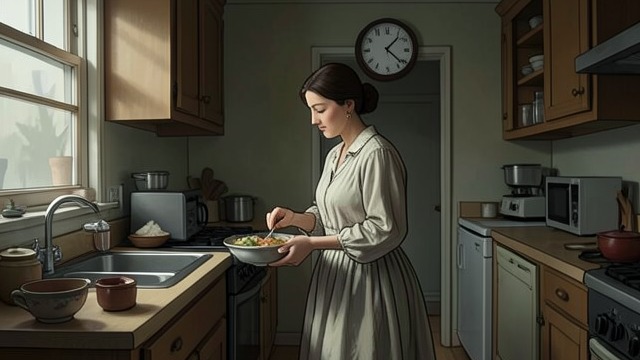
Louise tracks medicine, school, meals, sleep, and the children’s small preferences. Her careful routines make the household feel predictable.
A system held by one person
The care appears effortless to the employers because Louise remembers and performs so many tasks. The family’s stability rests on a worker whose own stability is neglected.
The Sick Child and the Missing Worker

Care Cannot Be Inexhaustible
A familiar absence
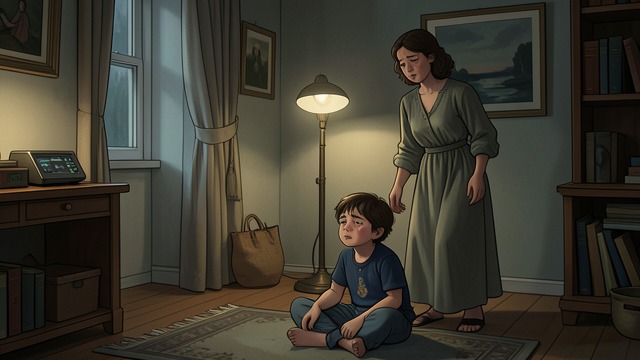
Louise cannot rise from bed while Mila is sick and Myriam has an important court appearance. Myriam first fears that Louise has abandoned them, then learns she is ill.
The body enters the arrangement
The episode briefly corrects the family’s image of Louise as perfectly reliable. The caregiver’s physical limits become visible only when the routine she sustains breaks down.
Comfort Becomes Obligation
Service Beyond the Contract
A rapid restoration
Louise returns to work and the children rush to her. The family is relieved to recover the familiar arrangement, while Louise apologizes for having failed her duty.
The unequal expectation persists
Her return restores the household but does not prompt a serious discussion of her health or workload. Caregiver devotion is again treated as the solution to everyone else’s disruption.
Affection Tightens
Protection and Possession
Increasing vigilance
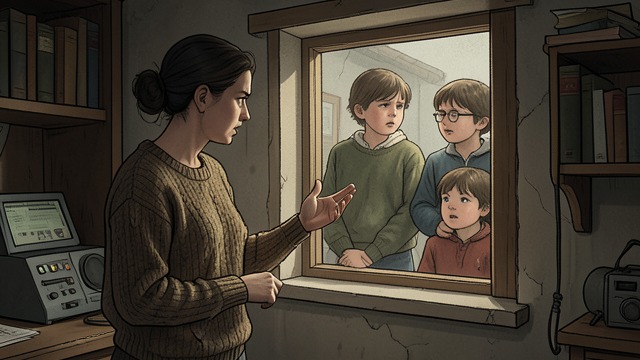
Louise watches the children closely, becomes jealous of Sylvie’s time with them, and urges Myriam to limit the grandmother’s influence. Her concern is sincere but no longer free of possessiveness.
The children as emotional shelter
Louise’s attachment offers tenderness, yet it also asks the children to stabilize her adult life. The difference between loving care and claiming ownership becomes increasingly difficult to see.
The Bath Recalled
A Familiar Gesture Reconsidered
The invitation
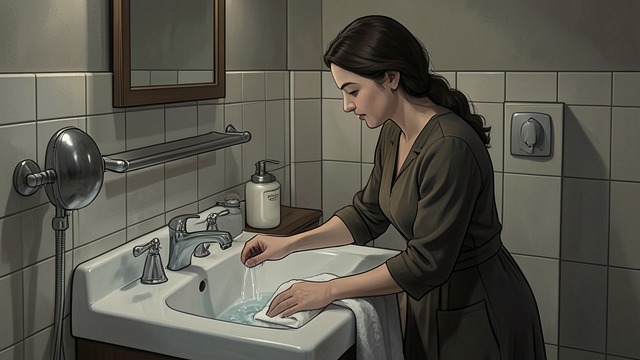
Nina Dorval prepares to repeat Louise’s bath-time routine, including checking the water and calling the children. The ordinary sequence becomes the final known shape of care before violence.
No single explanation
The reconstruction can reproduce movements but not the emotional rupture behind them. The scene leaves care’s double meaning unresolved: it can be a source of safety, dependence, and terrible vulnerability.
Louise’s first weeks in the apartment
The morning Louise is too ill to work
After Louise returns from illness
As Louise grows fearful of losing her place
At Nina Dorval’s reconstruction
