
The Children’s Photographs
Chanson douceFamily photographs preserve moments of happiness for Myriam while also revealing how images turn children and caregivers into evidence of an ideal life.
increasing Bearing strength in each event
 decreasing
Bearing strength in each eventdecreasingPhotographs as Maternal Duty
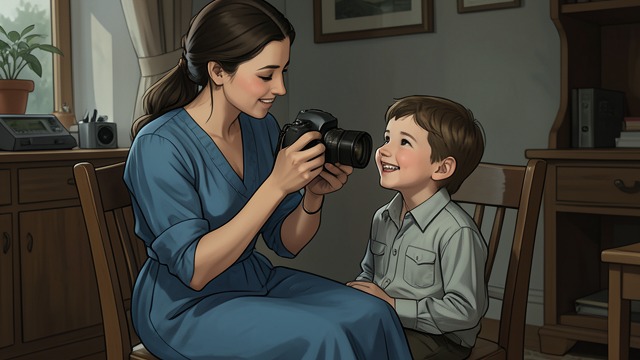
Fixing Fleeting Moments
Myriam records the children
Myriam takes photographs because she believes a mother should preserve the children’s changing faces and moments of joy. She revisits the images in lonely intervals between work and home.
Memory becomes proof
The photographs are intended to return lost sensations to the family later. Their abundance also reflects Myriam’s fear that childhood happiness passes too quickly to trust without evidence.
The Holiday Portrait

Louise Entered into the Frame
Paul takes the picture
Paul asks Louise to look toward the camera with the children while Myriam is in a ceramics shop. The light is beautiful, and the image captures a moment of shared travel.
A symbolic inclusion
Myriam later displays the photograph and tells Louise she is part of the family. The image offers recognition while concealing the employment boundary that still governs Louise’s place.
The Image in the Studio
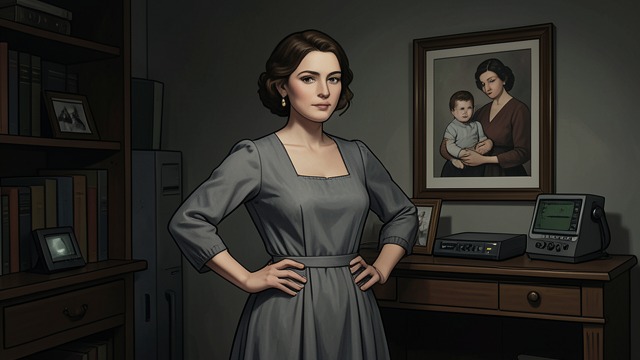
Louise Looks at Herself
A photograph on the shelf
Wafa notices the picture of Louise holding the Massé children. Louise uses it to describe a future return to the island and the life she imagines sharing with them.
A picture becomes a promise
The photograph is only a record of a past day, but Louise treats it as confirmation of an enduring family bond. Its meaning has shifted from memory to evidence of a future she expects.
Unprocessed Evidence

Images That Remain Hidden
The camera keeps recording
The novel notes that photographs from the afternoon exist somewhere inside a device but have not been developed. They show children in ordinary, apparently joyful moments.
Happiness is not knowledge
The images preserve appearances without explaining what Louise was thinking or what would follow. Their unprocessed state echoes the story’s broader inability to make a complete account from fragments.
The Missing Final Picture
A Record Without Closure
Evidence has limits
The investigators reconstruct movements from objects, witnesses, and recordings, but photographs cannot settle the motive. A captured face or gesture remains open to interpretation.
Memory after loss
For Myriam, the children’s images once promised access to happiness; after the crime, they become remnants that cannot restore the people depicted. The image preserves what it cannot return.
During the children’s early years
During the Greek vacation
During Wafa’s visit after the holiday
On the afternoon of the murders
After the crime, during the investigation
