Louise and Mila's Relationship
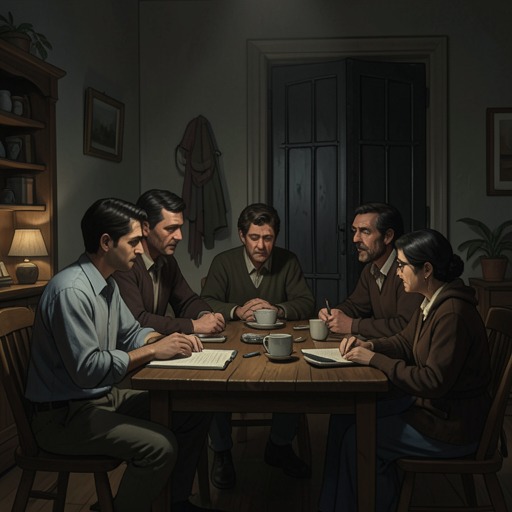
Chanson douceLouise and Mila’s relationship is a close, formative bond between a paid caregiver and the child in her charge, but its tenderness is never separable from the imbalance of power between them. Louise gradually learns how to reach a wary, volatile child through attention, ritual, and imaginative play; yet she also makes Mila experience abandonment as a game and, after losing sight of her, turns fear into a lesson in possession. Their intimacy is genuine, but it is neither equal nor consistently safe.
A difficult beginning
Mila is described as more guarded than her younger brother. She is slight, with a dancer’s bearing, and Louise tightens her hair into buns so firmly that her eyes appear drawn toward her temples. Mila meets frustration with screams, throws herself onto the pavement, and can use the embarrassment of an audience to make Louise yield. On walks she dawdles, steals a raspberry from a market stall, climbs onto shop windowsills, hides in doorways, and bolts; Louise has to run after her with the stroller. The child sometimes returns affectionate and remorseful, clinging to Louise’s legs and asking for tenderness. Their early closeness therefore already contains a chase: Mila tests the limits of care, then seeks reassurance from the person she has exhausted and frightened.
The hiring scene anticipates the unusual ease with which Louise can approach her. After Mila wakes from her nap, she hides between Paul’s legs while he carries Adam. Louise takes the baby and pretends not to notice the girl, asking where the missing princess has gone. Mila bursts into laughter, and Louise searches for the imaginary princess beneath the table and behind the sofa. Myriam later presents this as the moment her daughter chose the nanny. The performance is playful, but it also establishes Louise’s particular method: she does not force Mila to emerge; she gives her a role and invites her into a story.
Stories, routines, and trust
Louise’s patient storytelling slowly draws Mila nearer. Her tales return to orphans, lost girls, imprisoned princesses, abandoned castles, and strange, melancholy creatures. Mila listens quietly and asks for the characters to come back. These recurring stories supply the child with a shared imaginative world, while their lonely and threatened figures echo the fears that the later games will bring close to the surface. The stories are not simply a technique for calming Mila: they become a language of attachment between them, one in which the child can remain beside Louise and anticipate her return.
The relationship is also built out of daily care. Louise keeps track of the children’s schedules and appointments in a flower-covered notebook, teaches Mila to put things away, and prepares the household so that Myriam can return to calm children and a ready dinner. When Myriam tries to take a saucepan from Louise and offers to do the work herself, Louise gently pushes her back and tells her to rest and enjoy the children. As Louise assumes more duties, Myriam accepts more of this care, and Mila no longer asks when her mother will come home. Louise’s practical indispensability is therefore part of the emotional setting in which her bond with Mila deepens: she is not merely a companion in games but a daily presence holding the family’s routines together.
Play and the fear of disappearance
Louise makes Mila’s games elaborate, inventing precise geographies, costumes, and plots. In their police-and-thief game she may be the captive or the pursuer, arranging the world Mila must learn and urging her to begin again when the child tires. But Louise’s preferred game, unknown to Myriam, is a ruleless hide-and-seek. Louise vanishes without warning, hides where she can watch the children, and holds her breath. Mila cries out and claps when she realizes the game has begun; Adam laughs and repeatedly falls onto his bottom as he follows her.
The play changes when Louise refuses to answer. She stays hidden while the children shout, cry, and search. Adam becomes inconsolable, and Mila briefly believes Louise has really left them alone in the apartment. The story’s image of play thus turns sharply: the same disappearance that begins as a surprise becomes, for the children, a credible abandonment. Louise watches their distress from the dark and does not come out when Mila begs her to stop. Once Mila learns to check behind doors, curtains, beds, and cupboards, Louise finds narrower hiding places: the laundry basket, beneath Paul’s desk, the back of a closet, or the dark shower stall. The child’s growing skill at finding her does not immediately end the emotional test; Mila can still search in vain and sob while Louise remains still.
One day Mila changes the terms. Instead of crying out, she circles the laundry basket and pretends not to discover Louise. She sits on it while Louise, folded inside, feels herself suffocating. Mila quietly proposes making peace, then laughs that she knows Louise is there. Louise does not surrender the game: she springs up abruptly, knocking Mila onto the floor, where the child hits her head against the bathroom tiles. The fright gives way to hysterical laughter, and Adam joins the girls’ dance. Their reunion is joyful, but it follows a moment of physical hurt as well as fear. The scene captures the relationship’s unstable boundary between shared play and an adult’s control over a child’s distress.
The amusement-park disappearance
That boundary becomes more consequential during an outing to the amusement park. After a picnic, Louise wakes to find Adam beside her but Mila missing. Carrying Adam, she searches the rides and the area around the farm, calling and then shouting the girl’s name as passersby turn to look. She is close to collapsing when she sees Mila at the end of an avenue, eating an ice cream on a bench beside an older woman. The stranger challenges Louise for allowing the child to be alone and says she could ask for Mila’s parents’ number.
Mila slips out of the stranger’s hold and runs to Louise. Louise lifts her, kisses her cold neck, strokes her hair, and repeatedly apologizes and calls her pet names. This is not a detached performance of duty: the reunion shows how intensely Louise has reacted to losing sight of the girl. But the embrace grows so tight that Mila says she cannot breathe and tries to wriggle free. Louise keeps hold of her and, in a calm, cold voice, tells her never to wander off again. She frightens Mila with the possibility that a man could take her, hide her, and keep her from her parents, warning that no one would come even if she cried.
The threat follows a real danger, but Louise delivers it while physically restraining the child. The scene therefore refuses to treat protection as uncomplicated benevolence: Louise’s fear becomes a means of making Mila imagine the loss of every other attachment. Mila bites Louise’s shoulder until it bleeds. The bite makes the child’s resistance unmistakable and turns the embrace into a struggle, even as both have just been shaken by the separation.
A secret binding and dividing them
That evening, Louise does not tell Myriam that Mila wandered away or that she bit her. Mila also remains silent, though Louise has not warned or threatened her to keep quiet. The omission leaves each with a grievance against the other, while making their shared silence a secret neither brings to the mother. They have never felt so united as they do through this concealed episode. Yet the unity is uneasy: it rests not on a settled reconciliation but on an event in which care, fear, anger, and concealment have become inseparable.
The novel’s account of Louise and Mila is consequently not a simple story of a nanny winning a difficult child’s affection. Louise gives Mila attention, imaginative worlds, routine, and comfort; Mila responds with laughter, dependence, resistance, and, at moments, a return to tenderness. But Louise also makes Mila endure the terror of being abandoned in the apartment and later uses the terror of being taken away to enforce obedience. Their relationship shows how intimate caregiving can produce real attachment while remaining unequal—and how easily the gestures that soothe a child can become gestures that hold her too tightly.