Photographies non développées des enfants
Chanson douceThe undeveloped photographs of Mila and Adam are images from an afternoon at Thomas’s country house, but they also express Myriam’s wish to preserve family happiness against time’s changes. She takes photographs by the hundreds and returns to them in moments of melancholy; these particular images remain unprocessed, somewhere inside a machine, so the scene exists both as a recorded moment and as a memory not yet made available for viewing.
The Images from Thomas’s Country House
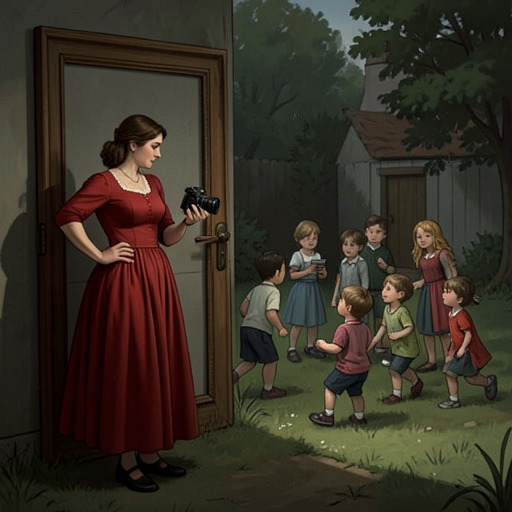
The photographs show the children in the garden. Adam lies in the grass, half-naked, looking aside with large blue eyes and an expression described as almost melancholy. In another image, Mila runs barefoot down a broad, tree-lined avenue in a white dress patterned with butterflies. The pictures preserve not posed stillness but movement: Mila is running, Adam is looking away, and the children do not appear to have been asked to hold themselves motionless for the camera.
A third photograph gathers the family together. Paul carries Adam on his shoulders and Mila in his arms, while Myriam stands behind the camera. Paul’s face is blurred, and Adam’s foot hides his smile. Myriam is laughing too; rather than interrupting the moment to make everyone stay still for a photograph, she lets it unfold. The imperfect image records a family scene precisely by failing to impose perfect photographic order on it.
Myriam’s Practice of Remembering
Myriam takes photographs in large numbers and looks through her children’s portraits in the Métro, between appointments, and sometimes during dinner. She regards preserving these moments as part of her duty as a mother: one day, she imagines, she will be able to show Mila or Adam the images and recount the memories, allowing a photograph to awaken old sensations, details, and atmosphere.
That practice answers her awareness that childhood is fleeting. Children change continually; their round faces acquire gravity before a parent notices. Myriam therefore uses the iPhone screen to look at her children and to hold on to moments that are already passing. The photographs are not merely souvenirs: in her understanding, they are evidence of a happiness that cannot remain unchanged.
The Unprocessed Pictures and the Family’s Hope
The afternoon belongs to a brief season of ease. Thomas, Paul’s friend, has invited the family to his country house, where he composes songs, keeps ponies, and drinks rosé from a carton. Away from their usual worries about childcare, education, and family holidays, Myriam and Paul can think instead about plans and happiness still to come. Myriam expects Pascal to offer her a partnership in September; Paul looks at his wife and children and believes the hardest part is over.
Against that confidence, the photographs’ undeveloped state carries a quiet tension. The images exist, but are not yet available to be seen; the reader knows their contents through the narration rather than through a completed set of prints. Myriam’s intention to preserve happiness meets the fragility of the moment she has captured: the family can keep its image, but the image cannot keep the afternoon from passing. In the novel, the photographs make memory at once tender and provisional, a record of an ordinary happiness whose permanence Myriam hopes to secure.