Wafa
Chanson douceWafa is an undocumented immigrant, a domestic worker, and Louise’s only real friend in the neighborhood. Her story links the intimacy of their friendship to the precarious conditions in which both women live: Wafa offers Louise food, conversation, and company, while Louise becomes the silent listener to a life that Wafa says will never be recorded. Later, Wafa’s account of a visit to the Massé apartment becomes one part of Captain Dorval’s reconstruction of the day of the murders.
Arrival and precarious work
Wafa tells Louise that she came to France from Casablanca with the help of an older man for whom she had given massages. He brought her to Paris, where he lived in a poor apartment and received state assistance. When his children pressed him to make her leave, he did so, though Wafa says he himself would have preferred her to stay. The account presents her arrival not as a secure beginning but as a passage through dependence on men and unstable shelter.
After leaving the older man, Wafa was taken in by another woman, who registered her on dating sites for young Muslim women without papers. One evening a man met her at a McDonald’s in the suburbs. He made advances and tried to rape her; she managed to calm him, and the encounter turned into a negotiation. Youssef agreed to marry her for twenty thousand euros, a transaction he described as a cheap price for French papers. The marriage is therefore both a practical route toward legal status and an arrangement whose price and circumstances expose her vulnerability.
Wafa finds work with a French-American couple who treat her well but are demanding. They rent her a maid’s room one hundred metres from their home, and the arrangement binds housing to employment: in exchange for paying the rent, they leave her feeling unable to refuse them. Her situation contrasts with the apparent security of her employers’ household. The job offers shelter, yet the terms make that shelter another source of dependence.
Friendship with Louise
Wafa and Louise meet through the children at the neighborhood square. Wafa sits beside Louise, offers her honey cakes, and speaks freely; Louise declines the pastries and forbids Mila to eat them, while Wafa takes the refusal without offense. Wafa’s young son, Alphonse, plays with Mila. The daily repetition matters: Wafa offers food each time they meet, and Louise refuses it each time, but the difference does not prevent their acquaintance from becoming a friendship.
Wafa talks especially about men, but she also tells Louise details of experiences that will not be entered into any official record. Louise listens without interrupting, and Wafa speaks to her as if confiding to a priest or the police. The friendship offers Wafa a listener outside her employers’ home and gives Louise a form of companionship she has difficulty believing anyone could seek from her. Their closeness is not symmetrical in temperament: Wafa is voluble, while Louise is often silent. Yet Wafa’s persistence reaches Louise where other neighborhood relationships have not.
When Wafa’s employers leave for vacation, she calls Louise several times a day simply to talk and asks to visit. Louise wonders why Wafa wants her company, but, still troubled by a nightmare, accepts. Wafa arrives at the Massé apartment carrying a large woven plastic bag. In the kitchen she takes out spices, a chicken, and one of her glass containers for honey cakes, then offers to cook. For Louise, sitting on the sofa while someone prepares a meal for her is an unfamiliar experience: she cannot remember anyone doing this for her even in childhood. Her recollection of having eaten other people’s leftovers makes Wafa’s practical kindness more than a friendly gesture; it briefly reverses the usual direction of care.
A place among domestic workers
Louise has only one friend in the neighborhood, and the other nannies initially keep their distance. She has presented herself as a strict, old-fashioned nurse, correcting children who are unsupervised or taking toys and reproaching caregivers who fail to hold a child’s hand when crossing the street. Colleagues see her as superior and overly proper. This history helps explain why Wafa’s easy talk and unembarrassed presence matter: the friendship is an exception to Louise’s isolation among the other workers.
The square gradually becomes a workplace network. Nannies encounter one another after school, in supermarkets, at the pediatrician’s office, and at the carousel; they learn where one another works and what their employers are like. They exchange job offers and accounts of disputes, and bring complaints to Lydie, the self-appointed president of this informal forum. The gathering functions at once as a recruitment bureau, a place to air grievances, and a rudimentary workers’ association. Wafa’s friendship with Louise exists within this wider world of domestic labor, where information and mutual recognition circulate even as the workers remain socially and economically vulnerable.
Wafa is notably discreet about Louise’s life, despite seeming to know her well. The other nannies wonder about the white nanny who is praised by parents for her cooking and complete availability, and ask among themselves whether her employers treat her fairly. Louise answers little. The workers recognize that reserve because they, too, carry concealed histories of humiliation, loss, and money sent to children who may no longer know their voices. The neighborhood does not erase the women’s isolation, but it gives them a shared understanding of why a person might keep silent.
Marriage and hopes for the future
Wafa’s marriage to Youssef begins as a strictly practical arrangement: they plan to register it at the town hall, and she will repay him monthly until she obtains French papers. Youssef later changes his mind and persuades his mother that they should invite friends, arguing that a celebration might reassure immigration officials. At the ceremony in Noisy-le-Sec, Louise serves as a witness for the first time. She signs the document, and the cheers and applause sound almost sincere, though the underlying bargain remains in place.
Wafa’s future also enters Louise’s imagination through the children. When Louise speaks about a possible life on a Greek island, she says she wants to stop caring for others and to sleep and eat when she pleases. Wafa suggests that Louise might meet someone there, but the exchange leaves intact the contrast between Wafa’s practical efforts to secure legal status and Louise’s fantasy of release from responsibility. Later, when Louise believes a child is going to be born into the Massé family, she tells Wafa that the baby will bring joy and extra work, adding that with three children the family will not be able to do without her. She imagines a larger life and a purer love, and prepares foods she believes may encourage fertility. Wafa is the confidante to whom Louise gives voice to a hope that also reveals how closely she ties her future to continued employment in the family.
Testimony after the murders
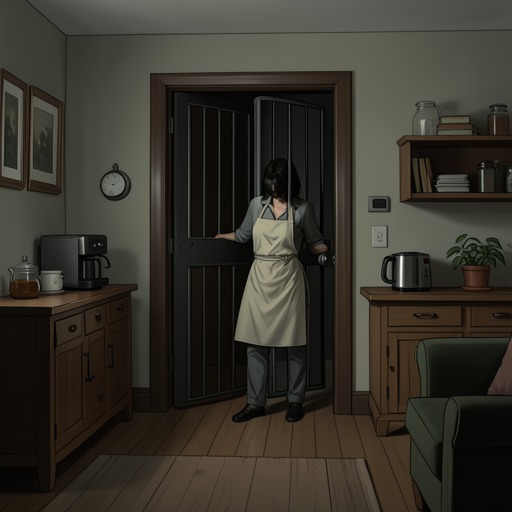
On the day of the murders, Wafa goes to the Massé apartment in the morning. Louise opens the door only partway, and Wafa senses that she is hiding something. Alphonse slips past Louise and joins Mila and Adam, who are still in their pyjamas watching television. Wafa tries to persuade Louise to take the children out for a walk because the weather is fine and they will be bored, but Louise refuses to let her in. Wafa calls for Alphonse, who is disappointed, and leaves with him.
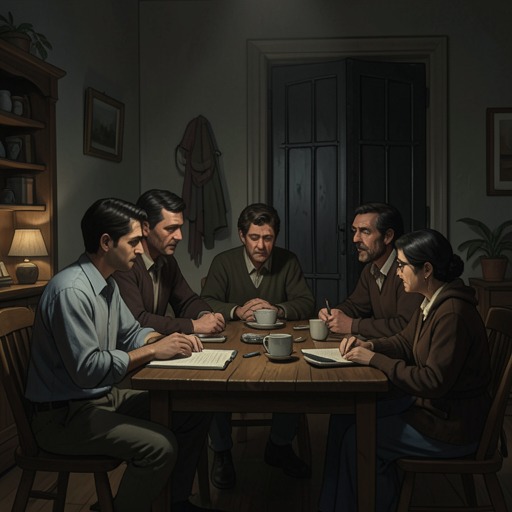
Captain Dorval later summons Wafa to police headquarters. Wafa cries and initially struggles to speak; Dorval presses her for a direct account of whether she saw Louise that day. Her evidence establishes that Louise refused the offer of a walk and did not let Wafa enter. It does not, by itself, explain what happened next: Rose Grinberg places Louise in the building later, an hour before the murder, after Wafa has left. Wafa’s testimony thus supplies a specific point in a larger investigation while preserving the limits of what she knows. Her role in the narrative moves from private confidante to witness, but she cannot resolve the gap between the morning visit and the crime.