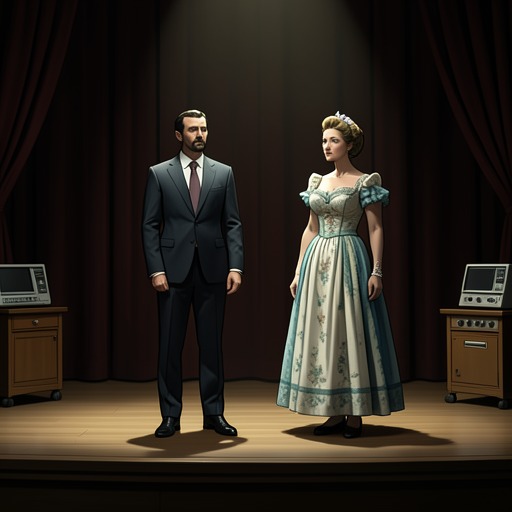
Die Widerspenstige
Cinder & Ella“Die Widerspenstige” (“The Taming of the Shrew”) begins as Brian Oliver’s comic label for the woman he is dating, but its recurrence gives the phrase a more complicated role. It is a private joke shared with Ella, a way for Brian to describe Kaylee without naming her, and a marker of the gap between the closeness of their online friendship and the meeting Ella longs for but fears. The joke can make Ella laugh; it cannot remove the conditions that keep them apart.
Origin and Use as a Private Joke
Brian introduces the allusion while trying to cheer Ella. He asks whether she has read The Taming of the Shrew; Ella says she has seen the film starring Elizabeth Taylor, and Brian describes his girlfriend as a shrew who will never be tamed. Ella laughs, comparing the woman to one of her stepsisters. Brian insists that Kaylee is worse, stretching the comic insult into a shared bit rather than a serious account of their relationship.
The joke soon becomes a recognizable label in their conversations. When Ella presses Brian to explain why he is with the woman if sex is not the whole reason, he calls Ella a spoilsport before explaining that Kaylee is effectively his boss’s daughter and is in love with him. He then tells Ella not to keep interrupting him, calling her “Madam”—another familiar term in their banter. The episode shows how the pair use playful friction to sustain an intimacy built through conversation, even as Brian is discussing a relationship Ella does not know how to challenge openly.
Kaylee’s Interruption and the Joke’s Double Meaning
The label crosses from private conversation into Brian’s immediate surroundings when Kaylee catches him on the phone with Ella. Brian has just teased Ella that he could have rocked her world; Kaylee’s sudden appearance startles him, and he drops the strawberries he is holding. He tells Ella he has to hang up because the shrew has caught him. Kaylee demands to know what he means, while Ella laughs and wishes him luck getting turned down by her.
The scene makes the phrase function on two levels. For Ella and Brian, it is a comic shorthand that lets them keep joking about Kaylee while maintaining their own connection. In Kaylee’s presence, it also exposes that Brian’s attention is elsewhere and turns the private joke into an awkward interruption. The comedy depends on the contrast between the easy, teasing bond on the call and the strained situation surrounding Brian’s relationship with Kaylee.
The Phrase as a Sign of Distance
The label recurs when Brian explains why he cannot meet Ella. He tells her that he has to have dinner on Friday with “the shrew,” her father, and other people, and says he cannot get out of it. When Vivian proposes meeting on Saturday instead, Brian again says he cannot. For Ella, the refusals are painful: she had wanted to meet the person behind the name, hear the laughter behind his typed messages, and discover what his voice sounded like when he called her Madam. But she has already kept her feelings secret, afraid that meeting him would change the friendship she depends on.
That contrast gives the phrase an edge beyond its comic origin. Brian can name the woman he is required to see, while the person he is emotionally close to remains unseen and unnamed to him as Ella in the physical world. Ella fears that if he sees her scars, he may be ashamed of her or treat her as others have. Her decision not to reveal where she lives or ask to meet protects the bond in the short term, but the silence leaves their intimacy suspended between affection and concealment.
Later Echoes and Thematic Significance
The shrew joke remains part of the language through which Ella and Brian try to comfort one another. On Ella’s birthday, Vivian urges Ella to forgive him and call him back, arguing that he has kept his promise to distract her even after their argument. Brian’s efforts to make her laugh belong to the same pattern as his earlier comic allusion: humor is a genuine form of care between them, but it does not settle the conflict or substitute for the openness Ella wants.
The phrase also resonates against the later pressures of fame and public exposure. When Ella explains why she cannot begin a relationship with Brian, she fears that the public will turn her scars, her mother’s death, and her past crisis into entertainment. She recalls that their brief time together already led to hostile attention and a false public account of their relationship. In a later conversation with Dr. Parish, Ella says she would run into Brian’s arms if people could accept her, but she cannot bear the prospect of renewed humiliation or harming his career. Against that history, “Die Widerspenstige” is more than a joke about Kaylee: it belongs to a private language whose lightness offers relief, while the story around it shows how much each character must hide to preserve connection.