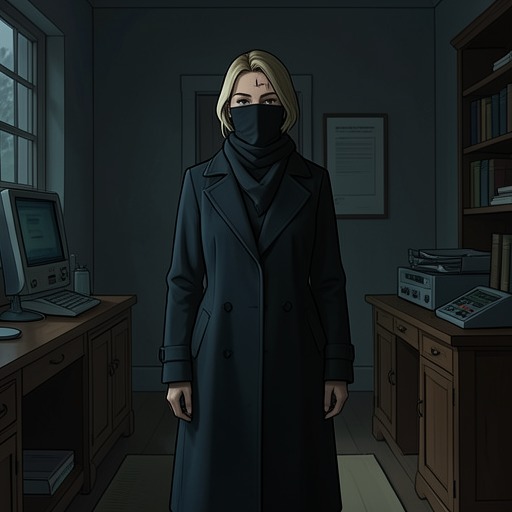
Ella's mother
Cinder & EllaElla’s mother is the loving, exuberant center of Ella’s childhood memories, and her death in the Vermont crash transforms an otherwise stable life into one defined by bereavement, injury, and difficult family revelations. She survives in Ella’s recollections through laughter, books, and a yellow cocktail dress, while the later account of her marriage to Ella’s father forces Ella to hold cherished memories alongside painful truths about the household she grew up in.
Identity and Background
Before the accident, Ella describes her life as largely secure despite her father having left when she was eight. Her mother was her best friend, and that bond made the absence of a father feel manageable. Ella’s memories present her mother not as a distant ideal but as the person who made ordinary life feel good enough and emotionally complete.
Her mother’s joyfulness is one of Ella’s defining recollections. She laughed readily, with a lightness Ella likens to a wingbeat, and seemed to believe that life could hardly be better. That buoyancy provides a sharp contrast to the tragedy that follows: Ella remembers a woman whose habitual response was delight, then loses her suddenly in the same journey that had been planned as a birthday treat.
The mother’s Chilean heritage also becomes part of the family history her father later recounts. He says she raised Ella as fully Chilean, taught her a language he did not know, and surrounded her with a culture he did not understand. According to him, Ella’s maternal grandparents helped raise her, while she had little contact with his side of the family. This account comes from her father during a painful disclosure, rather than from the mother herself, and reframes the family’s cultural life as part of the estrangement between the former spouses.
The Accident and Its Aftermath
For Ella’s birthday, her mother arranged a four-day ski trip to Vermont, including a spa stay with a hot tub and massages. The trip was a rare indulgence: mother and daughter had not often been able to dress up or spend freely, and their special purchases generally required saving. The outing’s anticipation makes its abrupt end especially stark.
During the drive, Ella was messaging her anonymous online friend, Cinder, about the forthcoming film adaptation of a beloved novel. She never learns which actor would have played one of its famous heroes. A logging truck lost control on black ice and slid across the two-lane road into their car. Ella was looking at her phone and did not see the truck approaching; she remembers hearing her mother scream, being thrown against her seat belt, and the airbag bursting in front of her before pain gave way to darkness.
Ella regained consciousness three weeks later at a Boston burn clinic, as doctors brought her out of an induced coma. Second- and third-degree burns covered seventy percent of her body. Her mother had died in the crash. The accident therefore takes not only Ella’s closest companion but also the life she had expected to return to: she wakes into severe injuries and a future in which her mother cannot help her recover.
Objects, Rituals, and Continuing Presence
Books preserve the everyday intimacy of their relationship. Ella had loved building her library since she could read, and her mother made books a recurring birthday and Christmas gift, sometimes giving them simply because she felt like it. Over the years, this practice became a tradition between them rather than a collection of isolated presents.
Their shared book outings extended across the Northeast. Ella attended signings and book fairs, collecting dozens of signed volumes by favorite authors. When she approached her mother with the particular expression that announced another excursion, her mother would laugh and ask where they were going this time. At each signing, they had someone photograph them with the author; Ella later tucked the picture into the inside cover of the corresponding book. The collection thus held not only stories and signatures but a record of the two of them together.
When Ella learns that the books have been given away, the loss reopens her grief. The photographs and memories embedded in the collection are gone with the volumes, making the disposal feel like losing her mother again. What mattered was not merely the monetary or literary value of the books: each one joined a shared ritual to a particular image of her mother, and Ella believes that neither the objects nor what they contained can be replaced.
A yellow cocktail dress carries a similar, more immediate force. Ella finds it among the boxes her father packed and recognizes it as her favorite of her mother’s clothes. Her mother bought it when Ella was about thirteen, during a period when she was dating a professional salsa dancer who liked taking her dancing. Although the family had to budget carefully, she spent beyond their usual limits on the dress. Ella presses it to her face and breathes in, knowing that it no longer smells of her mother; its importance lies instead in the memory of how beautiful her mother looked wearing it.
Marriage and Family History
During therapy, Ella’s father admits that he should never have married her mother. He says he came to love her in some ways, but not in the way Ella means when she asks whether he loved her, and he does not believe her mother loved him either. The confession shocks Ella, who had understood her parents’ marriage and her childhood through a different, less fractured story.
Her father explains that Ella’s mother became pregnant before they married. Raised religiously, she refused to end the pregnancy and asked him to marry her. He says he offered financial help but did not want marriage because the two were very different and did not love each other. Her parents, Ella’s maternal grandparents, threatened to disinherit her if she did not marry; because she was close to them and would otherwise have faced raising a baby alone, he accepted responsibility and married her. He says that the marriage began from obligation and family pressure, not a mutual romantic commitment.
He also describes resentments that affected his relationship with Ella. He says her mother repeatedly reminded him about the abortion and did not forgive him for not wanting the baby. When father and daughter became close, he says, she would become angry and tell him he did not deserve Ella. He recalls that it became easier to distance himself, work as much as he could, and leave mother and daughter alone. This account complicates Ella’s recollection of him leaving when she was eight: his absence was not simply an isolated departure but part of a longer pattern of marital conflict and withdrawal.
The cultural and extended-family divide is another part of his explanation. He says Ella’s mother raised her within Chilean culture, taught her a language he could not speak, and largely excluded his family’s traditions. During their marriage, he says, they visited his West Coast family only twice, usually without Ella’s mother; Ella had not seen his parents since she was three. He then reveals that she still has paternal grandparents, an aunt and uncle, and three cousins. The disclosure changes Ella’s picture of the family she thought she had, while remaining her father’s account of choices made during a marriage Ella was too young to understand.
Relationship and Narrative Significance
Ella’s mother remains the standard against which Ella measures whether her family accepts her. At a family dinner, Ella chooses the yellow dress because it belonged to her mother and because she wants to be with her family, not to make a statement. When her scars become a source of conflict, she insists that her mother would have embraced her and been proud of her courage, not asked her to conceal them. In Ella’s memory, her mother’s love makes room for the body and the grief Ella’s new household struggles to face.
The surviving family’s tensions sharpen that contrast. Juliette later says that Ella’s arrival has unsettled the household, that their parents argue more, and that she and Anastasia have grown distant; she also acknowledges that Ella has serious reasons to be angry. At another moment, Juliette argues that the family has, in a sense, taken Ella’s father from her, since he abandoned her before she came to live with them. These comments situate Ella’s grief within a blended family already struggling with competing loyalties, rather than treating her mother’s death as a loss that can be separated from the household’s present conflicts.
Ella’s mother is therefore present less through new action than through the durable particulars of memory: a laugh, a book-giving tradition, photographs inside signed covers, a dress bought for dancing, and the imagined embrace Ella longs for. Her death is the decisive rupture in Ella’s life, but the later revelation of the marriage’s painful history prevents remembrance from becoming simple idealization. Ella must reckon both with the mother who was her best friend and with the complicated family past her father describes; the book preserves the tenderness of her bond without making the past uncomplicated.