Kaylee Summers
Cinder & EllaKaylee Summers, an actress and heir to Los Angeles’s largest film studio, is Brian Oliver’s co-star and the public partner in a romance manufactured to promote their film. She begins by treating publicity as a useful opportunity for her first movie; as Brian tries to leave their arrangement for Ella, she turns that shared publicity script into leverage, threatening his career and family. Her arc makes the machinery behind celebrity romance visible: a relationship staged for cameras can produce real professional power, but it cannot guarantee private loyalty.
Identity and Introduction
Kaylee appears alongside Brian during a tightly managed film-promotion schedule. His new assistant, Scott, hands Brian a list of appointments and passes it to Kaylee; Brian responds by crumpling the paper and shooting it into a wastebasket like a basketball. The small gesture makes the imbalance in their working lives concrete: Brian feels that a network of agents, managers, publicists, lawyers, image consultants, and trainers has taken control of his choices, while Kaylee is positioned within the promotional machinery as his co-star and prospective partner.
The book identifies Kaylee as the heiress to the city’s biggest film studio. Together with Brian, whom one observer regards as Hollywood’s hottest newcomer, she possesses considerable industry power. That status is not merely background: it gives weight to her later threats and helps explain why the people around Brian press him to cooperate with the publicity plan.
The Publicity Romance
The proposed relationship is presented as a business strategy. When someone raises the possibility of Brian getting engaged, Kaylee does not look up from her phone; she shrugs and says her first film could use the media attention. Brian’s representatives argue that a genuine-seeming romance between the co-stars could bring in millions in extra publicity without additional expense and benefit both the film and his career. Kaylee, for her part, encourages Brian to go along with it, invoking their previous sexual encounter and suggesting they could have fun.
The arrangement soon becomes a public performance with a carefully chosen stage. For their first purported date, Kaylee selects the Ivy, a prominent Los Angeles celebrity haunt where photographers gather outside. Paparazzi recognize Brian’s car before it even reaches the restaurant, and he anticipates the frenzy when they realize he is dining with Kaylee. As he gets out, he switches on his audience smile and shuts down his thoughts and feelings, describing the numbness as a state that helped him survive the previous year. The date is therefore more than a private dinner presented misleadingly: the cameras, the venue, and the practiced smile make the couple’s public image the event’s product.
The fiction gathers force in the press. Television reports that Brian and Kaylee became engaged at her birthday party. Later, when Brian enters a club with Kaylee clinging to his neck, the image supplies further apparent proof of their relationship. At another public encounter, a reporter congratulates the pair on their surprise engagement and upcoming shared film, calling them the subject of the moment. Their apparent intimacy has become part of the promotional story surrounding the movie, regardless of whether it reflects Brian’s wishes.
Breakup and Coercion
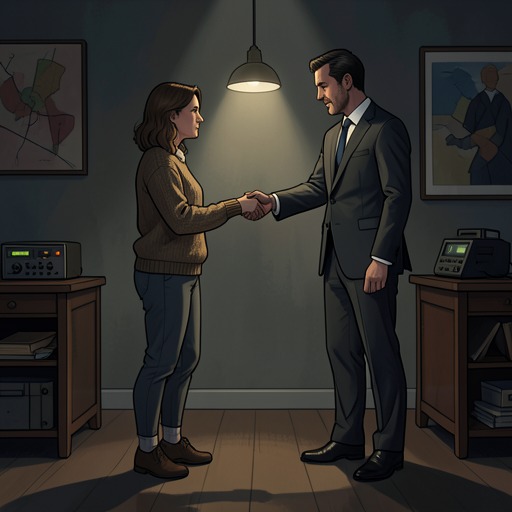
The arrangement breaks when Brian decides he will no longer pretend to be with Kaylee. He says he intends to fly to Boston, tell Ella who he is, and pursue a relationship with her without making her wait while he continues appearing beside a fake fiancée. Kaylee answers by invoking the couple’s publicity and their careers, and asks what will become of their plan. Her appeal makes explicit the competing terms of the relationship: for her, the staged engagement is an asset they have built together; for Brian, continuing it would compromise the choice he wants to make in private.
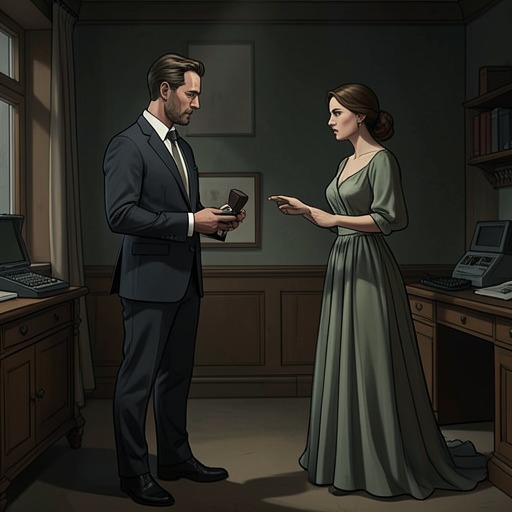
Kaylee’s response escalates from persuasion to threats. She says she does not care whom Brian loves but will not let him ruin the arrangement; she threatens to destroy him and his father, have them denied respectable work in Hollywood, and make Ella suffer most of all. She claims her father can give her what she wants and points to the remaining films in the series as a means of pressure. The threats reveal how the publicity romance is backed by studio power: the performance is not maintained by attraction alone, but by the threat of professional retaliation against Brian, his father, and the woman he hopes to see.
At FantasyCon, Ella recognizes that the girl Brian had described as being forced into a relationship with him is Kaylee, his co-star and fiancée. After the relationship becomes openly contested, Brian confronts Kaylee and demands that she stop speaking about Ella. He says he will expose the engagement as false and disclose her threats to ruin his career, get his father fired, and sabotage the film. His ultimatum reverses the leverage Kaylee had exercised: the same public attention that made the arrangement valuable could also reveal how it was imposed.
Public Narrative and Aftermath
After Brian and Ella kiss, Kaylee appears on television smiling confidently as a reporter asks about the kiss. She dismisses the idea that Brian would cheat on her with “some little girl” and describes Ella as a major fan who met him through a wish-fulfillment charity event. Kaylee says Brian agreed because he liked Ella’s blog and had tweeted about it throughout the preceding Friday. She then warns that if the supposed stalker comes near her fiancé again, she will show why she is suited to play the ruthless warrior princess Ratana, adding, “Brian belongs to me.” The interview turns a private reunion into a public accusation and presents Kaylee as the legitimate partner while casting Ella as a threat.
Brian later repudiates that account. He explains that he and Ella met unexpectedly at a discussion of The Druid Prince at FantasyCon; neither knew the other would be there, and they recognized one another while renewing an old argument about the books. He says he ended things with Kaylee immediately after that encounter, then asked Ella to dinner and kissed her because he loved her. He also says Kaylee’s claim that she was still his fiancée was a lie intended to hurt Ella. His management team, he adds, invented the wish-event story with Kaylee at a meeting he did not attend and released it without his knowledge or permission. The distinction between Kaylee’s televised account and Brian’s later explanation establishes the extent to which the public version of their relationship has been engineered and contested.
The deception matters because the false account gives Ella the role of an opportunistic fan and stalker, while concealing both the couple’s earlier fake engagement and the fact that Brian had already broken it off. Kaylee’s statements are thus part of the conflict over who gets to define the relationship in public: she uses the language of possession and legitimacy, while Brian identifies the supposed romance and the story built around Ella as fabrications.
Characterization and Narrative Role
Kaylee’s characterization turns on the gap between polished public composure and private coercion. She can shrug through a business discussion while holding a room’s attention, smile for a reporter, and cling to Brian in a club photograph; when he resists the plan, she threatens his livelihood and Ella’s safety from public humiliation. The contrast does not make the public performance harmless. Rather, it shows how the performance can serve as cover for a struggle over control, with fame and family influence amplifying the consequences of a breakup.
Her position also clarifies the cost of converting intimacy into promotional capital. The proposed romance promises millions in added publicity, and the engagement becomes a headline attached to a film release. Yet the staged image does not stay confined to advertising: it constrains Brian’s choices, becomes a weapon when he tries to leave, and gives Kaylee a platform from which to discredit Ella. The cameras do not simply record the relationship; the public story they circulate becomes part of the conflict itself.
At the later film-premiere red carpet, Kaylee smiles for the crowd and clings conspicuously to an actor known to Ella from a famous vampire film. Ella finds the sight somehow fitting. The brief appearance offers no further resolution of Kaylee’s motives or career, but it returns her to the setting that has defined her public role throughout the story: a camera-facing performance in which visible attachment can itself become part of the spectacle.