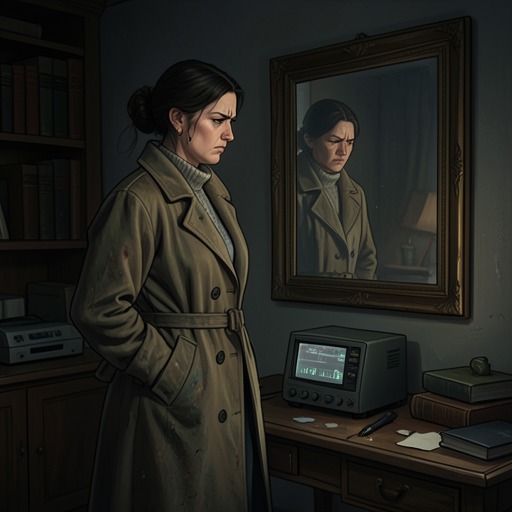
Lucinda
Cinder & EllaLucinda, known to Ella as Mom, is a deceased mother whose presence persists not as a distant backstory but through the objects, recipes, and dates that organize her daughter’s grief. Her yellow cocktail dress, her green-chili enchiladas, and the birthday Ella never got to celebrate with her all make memory tangible; sharing those memories with Ella’s father briefly turns private loss into a point of family connection.
Identity and Background
Lucinda was Ella’s mother and had been married to Ella’s father, who later became known as Richard Coleman, for more than eight years. By the time Ella lives in the Coleman household, Lucinda has been dead for a year. Her absence is sharpened by the fact that Ella has felt she had no one left who knew her mother with whom to talk about her: although Richard shared a long marriage with Lucinda, Ella rarely connected the man in the house with the father she remembered from childhood.
The evidence presents Lucinda through Ella’s recollections rather than through scenes in the present. Those recollections reveal a mother attentive to her daughter’s birthdays and shared pleasures, a skilled cook whose food remained a family standard, and a woman who made occasional room for extravagance despite the need to watch spending.
Objects, Food, and Memory
After the Coleman family dresses for a formal dinner, Ella is left alone to change and searches her closet, certain she will find nothing that fits in with the family. She comes upon Lucinda’s small canary-yellow cocktail dress. Ella presses it to her face and breathes in, knowing it no longer smells like her mother; the recognition does not diminish what the dress means. It is her favorite of Lucinda’s clothes, and she remembers how beautiful her mother looked in it. She had cried with relief when she found it among the boxes her father had packed.
The dress also carries a story of Lucinda’s limited opportunities to dress up with Ella. They had not often been able to do so: the family had not been truly poor, but they had needed to monitor expenses and save for anything special. When Ella was about thirteen, Lucinda dated a professional salsa dancer for several months who loved taking her out dancing. Lucinda went beyond her usual budget and bought the dress. For Ella, its importance lies both in its beauty and in the remembered occasion of her mother choosing a pleasure for herself.
Food provides another route into memory. When Richard praises Lucinda’s cooking and recalls missing her green-chili enchiladas after their separation, Ella experiences his words as an almost unbearable blow. Anastasia responds dismissively, while Juliette rebukes her; Lucinda’s memory thus enters a family dinner where grief is not shared evenly and where Ella’s vulnerability is visible to others.
Later, Ella makes enchiladas for the family. The meal goes unusually well: everyone enjoys it, the atmosphere is more relaxed than Ella has experienced in the Coleman home, and even Anastasia eats without insulting her. Richard praises Ella’s cooking, saying it may be better than her mother’s. The compliment warms Ella because it is the first sincere one she can remember receiving from him, but it also prompts an immediate insistence that her enchiladas do not compare with Lucinda’s.
A Shared Family Past
At that dinner, Ella mentions that her grandmother taught her the secret of her sopaipillas before she died. She believes she has made them better than Lucinda did, then falters as grief catches her and hides her eyes behind a cloth napkin. Asked what a sopaipilla is, Ella explains that the crucial ingredient is chancaca rather than ordinary brown sugar. It is difficult to find, and she had promised her grandmother not to tell Lucinda; the secret had been theirs, and keeping it had driven Lucinda to frustration.
The small culinary confidence gives the family a memory of Lucinda that is intimate without being solemn. Richard laughs, and Ella smiles with him. She is surprised by the surreal ease of remembering Lucinda together: she had believed she could never speak about her mother again because there was no one in her life who had known her. Richard’s laughter reveals that he, too, belongs to that past. The conversation does not undo their estrangement, but it makes a shared history available to them in a way Ella had not expected.
Birthday, Bereavement, and Continuing Bonds
Ella’s nineteenth birthday falls on the first anniversary of Lucinda’s death. She tells no one and hopes the day will pass unnoticed. The date holds two losses together: her mother’s death and the birthday celebration that was interrupted. On the morning of Ella’s eighteenth birthday, Lucinda had woken her with a crooked birthday song and announced plans to take her out of school for the last two days of the week for a ski trip to Vermont. She promised an expensive dinner and a dessert of Ella’s choice with a candle to blow out, but Ella never got that promised celebration.
Lucinda had also protected the meaning of Ella’s birthday against Richard’s repeated forgetfulness. He had forgotten or ignored it over the previous four or five years; the first time was when Ella turned eleven, and the last time he remembered was her fourteenth birthday. Lucinda tried to make the day the best of the year, whatever it took, helping Ella forget her father’s absence for a while. Her care lives on in Ella’s sense of what the day once meant, even as the anniversary makes it painful.
The accident that killed Lucinda gives the date another meaning for Cinder, Ella’s online friend. He remembers it because he was chatting with Ella when the accident happened; for him, it is the day he lost her. Ella had told him that it was also her birthday, and he promised to find a way to distract her and help her enjoy the day rather than think only about the accident. When she recognizes that he has kept his promise, her response shows how Lucinda’s death remains entangled with the later loss and recovery of other relationships.
Narrative Significance
Lucinda’s memory moves between grief and ordinary continuity. Ella’s first response to the dress is a plea that she needs her mother and cannot face everything alone. At dinner, a mention of Lucinda can make her recoil, yet food also enables laughter, family conversation, and the discovery that Richard remembers the same woman. The narrative does not treat those moments of connection as proof that grief has passed: Ella’s tears interrupt the talk of Christmas and recipes, and the anniversary remains difficult.
That continuing bond shapes Ella’s capacity to imagine future closeness without requiring her to relinquish the past. She thanks Brian for making her feel beautiful, special, and loved after the accident, even as the public exposure of their private moment threatens to overwhelm her. Separately, she tells Richard she would like a better relationship with him but needs time, and names the anger and hurt of having grown up feeling abandoned. Lucinda’s absence is part of the history that makes this reconciliation difficult; her remembered care, however, also gives Ella a language of love and a set of shared memories through which connection can begin.