Publicity romance and fake engagement
Cinder & EllaPublicity romance and fake engagement is the manufactured relationship between Brian Oliver and Kaylee Summers, devised to sell The Druid Prince and recast Brian as a more mature star. Its importance lies in the widening gap between a private attachment Brian wants to pursue honestly and a public romance that other people package, stage, and exploit. The engagement is not merely make-believe: its publicity machinery gives Kaylee leverage over Brian, while the false story later subjects Ella to public humiliation and harassment.
Origins and Commercial Design
Brian’s career is already under the control of agents, managers, publicists, lawyers, image consultants, and other professionals who decide what he wears, eats, says, and attends. The film’s publicity tour is presented to him as a schedule already fixed, with interviews, photo calls, premieres, and television and radio appearances in Los Angeles, New York, and Chicago. His protest that he has no meaningful say in his own life establishes the imbalance that will shape the romance campaign: decisions about his public identity are made around him, not with him.
The engagement proposal comes from Brian’s press team as another way to manage that identity. They argue that a celebrated love story would satisfy teenage fans and make him appear to have outgrown his earlier reputation. The commercial calculation is explicit: Lisa tells him a genuine-looking romance with Kaylee could bring in millions in additional publicity without additional cost, benefiting both the film and his career. Brian rejects the idea of a real relationship with Kaylee, pointing out that the team is asking him to act beyond his abilities; the irony is that acting is precisely what the campaign requires.
The plan also builds on an earlier encounter that Brian understands as a casual night, while Kaylee treats it as the beginning of something more. At their first staged public dinner, she chooses the Ivy, a prominent Los Angeles celebrity destination where paparazzi wait outside. Brian knows the cameras recognize his car before it even reaches the entrance. He shuts down his feelings, puts on his audience-facing smile, opens Kaylee’s door, and poses as a gentleman, treating the date as another scene to perform. The intimacy is therefore public-facing from the start: the cameras and the expected audience are part of the occasion, not incidental witnesses.
The Performance Becomes Coercive
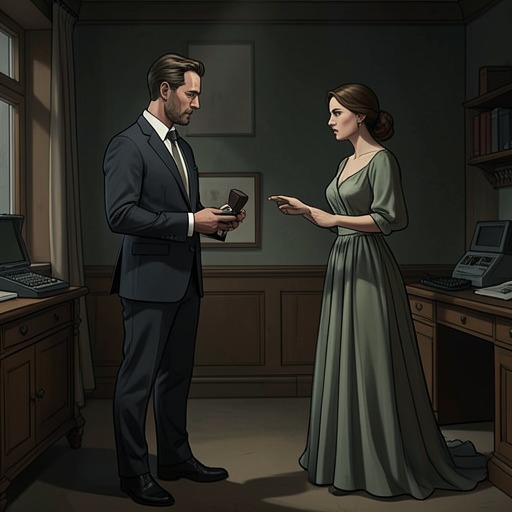
The publicity story’s apparent mutuality conceals a struggle over consent. Brian initially refuses the fake engagement, but Kaylee has already bought a ring and stages a proposal in front of people he works with and reporters. Once that spectacle is underway, she pressures him to continue. She threatens to ruin his career and persuade her father to have Brian’s father fired from directing the sequels to The Cinder Chronicles. Brian later explains that he felt trapped and had no good pretext to resist the arrangement at the time; Kaylee’s threats convert a promotional fiction into a means of professional coercion.
The public couple also has an agreed explanation ready for its eventual separation. When Brian tries to leave, Kaylee reminds him that everyone believes they are together and invokes their careers, publicity, and original plan to prove he is not simply an arrogant womanizer. Brian proposes a friendly, mutual breakup, expecting that they can each preserve favorable coverage. Kaylee instead imagines turning their apparent partnership into a Hollywood power couple, comparing their prospects to Kanye and Kim and describing fame as a popularity contest they are destined to win. Her response makes the campaign’s ambition plain: the engagement is not only a story about love but a bid for influence built on celebrity attention.
Brian’s attempt to end the arrangement becomes decisive when he learns Ella is alive and can pursue a real relationship with her. He says he will not continue pretending to be engaged, fly to Boston to identify himself to Ella, or make her wait while he performs a romance with Kaylee in Los Angeles. Kaylee is stunned that Ella does not know Brian’s identity and that he has not yet met her face-to-face. Brian calls his relationship with Ella complicated, but his priority is no longer the publicity plan: he refuses to let a fabricated girlfriend stand between them.
Exposure and the Competing Stories
The campaign’s scripts outlast Brian’s consent. After recognizing Ella at FantasyCon, he ends things with Kaylee and asks Ella to dinner. When Kaylee later challenges him over flirting, Brian declares the publicity stunt finished and tells her that the girl she saw was Ella. He warns Kaylee not to speak about Ella contemptuously and says he will reveal that their relationship was false from the beginning, including Kaylee’s threats to damage his career, have his father fired, and sabotage the film if he refused the fake engagement. His warning exposes the arrangement’s hidden terms: the supposed romance was both a public performance and a private threat.
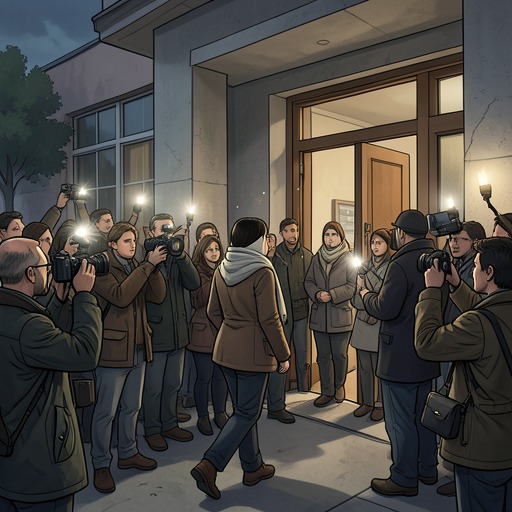
At the restaurant, Brian and Ella’s kiss is interrupted by photographers, screaming fans, and people filming on their phones. Ella is caught without her cloak or gloves, and the images of her scars become, in her fear, a disaster about to spread across every news channel. Brian helps fasten her cloak and holds her as the crowd presses in. The private moment the campaign was designed to manufacture becomes real, but the cameras seize it before the couple can control what it means.
Brian’s management then issues a false account: Ella is described as a gravely injured fan whose wish was to receive a kiss from Brian, supposedly through a charity for sick children. The statement also claims Kaylee knew about the encounter, supported her fiancé, and remained happily engaged to him. This invented version turns Ella’s actual relationship with Brian into a charitable favor and presents Kaylee as the understanding partner. Kaylee reinforces the story on camera, belittling Ella as an ordinary girl and invoking her scars and difficulty walking to explain why Brian supposedly carried her. She calls Ella a stalker and threatens her, while insisting that Brian belongs to her.
The consequences fall unevenly. The public fiction protects the appearance of the engagement and attempts to contain the scandal, but it strips Ella of agency, presenting her as a pitiable fan rather than a person Brian loves. The broadcast’s framing also makes her injuries and mobility visible to a mass audience without her consent. At home, Juliette, Vivian, and Rob embrace and try to comfort her; Ella thanks them but asks to be left alone after the exhausting day. The manufactured romance thus produces not only a false celebrity narrative but a personal cost for the person it turns into a prop.
Rejection, Correction, and Significance
Brian repudiates the fabricated account when he challenges his team’s representative. He says Ella is not a fan, that no charity was involved, and that he was no longer engaged to Kaylee when he kissed her. He explains that his team and Kaylee invented the story at a meeting he did not attend, without his knowledge or consent, despite his personal assistant’s warning that he would never approve it. He regards the unauthorized statement as possible grounds for a breach of contract. His objection is not simply that the story is unflattering; it is that the people paid to manage his image have again spoken for him and used Ella to protect their preferred version of events.
Brian later corrects the record publicly on Kenneth Long’s program. He explains that he and Ella met by chance at FantasyCon, that he invited her to dinner and kissed her because he loved her, and that Kaylee’s claim that they were still together was a lie meant to hurt Ella. He confirms that he fired his management because the charity explanation was false and had been released without his permission. He also acknowledges the damage done: Ella has been made a laughingstock, faced cruelty and online hate pages, and received death threats, although her identity has not been disclosed.
The publicity romance and fake engagement therefore operate as an economy of borrowed intimacy. Brian’s team seeks publicity and career security; Kaylee seeks the status and leverage of a celebrity partnership; Brian is expected to perform the role of a reformed star; and Ella bears the cost when a genuine, vulnerable encounter is repackaged for public consumption. The eventual correction matters because it restores the distinction the campaign tried to erase: a staged engagement is not a real relationship, and a real kiss is not a charity spectacle merely because publicity professionals find that story more useful.