Ella and Brian’s Estrangement
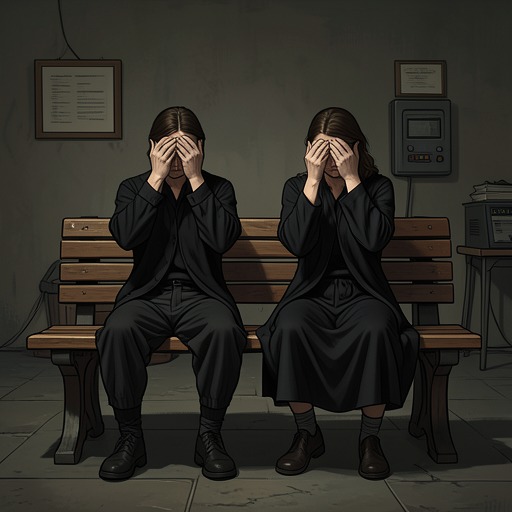
Cinder & EllaElla and Brian’s estrangement is a separation sustained not by a loss of attachment but by the public damage surrounding their relationship, their inability to speak at the crucial moment, and a painful mismatch in what each believes the other thinks. Ella still considers Brian her closest friend, yet the in-person encounter and its fallout make their former intimacy feel impossible to recover. Brian, unaware that she has not heard his explanation, believes she has rejected him and now holds him responsible for ruining her life. The silence between them is therefore both a practical barrier and an emotional stalemate: each still cares, but neither can act on that care with confidence.
Origins of the Separation
After Ella and Brian meet in person, the consequences of their connection become inseparable from its public exposure. Ella recalls that their brief time together was followed by her becoming a national object of ridicule. The people around Brian, she believes, responded to the crisis by presenting her as a fan whose wish had been granted and claiming that Brian was working with a charity. Brian’s fiancée confirmed the account and said they were still together. To Ella, these actions made her private significance to Brian appear nonexistent and left her exposed to public hostility.
The public story is also why Ella fears renewed contact. She says Brian had warned that his world would hurt her, and the scandal seems to confirm that warning. She does not want to ruin his career, but she also cannot bear the prospect of hearing for the rest of her life that people consider her ugly and pathetic. Her withdrawal is thus not evidence that the bond has become unimportant. It is a defensive response to the costs she associates with being close to him.
Contact Blocked, Attachment Remains
Ella’s father inadvertently removes Brian’s opportunity to contact her again. Yet the separation is not absolute in a technical sense: Ella still knows Brian’s email address, phone number, and chat nickname, and could find him if she chose. The remaining possibility of contact makes her uncertainty consequential. She is not simply unable to reach him; she doubts that reaching him would be wise, given what she believes their relationship would expose her to.
In therapy, Dr. Parish asks whether Ella intends to get back in touch. Ella says that even thinking about Brian hurts and that she does not think she can remain friends with him. Dr. Parish identifies him as Ella’s closest friend and the strongest strand in her support network, arguing that she needs him. Ella answers that meeting him in person has changed what their relationship can be. She goes further: she cannot have a real relationship with him. Dr. Parish suggests fear, rather than inability, is keeping her from one, but Ella’s concern is grounded in the concrete aftermath of their encounter and the public story that followed.
When Dr. Parish asks whether Ella might reconsider if a relationship could help rather than harm Brian’s image, Ella responds with reluctant candor. If people could somehow accept her and she could be with Brian, she says, she would forgive him immediately, run into his arms, and never let him go. The declaration lays bare the contradiction at the heart of the estrangement: Ella imagines reunion as an overwhelming possibility even while treating separation as necessary protection.
Brian’s Account and the Misunderstanding
Brian’s version becomes audible to Ella through his television interview with Kenneth Long. He says that, for him, there are only two kinds of women: Ella and everyone else; he cannot be happy with anyone but her, and now he has lost her again. When Kenneth asks why, Brian explains that Ella thinks he was behind the false account. He acknowledges that his management spread the claim that she was a fan whose wish had been granted, his representatives said he was working with a charity, and his fiancée affirmed that they were still together. Brian understands why Ella would believe he had allowed these statements to protect his reputation, even though he says that was not his intention.
The interview also supplies the missing explanation for the silence. After Ella rejected him, Brian says, he was devastated, switched off his phone, and went to Las Vegas to clear his head. He did not learn what had happened until two days later, when Ella had already disappeared. His withdrawal and her disappearance therefore overlap without either knowing the other’s circumstances: Ella interprets the public lie as evidence that Brian disowned her, while Brian’s account suggests he was absent and unreachable before he understood the crisis.
Hearing him describe the story changes Ella’s understanding. She realizes she had believed he was responsible, but now considers that belief absurd and calls herself an idiot for entertaining it. Her immediate impulse is to call him, a reversal from the fear and refusal she had expressed in therapy. The interview does not erase what happened to her or instantly restore trust; it gives her new information about Brian’s absence and the source of the story that had shaped her judgment.
The Delayed Possibility of Reconnection
The revelation reaches Ella late. When she learns that the interview aired two weeks earlier, she panics at the thought that Brian must now hate her for ignoring him all this time. Juliette dismisses that fear and hands her a phone already displaying Brian’s number. As Juliette begins to press the call button, Ella cries out and snatches the phone away, stopping the attempt before contact is made.
That interrupted call leaves the estrangement at a threshold rather than resolving it. Ella has learned that Brian publicly described his love for her and explained how he missed the scandal, and she now wants to reach him; nevertheless, the prospect of calling still overwhelms her. The sequence turns silence into something other than simple rejection. Their separation has been maintained by injury, publicity, blocked access, and a two-week delay in Ella hearing Brian’s account, while the final gesture preserves both her renewed hope and her hesitation.