Ella and Brian’s first kiss and its exposure
Cinder & EllaElla and Brian Oliver’s first kiss and its exposure mark the collision of a long-hidden private attachment with the machinery of celebrity publicity. The kiss is tender and mutually desired, but a burst of camera flashes transforms it into a public event: reporters and fans crowd the Dragon’s Nest, and Ella realizes that images of her uncovered scars will reach the news before she can get home. The scene makes intimacy itself the threshold through which Ella is exposed to a world she has feared.
Causes and Background
Brian’s public romance with Kaylee Summers began not as a genuine relationship but as a publicity strategy. After the studio’s plans for further films in the Ash Chronicles made Brian’s career prospects a subject of discussion, his press team proposed an engagement as a way to present him as mature and generate interest. Brian objected to the idea, but his team argued that a convincing romance could bring millions in additional publicity without extra cost. The contrast between his reluctance and their calculations establishes the commercial script that later surrounds his relationship with Ella.
The arrangement also blurred the line between performance and private life. Kaylee pressed Brian to continue their supposed relationship by invoking publicity, their careers, and the plan they had made; she imagined that their combined fame could make them Hollywood’s reigning couple. Brian, by contrast, maintained that they were not truly together and proposed an amicable public separation. The engagement was no longer in effect by the time he kissed Ella, although the public-facing narrative would later obscure that fact.
The two protagonists enter the kiss with different expectations of what publicity will mean. Brian anticipates that dating an ordinary, unknown woman after Kaylee will draw intense press attention, and believes his management will have to accept it. Ella sees that attention as a threat to both of them: she fears Brian’s team and fans will reject her, worries that the coverage will damage his career, and does not want to be exposed to public scrutiny herself. Their disagreement is not over the depth of their attachment, but over whether their private bond can survive becoming a celebrity story.
The Kiss
In a moment of overwhelming emotion, Brian tells Ella that he does not know exactly what he is feeling and that he is overwhelmed. He takes her hands and kisses the backs of both: first the unscarred hand, then the scarred one. His lips against her scars startle her; he presses kisses to her knuckles and wishes he could take away what she has suffered. The gestures acknowledge her injured body directly rather than avoiding it, and Ella experiences them as deeply intimate.
The contact becomes a kiss on the mouth. Ella recognizes Brian as Cinder, her closest friend and the person she has loved for years, and she wants the kiss rather than resisting it. Their cautious first touch turns passionate as she responds, but the narration frames the happiness as precarious: the moment feels like a fairy tale, and then the clock strikes twelve. A flash goes off directly in front of them.
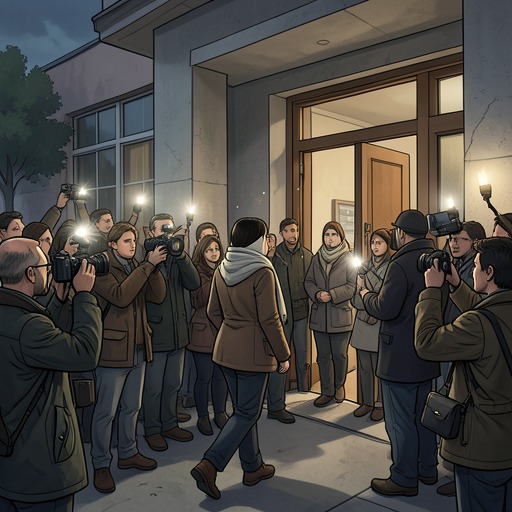
The sound and light abruptly change the scene’s meaning. Ella and Brian pull apart to find their table encircled by camera operators; a mass of fans forms a barrier behind them, while diners film on their phones and girls scream. Reporters call questions at Brian. Ella’s recognition shifts with the attention: the intimate figure she knows as Cinder is suddenly visible as Brian Oliver, the celebrated Hollywood heartthrob. The warmth of the kiss gives way to cold fear as she becomes conscious of the audience.
Exposure and Immediate Aftermath
Brian initially remains composed, accustomed to the attention, but Ella’s frightened expression makes him register the chaos and the danger it poses to her. He apologizes for kissing her there and admits he had not thought it through. Rather than address the reporters, he calls Scott and asks him to send the convention center’s security staff to the Dragon’s Nest to escort them. He tries to steady Ella, holding her hands and assuring her that they can get through the commotion safely.
The crowd’s questions quickly turn from their relationship to Ella’s body: people demand to know where her scars came from and what happened to her, while another asks Brian what is wrong with his new girlfriend. Ella realizes that she is wearing neither her cloak nor her gloves. Pulling the cloak over her shoulders cannot undo the exposure; she fears that photographs of her will be circulating across news channels before she reaches home. The kiss has made her scars public without giving her any control over how they will be shown or interpreted.
Her distress becomes physical. Ella shakes and cannot breathe normally, anticipating that she will hyperventilate as panic takes over. Brian takes her in his arms and shields her from the crowd; when a security officer offers to help, Brian says he will carry her. The act is both protective and conspicuous: surrounded by cameras, he lifts her and holds her against his chest, while two large security men flank them. A crowd and cameras swarm them as they leave. Ella hides her face against Brian’s shoulder, trying not to see the photographers, until she hears Juliette Coleman shouting that Ella is her sister and demanding a way through.
Publicity, Consequences, and Significance
The exposure acquires a second life through the stories Brian’s team circulates afterward. Brian later tells a reporter that the account of a charitable project was fabricated: Ella was not a fan, he had not worked with a charity, and he was no longer engaged to Kaylee when he kissed Ella. He says that his team and Kaylee invented the story at a meeting he did not attend and released it without his knowledge or consent, despite his personal assistant’s warning that he would not approve it. Thus the fabricated publicity explanation conceals the actual circumstances of the kiss and the status of the former engagement, converting an intimate moment into a managed narrative.
The sequence exposes two distinct costs of turning intimacy into promotion. For Brian’s team, romantic attachment is a resource that can be arranged, announced, and used to sell a film or reshape a star’s image. For Ella, public attention is not an abstract career benefit: it means strangers photographing her scars, asking what is wrong with her, and making her body part of a story she did not choose. Brian’s intention to protect her is sincere, but his expectation that the press will simply have to accept their relationship cannot prevent the harm produced by the cameras.
The scene’s fairy-tale pattern gives the reversal its force. The kiss briefly fulfills the romance Ella has wanted for years; the flash that interrupts it acts like a harsh public midnight, replacing private recognition with celebrity spectacle. Yet the aftermath also distinguishes Brian’s care from the publicity machine around him: he turns from the reporters to Ella, apologizes, arranges an escort, and carries her out. The moment is therefore both the beginning of their visible relationship and the event that reveals how little control either of them has over the story the public will be told.