Ella’s Anonymity and Withdrawal from Social Media
Cinder & EllaElla’s Anonymity and Withdrawal from Social Media is a shifting condition in which a carefully managed online identity first brings Ella attention and connection, then becomes a target of public harassment. Her legal name never reaches the public, but the scandal makes her blog and social accounts unusable and cuts her off from Brian. The distinction between remaining unidentified and remaining connected proves crucial: Ella is protected from exposure, yet the means through which she had built a voice and a friendship are stripped away.
A Separate Identity, Suddenly Amplified
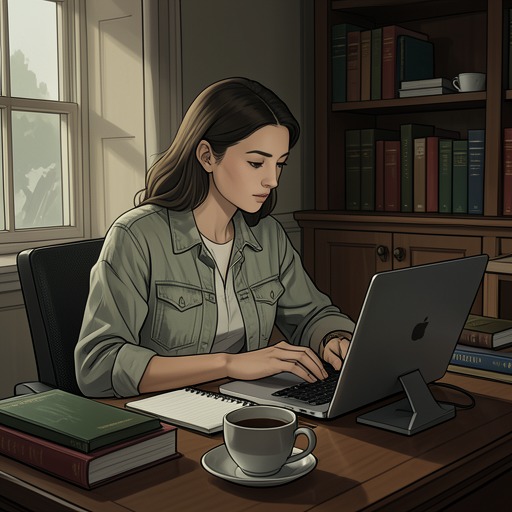
Ella’s blog had been a personal creative outlet, and after her accident Brian urged her to resume writing when she told him she might abandon it. She eventually posted a review of The Long Road Home, the film he had asked her to watch. Framed as a humorous apology to Brian for once believing he would ruin Cinder, the review also marked her return to the blog after a brief explanation that an accident had kept her away. The post made visible both her affection for blogging and the particular bond between her writing and her online friendship with Cinder.
Brian welcomed Ella back in the comments, where the two resumed their playful disagreement about a costume in The Druid Prince. Readers joined in, and her return was met with an outpouring of affection. On her birthday, Vivian showed Ella a birthday message Brian had posted publicly on Facebook, calling her his favorite blogger and greatest supporter and praising her words of wisdom. He linked to her review of The Long Road Home and shared other selections from her blog. The attention moved quickly from a post and its comment thread to a much larger audience: Ella’s Twitter following rose from just over six thousand to more than twenty-five thousand in a day.
The sudden increase made privacy a practical concern even before the later scandal. Rob asked whether Ella had disclosed personal information on her blog. She explained that she used a separate email account and distinct Twitter and Facebook profiles for blog-related activity, as well as a postal box for publishers’ review copies. Those boundaries helped keep her private identity out of public view. They did not, however, prevent public attention from attaching to the accounts and content through which she had chosen to be known.
Harassment and the Retreat from Public Platforms
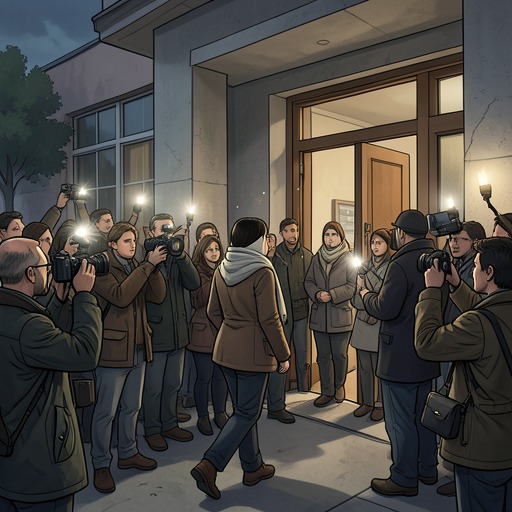
After Brian’s public account of events cast Ella as a disturbed stalker who had threatened his relationship with Kaylee, the online response turned against her. The next morning, her inbox filled with hate mail from fans of both Brian and Kaylee. Her blog, Twitter account, and Facebook profile were flooded with hostile comments. At school, the same story acquired a face-to-face consequence: classmates treated her as a liar who had falsely claimed to know Brian, although she had never suggested that she knew him. Rob, Vivian, and Juliette accompanied her across the school parking lot and challenged anyone who approached, but their presence could not prevent laughter and cruel remarks.
Brian later recognized the damage as the result of statements released by his own team. Although Ella’s private identity had not leaked, Kaylee had revealed her identity online. Ella deleted her Facebook and Twitter profiles and closed her email account. Her blog remained available, a small but meaningful exception because it held three years of posts; she disabled comments and stopped publishing. Brian could still find material about her on other platforms, including labels such as charity project, obsessed fan, and disturbed stalker. The claims followed her even as she withdrew from the accounts she controlled.
The retreat was more than a pause in blogging. Ella’s online disappearance included changing or abandoning the contact routes that had sustained her connection with Brian. She removed the blog’s comment function, ceased posting, and made herself harder to reach. The blog survived as an archive, but no longer functioned as an active public space in which she could speak and receive responses. That contrast—preserved words, silenced exchange—gives the withdrawal its particular force.
Protection, Separation, and the Unanswered Choice
After Ella went to live under her father’s care, he erased her email address and accounts on Facebook, Twitter, and chat. He spared the blog, but removed its abusive comments and changed its settings so that no new ones could be posted. He also gave her a new phone number, fearing that students might circulate the old one as a cruel joke. The measures addressed several routes by which harassment could reach her, while leaving the archive of her writing intact.
Her father also went to the school and spoke to the student body. With a friend from the FBI present, he warned students about the consequences of disclosing Ella’s identity to the media and explained that investigators could identify those responsible. The warning helped preserve a clear boundary: the public still did not know who Ella was. Yet keeping her name secret did not restore her public accounts or her previous contact with Brian. The intervention protected her privacy by restricting access to her, including access by someone she had once known intimately online.
When Dr. Parish asked whether she intended to resume contact with Brian, Ella acknowledged that she had been running from him and had not spoken to him since FantasyCon. Her father had made direct contact difficult, but the remaining barrier was also emotional: she still knew Brian’s email address, phone number, and chat nickname, and could seek him out if she chose. She could not say that doing so was a good idea, and told Dr. Parish that she did not think she could manage being friends with him. Her withdrawal therefore cannot be reduced to a technical lockout. The lost accounts and changed number closed routes from the outside, while her uncertainty about Brian kept the possibility of contact unresolved.
The Blog as Archive and a Thread Back to Ella
When Brian later described the consequences of the scandal, he emphasized that Ella’s identity had never been exposed, even though she had been forced to disappear from public view. She had changed her phone number, email address, and chat nickname, and deleted Facebook and Twitter. Since the damaging statement, she had not posted on the blog. Brian described that retreat as losing her again: anonymity had protected the identity he did not know, but her disappearance from the channels he did know left him unable to reach her.
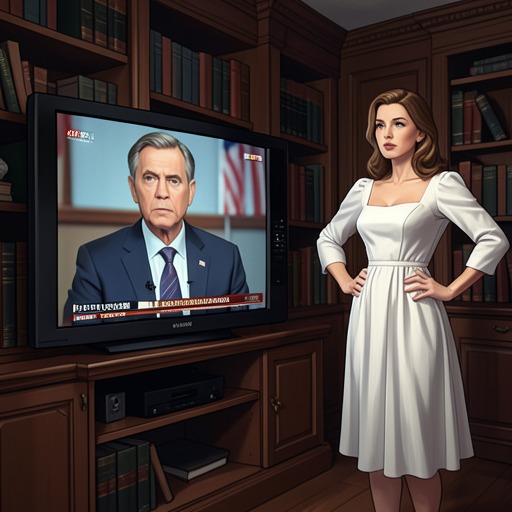
His televised appeal made the surviving blog part of the story’s unresolved connection. Brian said he still wanted to find Ella and invited anyone who could tell him how to contact her to come forward. He also referred to a gift he had given her, left behind at the café with his gloves, as something she should get back even if she never wished to see him again. The appeal did not itself restore communication; instead, it exposed the distance between public visibility and private access. Brian could speak to a mass audience about finding her, while Ella’s chosen and imposed silence remained intact.
The episode thus reverses the earlier movement of attention. Brian’s praise had helped carry Ella’s writing to a much wider audience, turning a private return to blogging into a public celebration. After the scandal, online circulation carried hostile labels and abuse, and Ella responded by withdrawing from platforms while preserving the blog’s past. Her anonymity succeeds in its narrowest sense—the public does not learn her identity—but comes at the cost of participation, contact, and control over how her friendship with Brian is represented. The surviving posts bear witness to the person and connection the public cannot fully identify, even as the channels that once made that connection possible fall silent.