Ella’s Rehabilitation
Cinder & EllaElla’s Rehabilitation is a long period of inpatient recovery after the car accident that killed her mother and left her with lasting injuries and scars. Ella spends more than eight months in a rehabilitation clinic, including time in a coma; the experience is not simply a passage from injury to cure. As she regains mobility, ordinary spaces and relationships expose barriers her body cannot simply overcome, and her recovery becomes inseparable from grief, public scrutiny, and her demand to make decisions for herself.
Injury, Mobility, and Daily Barriers
At the beginning of this period, doctors do not expect Ella to walk again. She fights through pain and eventually regains much of her mobility, taking pride in getting upright and walking without another person’s help. The achievement does not erase the severity of her scars or her continuing limitations: walking remains difficult, and she does not want to spend the rest of her life confined to a wheelchair. Recovery is hard-won rather than effortless, and her regained movement exists alongside lasting impairment.
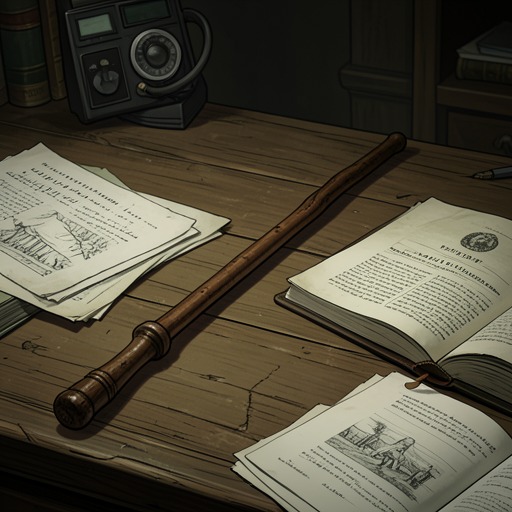
After leaving the clinic, Ella’s mobility remains a practical concern. At school, Anastasia tells her to climb into the back seat of the car or walk, refusing to give up her own place. Ella explains that she is physically unable to climb there. The dispute makes visible a basic mismatch between what others demand and what her injured body can do; it is not a matter of unwillingness. At FantasyCon, she uses a staff made for her by a friend to serve both as part of her costume and as a cane, so she can leave her usual cane at home. She later explains to Brian that she walks with a pronounced, painful limp and moves slowly. The convention staff disguises neither the need for support nor the disability it helps accommodate.
Grief and the Work of Returning
The accident’s anniversary is also Ella’s nineteenth birthday, making the approach of the date difficult even after months of treatment. Her mother had made earlier birthdays special, including the birthday before the accident, when she planned a Vermont ski trip and a dinner Ella never got to have. Ella anticipates the anniversary with grief and also fears that her father will forget her birthday, as he had repeatedly done in previous years. These memories mean that rehabilitation cannot be measured only by physical progress: the date carries the loss of her mother into the life Ella is trying to resume.
Cinder remembers the date because he had been chatting with Ella when the accident happened. For him, it marks the day he lost her; Ella had told him it was also her birthday, and he had promised to find a way to help her enjoy it rather than spend the day thinking only about the accident. His remembering offers a connection across the period in which they have been estranged. The birthday celebration and the family’s gift of FantasyCon tickets do not cancel the loss, but they place care, anticipation, and future plans alongside the anniversary’s grief.
Family, Care, and Autonomy
The return to everyday family life brings its own tests. At a family dinner, Ella wears her late mother’s yellow cocktail dress, an especially cherished garment she had found among the belongings her father packed. The dress holds an intimate connection to her mother and to a time when the two of them could occasionally dress up despite having to watch their spending. Later, Ella’s enchiladas earn her father’s first sincere compliment, but his praise also brings her mother to mind: she starts to mention making her grandmother’s sopaipillas at Christmas, then breaks down when grief catches up with her. Recovery makes room for participation and warmth without making bereavement predictable or complete.
In a conversation with Dr. Parish and her father, Ella directly challenges the guardianship that leaves her unable to make her own decisions. She asks that it end when she is ready to leave the clinic, explaining that she is an adult and needs people who trust her. She recognizes that her father is trying to do what he believes is best, but argues that what suits him and his family may not be what suits her. Her request distinguishes support from control: being cared for does not, in her view, justify surrendering her voice.
Ella and her father also begin to address the estrangement beneath their conflict. She admits she wants a relationship with him and will try, while asking for time; she remains angry and hurt that she grew up without him and feels like an outsider in his household. Her guarded willingness to try is not instant reconciliation, but it gives their relationship a possible way forward grounded in honesty rather than an assumption that recovery has resolved the past.
Discharge and Exposure
As Ella nears discharge, the clinic has kept her away from the media for a month. Dr. Parish prepares her for what awaits outside, worried that the exposure could provoke a setback, and takes her to see the people gathered in the common room: her father, Jennifer, Juliette, Rob, Vivian, Vivian’s two fathers, and members of the rehabilitation team. The scene makes discharge more than a medical threshold. Ella is leaving a protected setting for a world in which the consequences of her public association with Brian may reach her directly.
Brian later explains publicly that he spent nearly ten months unaware of what had happened to Ella, and that she had been in a coma and then a rehabilitation clinic for more than eight months. The account clarifies the duration and isolation of her recovery: he had not known her real name or how to find her. By the time Ella faces the film premiere, the public narrative has shifted dramatically after Brian’s interview, from casting her as a hated, obsessive stalker to celebrating her as a resilient survivor. That change in public attention does not remove her injuries or guarantee an easy return. Rehabilitation leaves Ella with both a body and a life altered by the accident, and its decisive measure is not that she becomes uninjured, but that she continues to claim mobility, connection, and self-determination amid lasting constraints.