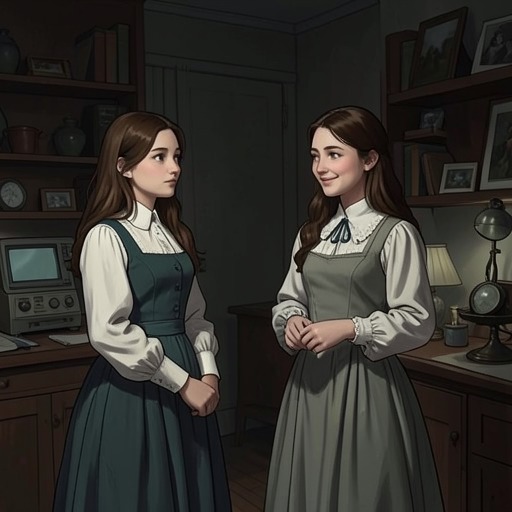
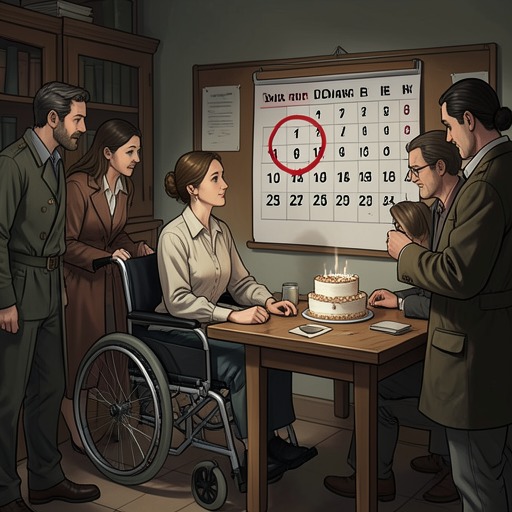
Ella’s birthday and the anniversary of the accident
Cinder & EllaElla’s birthday and the anniversary of the accident coincide on the day she turns nineteen, making a date that once belonged to celebration carry the weight of bereavement and trauma. The first anniversary of her mother’s death is also the anniversary of the crash that left Ella without her mother and separated her from Cinder; the day’s emotional force is shaped both by what it recalls and by the unexpected gestures of remembrance that meet her grief.
A Birthday Bound to Loss
The date arrives on the Friday after Ella’s unsuccessful attempt to imagine a romance with Rob Loxley. She has not told anyone that she is turning nineteen and hopes the day will pass unnoticed. Its significance is impossible to set aside: it is the first anniversary of her mother’s death, and it recalls the birthday a year earlier when her mother woke her with a crooked birthday song and planned to take her skiing in Vermont for the last two days of the school week. Her mother had also promised an expensive dinner and a dessert of Ella’s choice with a candle to blow out. The crash came before Ella could enjoy those plans, binding the memory of a birthday promised to her to the loss that followed.
The anniversary is therefore not just a marker of bereavement. It also brings back the ordinary future her mother had imagined for them: time away from school, a trip together, and a small ritual of celebration. Those unfinished plans give the day a particular ache. Ella is not merely missing her mother in the present; she is encountering the life they expected to share and the birthday celebration that never happened.
The Fear of Being Forgotten
Her dread has a second source in her father’s history of forgetting her birthday. For four or five years, he had either forgotten the date or ignored it. He first forgot when she turned eleven, and the last birthday he remembered was her fourteenth. Each year, Ella tried not to expect much and was disappointed anyway. Her mother had responded by making the birthday the best day of the year, whatever it took, as if her efforts could shield Ella from the hurt of her father’s absence.
Now that her mother is gone, Ella does not know whether her father even remembers her birth date. She refuses to ask him: their relationship is already fragile, and asking would expose how much she still needs from him. She tells herself she will treat the day like any other, but by the time she leaves her room the grief is so heavy that she can scarcely breathe. The date presses together two fears—missing the person who made birthdays feel special and being forgotten by the parent who remains.
Her Father’s Gesture
On the kitchen counter, Ella finds a large bouquet of yellow roses bearing her name. As she stares at the flowers, her father, Richard Coleman, puts an arm around her shoulders and solemnly asks how she is that morning. Ella cannot find words; she only shrugs beneath the weight of his arm. Then he pulls her firmly against his chest. She is initially rigid with shock, but quickly leans into him and returns the embrace as tightly as she can.
The physical movement matters because it turns a feared silence into an encounter neither of them can manage through explanation alone. Her father wishes her a happy birthday in a strained voice. Ella admits she had not thought he would remember, and he acknowledges that he has forgotten too many of her birthdays. The roses and the embrace do not undo that history, but the admission gives the present moment honesty: his effort to remember exists alongside the pain caused by earlier failures. For Ella, the greeting is both a birthday wish and a rare opening in a strained father-daughter relationship.
Cinder’s Promise and the Shared Date
Cinder also remembers what the date means to Ella, though he and Ella have not spoken since she angrily ended their phone call. When they discussed the approaching anniversary weeks earlier, he told her that the day haunted him because he had been chatting with her when the accident happened. To him, it was the day he lost her. Ella told him that it was also her birthday, and he promised to find a way to distract her and help her enjoy the day rather than think only about the accident. Remembering the date thus connects two sharply different experiences of the crash: Ella’s birthday and the death of her mother, and Cinder’s memory of losing contact with someone who mattered to him.
As Ella realizes that Cinder has kept his promise, she whispers that he has followed through and struggles against tears. His care reaches her across their silence: he knows the date and has acted on what she told him, even though she is still angry with him. Vivian notices Ella’s sudden emotion and tries to draw her attention back, asking what promise she means. The moment leaves the promise itself as a private recognition between Ella and Cinder, while showing that his remembrance has already changed the texture of a day Ella expected to endure alone.
The Anniversary at FantasyCon
The same date is shown from Cinder’s perspective at FantasyCon, the annual convention held each November at the Los Angeles Convention Center. As part of the publicity tour for The Druid Prince, he is greeting fans, smiling for the crowd, and performing his staged romance with Kaylee Summers. Although he loves FantasyCon and has attended every year since his sixteenth birthday, he finds this year’s appearance among the worst days of his life: throughout the public performance, he can think only of Ella and what she may be going through.
Cinder cannot comfort her in person because she has stopped speaking to him. He knows she is angry after he refused to meet her, and he recognizes that his refusal hurt her deeply. He had expected her to calm down and forgive him after a few days, but two weeks have passed. He repeatedly logs into their chat and finds Ella inactive. With direct contact unavailable, he turns to an indirect gesture: he posts another message to fans using the hashtag #EllamarasWortederWeisheit, this time sharing a thought Ella had written nearly three years earlier about the Dragonlance novels by Margaret Weis and Tracy Hickman. His public-facing birthday tribute thus carries a private purpose, linking the crowd around him to the absent person on whom his attention remains fixed.
The day’s parallel scenes give the anniversary its defining tension. Ella fears being forgotten, yet her father remembers and Cinder honors a promise; Cinder, meanwhile, remembers the crash as the day he lost Ella but must hide his distress behind a celebrity performance. Birthday and anniversary cannot be separated, but acts of recognition create room within the grief. Neither repairs every fracture—Ella’s relationship with her father remains delicate, and her silence toward Cinder continues—but the date makes remembrance itself consequential.