Ella's book collection
Cinder & EllaElla's book collection is more than a set of treasured volumes: it holds the history of her bond with her mother and the memories that make those books irreplaceable. Its disappearance during Ella's coma turns an attempt to clear out an apartment into a second experience of loss. When books return to her life through blogging and her father's practical support, they help her resume some of what grief interrupted, but they do not restore the vanished collection or the mother whose presence it preserved.
A collection made with her mother
Books had been central to Ella since she learned to read. She spent years building a personal library, and her mother made giving books a recurring birthday and Christmas tradition, sometimes bringing one simply because she felt like it. What might otherwise seem an ordinary hobby was therefore also a practice of being known and remembered: the collection grew through gifts attached to the rhythms of their life together.
Ella also traveled to book signings and book fairs throughout the Northeast, collecting dozens of books signed by favorite authors. At each event, she asked someone to photograph her and her mother with the author, then pasted the picture inside the cover of the corresponding book. A volume thus held more than a signature: it kept a particular meeting and a shared day close at hand. The library joined reading, collecting, and family memory in a single physical form.
Donation and compounded grief
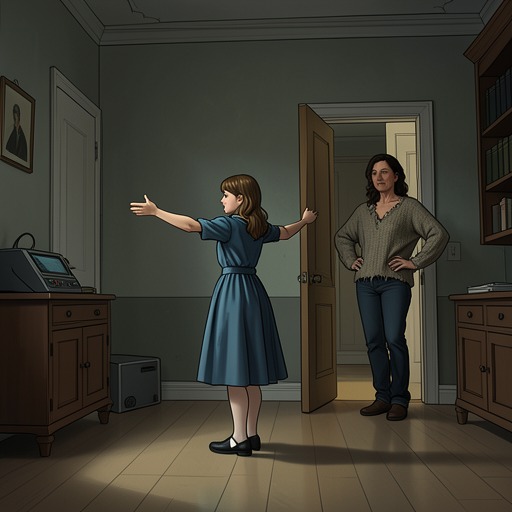
While Ella was unconscious after the accident, her father cleared their apartment and donated the books from the living room. He had packed a few boxes of possessions he thought she might want, including some of her mother's things, but did not understand the significance of the collection. When Ella asked what had happened to her books, his explanation brought on a furious, disbelieving reaction; after the strain of the day, she could not bear to learn that years of collecting had been undone without her knowledge.
The loss was inseparable from the circumstances of her mother's death. The signed volumes contained photographs and memories of the two of them, and Ella understood that neither the books nor those specific moments could be recovered. Their absence felt like having her mother taken from her again. Her father offered to buy new books and take her shopping, intending to make amends, but replacement could not answer the injury: the value lay not simply in owning more books, but in the history embodied by these particular ones. Ella told him he did not understand and asked him to leave, then cried for hours before exhaustion overcame her.
Absence carried into the silence
The destroyed collection also became part of Ella's separation from her former life. In an email to Cinder, she explained that her mother had died, that she had moved in with her father and his family, and that she had been unable to return home, see her old friends, say goodbye, or attend her mother's funeral. Her father had rented out the apartment before she was discharged from the hospital. She had made no contact with anyone from her old life, and the thought of returning to her blog hurt too much—especially because, while she was in a coma, her father had sold all her books.
The library's disappearance thus had consequences beyond the room it once occupied. Ella connected it to the difficulty of writing, remembering, and resuming contact, and apologized to Cinder for vanishing. The email did not erase the silence between them, but it gave that silence an explanation grounded in bereavement and dislocation rather than indifference. The books had been part of the life from which Ella was abruptly cut off; their loss made the prospect of returning to that life feel painful in itself.
A different library and a return to writing
Cinder eventually encouraged Ella to blog again. After watching a film starring Brian Oliver that Cinder had recommended, she sent him her review; he liked it and urged her to post it. Ella agreed, and writing further reviews became easier. Her followers welcomed her back, and the narration presents this return as a gradual mending: pieces of her broken heart begin to fit together, though the original collection remains gone.
When the first box of books from a publisher arrived at the house, Ella had to explain it to her father. He was relieved that she had acquired an interest beyond hiding in her room, and responded with concrete help: he bought her a shelving system full of books and a new e-reader, and arranged for her name to be placed on a press list so that she could attend film screenings for free. Ella still disliked him, but could recognize that these efforts were thoughtful. His response did not undo his earlier decision or reproduce the mother-and-daughter history in the donated volumes. It did, however, support a new reading life connected to Ella's reviews and growing activity outside her room.
Memory within changing family life
The books remain part of a wider pattern in which objects and shared practices bring Ella's mother back into the present. At a family dinner, after her father praised Ella's enchiladas, she answered that they were nowhere near as good as her mother's cooking and began to suggest making her grandmother's sopaipillas for Christmas. The thought of the holiday without her mother struck her with such force that she covered her eyes with a cloth napkin and apologized. Like the lost collection, food could carry affection forward while also exposing the absence that no new family routine could simply fill.
That tension is sharpened by Ella's nineteenth birthday, which falls on the first anniversary of her mother's death and the accident. Her mother had planned a Vermont ski trip for Ella's eighteenth birthday, along with a special dinner and a dessert with a candle; the accident prevented those plans from becoming a shared celebration. Remembering this history clarifies why books were not interchangeable possessions. They belonged to a life of repeated, intimate gestures, and the new books her father provided could support recovery without substituting for those accumulated memories.
The collection's arc is therefore neither a simple story of loss nor one of replacement. Its destruction makes Ella's grief concrete and deepens her estrangement from her father; its later, partial return through publisher books, shelves, and an e-reader accompanies her renewed writing and a more workable relationship with him. Even as she begins to accept that her father is trying, she says she needs time. The books can again furnish a reading life, but their changing form preserves the distinction between starting over and getting back what cannot be restored.