Online harassment and Ella’s deletion of her social media accounts
Cinder & EllaOnline harassment and Ella’s deletion of her social media accounts mark the reversal of her sudden public visibility: after Brian’s attention brings thousands of new readers to her writing, a false story about their relationship turns that same network into a source of abuse. The resulting pressure reaches beyond the internet into school, and Ella responds by withdrawing from platforms and cutting off the channels through which Brian might contact her.
From a return to blogging to sudden visibility
Ella’s renewed online presence begins with a review of Brian Oliver’s film The Long Road Home. After reading her comic, personal apology to him, Brian urges Ella to resume blogging; she eventually posts the review, explaining that an accident had interrupted her work and that a persistent fan persuaded her to return. The post also turns into a lively disagreement with Brian in the comments, where other readers join in. Her blog’s return is therefore both personal and public: Ella resumes a practice she loves, while Brian’s participation helps expose it to a much larger audience.
The scale changes quickly. On her birthday, Vivian shows Ella a message Brian has posted on Facebook, praising her as his favorite blogger and greatest supporter, wishing her a happy birthday, and linking to her review of The Long Road Home. Brian has also shared posts featuring Ella’s words of wisdom. Ella checks Twitter and discovers that her following has jumped from just over 6,000 to more than 25,000 in a day. Rob warns her not to reveal personal details; Ella says she uses a separate email account, separate Twitter and Facebook profiles for the blog, and a mailing address for review copies. These precautions distinguish her public-facing blogger identity from her private identity, but they cannot control how other people will frame her or direct attention toward her.
A manufactured story changes the audience’s response
The danger becomes concrete after the publicity story about Ella and Brian circulates. Brian later admits that the account was fabricated: Ella was not a fan, he had not worked with a charity, and he was no longer engaged to Kaylee Summers when he kissed Ella. He says his management team and Kaylee devised the story at a meeting he did not attend, and that they released it without his knowledge or consent despite his personal assistant’s objections. The false account recasts Ella as a fan whose encounter with Brian was part of a charity project, making the story easier to package publicly while erasing the private relationship it misrepresents.
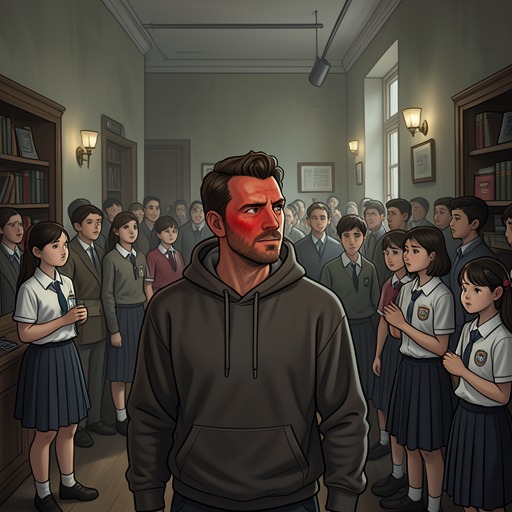
The next morning, Ella’s inbox is overflowing with hate mail. Fans of both Brian and Kaylee condemn her as a disturbed stalker who nearly broke up the supposedly perfect couple. Her blog, Twitter account, and Facebook profile fill with cruel comments. The hostility does not rest on a relationship Ella had publicly claimed: at school, classmates call her a liar for supposedly pretending to be Brian’s friend, although she had never even suggested that she knew him. Online invention thus becomes a social accusation, and the contradiction between what Ella actually disclosed and what others insist she claimed offers no protection.
Harassment at school and withdrawal from platforms
School makes the campaign immediate and difficult to escape. Rob, Vivian, and Juliette wait for Ella and accompany her toward the building, glaring and snapping at anyone who approaches. Their presence keeps some students at a distance, but it cannot stop the laughter and cruel remarks. At Ella’s locker, Juliette suddenly turns and presses herself against it, trying to block Ella’s view. The friends’ solidarity provides a measure of protection, yet the hostility remains public and embodied, not confined to messages on a screen.
After the scandal, Ella deletes her Facebook and Twitter profiles and deactivates her email address. Her blog remains online, but its comments are disabled, and she has published nothing since Saturday. The disappearance is selective: the archive of three years of posts survives, while the interactive routes through which readers—and Brian—could reach her are shut down. Brian is relieved that the blog has not vanished, but recognizes that the barrage on other online platforms has helped force Ella into retreat. Though her private identity has not leaked, Kaylee has exposed her online identity; Ella has also abandoned her phone number and chat ID, making it impossible for Brian to contact her through the channels they once used.
Consequences and significance
The episode exposes the instability of celebrity-amplified attention. Brian’s public endorsement first makes Ella’s writing newly visible and welcomes her back into the blogging community; later, a fabricated publicity narrative redirects that visibility into suspicion, insults, and social isolation. The audience does not merely grow: it changes the terms on which Ella can participate, treating her as a character in a celebrity story rather than as a blogger with a life and a voice of her own.
Ella’s withdrawal is both practical self-protection and a rupture in relationships. She preserves the blog’s accumulated work but removes the platforms and contact details that had allowed readers to find her, and that had connected her to Brian. Brian interprets the vanished profiles and inaccessible contact channels as signs that she has cut him out of her life. His public promise to go out with anyone who can help him reach her underscores the consequence of the false story: the attention that once connected them now leaves him trying to locate someone who has deliberately become unreachable. The harassment therefore does not end simply when Ella stops posting; it alters her access to public space, her connection with her audience, and the possibility of private communication with Brian.