
Gideon’s Refusal of Kingship
Common SenseThis flow traces Paine’s use of Gideon’s refusal to present monarchy as a rejected human demand rather than a natural political order.
increasing Bearing strength in each event
 decreasing
Bearing strength in each eventdecreasingVictory and Acclaim
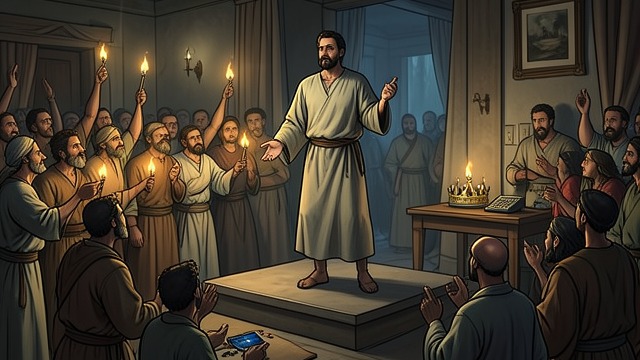
Victory and Acclaim
A Leader Celebrated
After victory over the Midianites, Gideon receives recognition from the people. Their gratitude creates an opening for a new political claim.
Success Creates Temptation
The episode shows how military achievement can encourage demands for personal rule. Public admiration does not, by itself, make a ruler legitimate.
The Hereditary Offer

The Hereditary Offer
Rule for a Family
The people urge Gideon to rule over them and extend authority to his descendants. Their request proposes not merely a leader, but hereditary monarchy.
A Familiar Model
Paine emphasizes the desire to imitate neighboring nations. The offer expresses a political preference shaped by example, not by an unavoidable need.
A Refusal in Principle
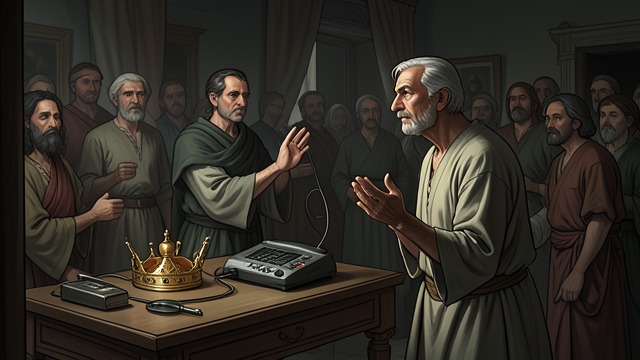
A Refusal in Principle
Rejecting Personal Rule
Gideon refuses to rule over the people and rejects the idea that his son should rule after him. Paine presents the refusal as a direct answer to hereditary power.
A Higher Sovereign
The reply attributes rightful sovereignty to the Lord rather than to a human family. For Paine, it undermines claims that monarchy is naturally authorized.
The People’s Discontent
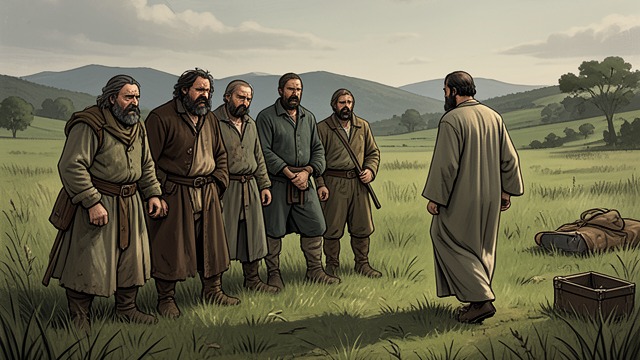
The People’s Discontent
Dissatisfaction with Leadership
Paine connects the later demand for a king to dissatisfaction with the sons of Samuel. A failing administration becomes the stated reason for a more sweeping political change.
Imitation as Motive
The people explicitly seek to be like other nations. Paine treats this as a rejection of a distinct political responsibility, not merely a practical adjustment.
A Warning Against Monarchy
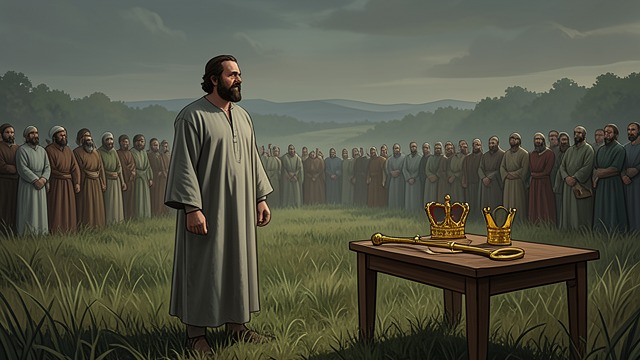
A Warning Against Monarchy
An Alternative Remembered
Gideon’s refusal offers Paine a scriptural counterexample to royal rule. It shows that political authority need not pass into a king’s hands.
A Reusable Lesson
Paine presents the episode as a warning for societies forming their governments. The story’s significance lies in its challenge to hereditary power, not in dynastic succession.
In the scriptural episode Paine recounts
Immediately after Gideon’s victory
At Gideon’s response to the offer
In Paine’s reflection on the later request for a king
At the end of Paine’s account of Gideon
