
William’s Conquest and Royal Legitimacy
Common SenseThis flow traces Paine’s use of William the Conqueror’s invasion to challenge the legitimacy of English monarchy.
increasing Bearing strength in each event
 decreasing
Bearing strength in each eventdecreasingAn Invasion Begins

An Invasion Begins
A Foreign Claimant
Paine describes William the Conqueror arriving in England with an armed following. The origin story begins in military force, not consensual public choice.
A Question of Authority
The conquest provides no self-evident right to govern the native population. Paine invites readers to distinguish victory from legitimate title.
A Crown Established
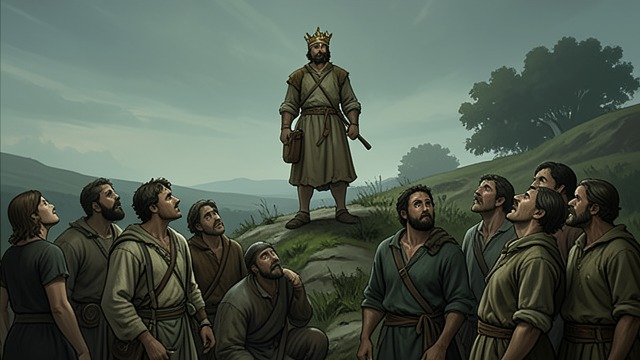
A Crown Established
Rule by Force
William establishes himself as king against the consent of the natives, in Paine’s telling. The new political order follows conquest rather than popular authorization.
An Unhonored Origin
Paine rejects the idea that age can transform an unjust beginning into divine legitimacy. The crown’s history remains open to scrutiny.
Inheritance Built on Conquest
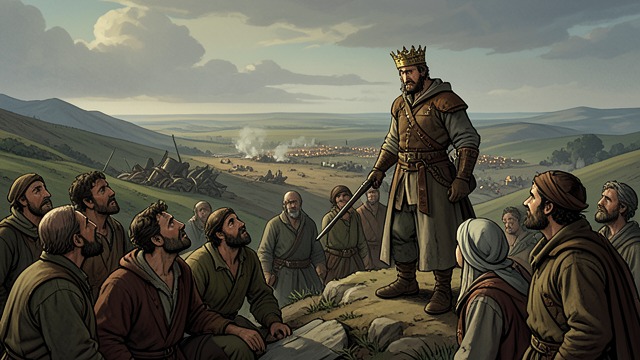
Inheritance Built on Conquest
A Claim Across Time
Later rulers inherit a position whose early foundation was force. Paine questions how descendants could convert an ancestor’s conquest into a permanent right over other families.
Consent Still Missing
The passage of generations does not supply consent from those governed. Hereditary authority therefore carries forward the original problem rather than resolving it.
History Refuses Divinity
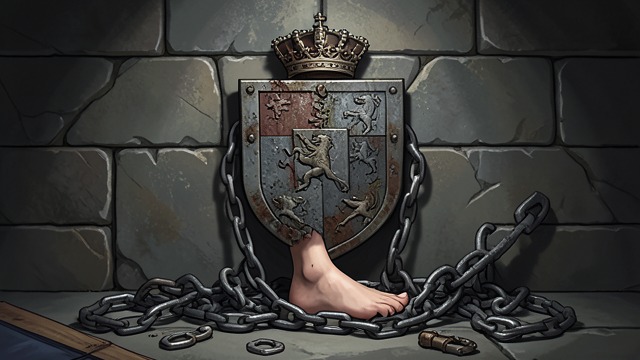
History Refuses Divinity
A Human Beginning
Paine treats the English royal line as a human political construction with a violent origin. Its title cannot become sacred simply through repetition.
Looking Behind Custom
Historical inquiry challenges the reassuring appearance of inherited legitimacy. Paine’s account asks readers to judge the institution by its beginnings and effects.
A Case for Self-Rule

A Case for Self-Rule
The Right to Reconsider
If inherited rule lacks a just foundation, a people need not treat it as untouchable. Paine’s historical argument opens political space for choice.
From Critique to Independence
The conquest story contributes to a larger challenge to British authority in America. It supports the principle that government must answer to those it governs.
At the Norman invasion described by Paine
After the conquest of England
As later generations invoke royal descent
During Paine’s assessment of English royal origins
Near Paine’s conclusion on monarchy
