
A Constitutional Crisis in England
Common SenseThis flow traces Paine’s analysis of the English constitution as a structure whose apparent checks conceal royal predominance.
increasing Bearing strength in each event
 decreasing
Bearing strength in each eventdecreasingA Celebrated Constitution
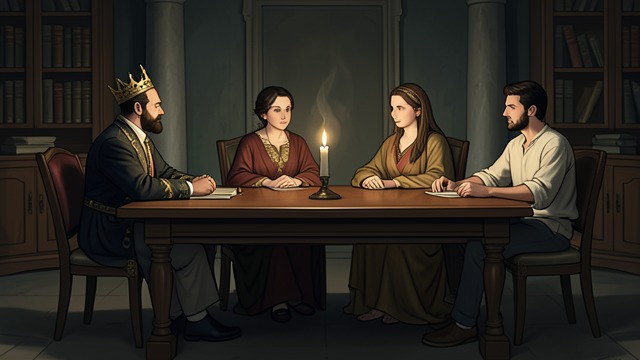
A Celebrated Constitution
The Promise of Balance
The English constitution is often praised as a union of king, peers, and commons. Paine acknowledges its historical appeal in an age of tyranny.
The Question of Performance
Its reputation does not prove that it delivers liberty. Paine examines how its parts actually exercise and constrain political power.
Inherited Powers Exposed
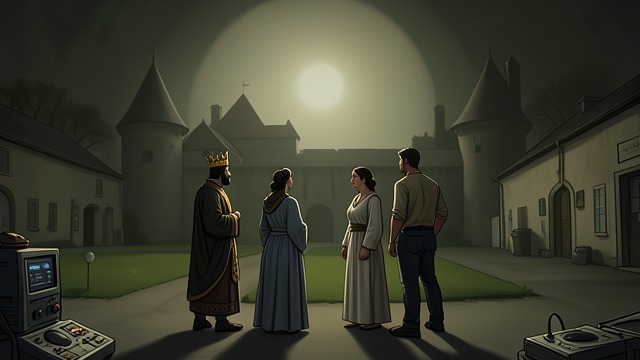
Inherited Powers Exposed
Monarchy and Aristocracy
Paine identifies the king and peers as inherited elements of older systems of domination. Because they are independent of the people, he doubts their contribution to popular freedom.
A Republican Element
The commons, by contrast, represents a new republican component. Its virtue and accountability become central to whether the system can protect liberty.
Checks Contradict One Another
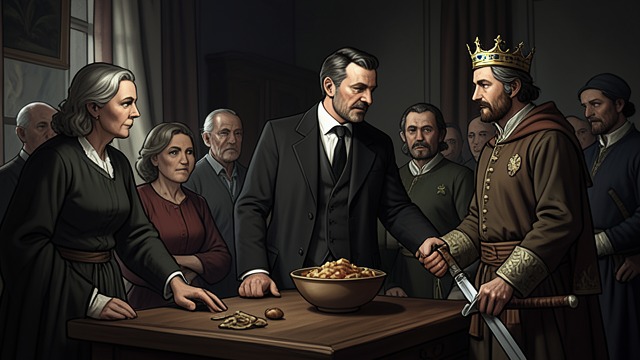
Checks Contradict One Another
Conflicting Claims
The commons can withhold supplies, while the king can reject bills. Paine argues that describing this arrangement as harmonious balance obscures its contradictions.
Confusion Instead of Clarity
A complex constitution can make it difficult to identify responsibility when people suffer. Complexity allows each political part to blame another.
Influence Tilts the Balance
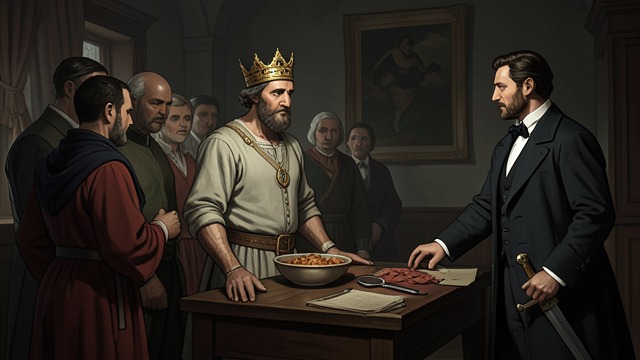
Influence Tilts the Balance
Places and Pensions
Paine argues that control of offices and pensions gives the Crown leverage over representatives. A formal check can lose force when its members depend on royal favor.
The Crown Predominates
The system’s practical balance therefore differs from its official description. Influence, rather than constitutional labels, determines which power ultimately prevails.
The People Become the Real Check

The People Become the Real Check
Public Character Matters
Paine concludes that the restraint on royal oppression comes from the people, not from the constitution’s design. Popular vigilance supplies what institutional structure fails to guarantee.
A Need for Reform
The critique prepares the case for a simpler and more accountable government. Political liberty requires more than a complicated arrangement of inherited offices.
At the start of Paine’s constitutional critique
As Paine identifies the constitution’s components
During Paine’s examination of reciprocal checks
As Paine explains royal control over appointments
At the end of Paine’s constitutional argument
