British Crown–House of Commons relationship
Common SenseThomas Paine presents the British Crown–House of Commons relationship as the central weakness in the English constitution: the Commons is said to check royal power, yet the Crown retains the means to check, influence, and ultimately outweigh the representatives. Because the monarch can reject bills and distribute offices and pensions, Paine argues, the supposed balance does not secure liberty. It allows royal influence to absorb the Commons’ republican purpose, leaving the freedom of the state dependent less on constitutional design than on the virtue of the people.
The Failure of Reciprocal Checks
Paine challenges the description of England’s constitution as a union of three powers—king, peers, and Commons—reciprocally checking one another. The first two are hereditary and therefore, he says, independent of the people; in a constitutional sense, they contribute nothing to popular freedom. The Commons, by contrast, is the republican element, whose virtue is supposed to protect liberty. The arrangement’s defenders make the Commons a check on the king, but this claim already implies both that monarchy has a natural appetite for absolute power and that the Commons merits greater confidence than the Crown.
The contradiction becomes sharper because the same constitution that lets the Commons withhold supplies also empowers the king to reject its other bills. The system thus treats the Commons as wiser than the monarch when it checks royal authority, then treats the monarch as entitled to check the Commons in turn. For Paine, this is not a stable balance but an incoherent assertion of competing superiority. The Crown’s supposed constitutional subordination is further compromised by the question of how it acquired a power that the people are said to fear and must continually restrain.
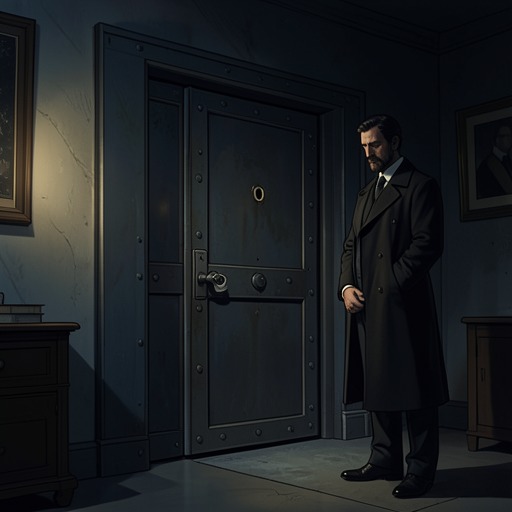
Paine’s mechanical analogy explains why these formal restraints fail. In a machine, the part with the greatest weight governs; other parts may slow its movement but cannot prevent it from prevailing. In the English constitution, he identifies the Crown as that overbearing power. Its influence derives especially from control over places and pensions, which gives it leverage over the Commons despite the visible arrangement of checks. The door against absolute monarchy may appear shut, he suggests, but the Crown has been left holding the key.
Patronage and the Erosion of the Commons
The Crown’s influence is not merely a formal power to reject legislation. By controlling public appointments and pensions, it can diminish the independence of the representatives who are meant to restrain it. Paine therefore describes the Commons as having been effectively swallowed up by royal influence: the republican part remains in the constitutional structure, but its capacity to act with public virtue has been eaten away. The result is a government that retains representative forms while approaching monarchy in practice.
This diagnosis shapes Paine’s account of what the king does. In England, he argues, a king has little more to do than make war and distribute offices. Those powers burden the nation and set its members at odds, while the Crown’s influence over the Commons makes the institution meant to represent the people vulnerable to the very authority it should check. Paine contrasts the value of an honest person to society with that of crowned rulers, directing attention away from royal dignity and toward the consequences of political power.
Paine also disputes the national pride that, in his view, shields the English constitution from scrutiny. Individuals in England may be safer than in some other countries, but he argues that the king’s will can still become the law, with parliamentary acts serving as the channel through which royal power reaches the public. He invokes the fate of Charles the First to suggest that the lesson kings drew was greater subtlety, not greater justice. The relative restraint of the Crown, on this account, comes from the constitution of the people rather than from the constitution of the government.
Republican Character and Political Dependence
The relationship between Crown and Commons is also, for Paine, a test of whether England deserves to be called a republic. Sir William Meredith uses that name, but Paine considers it inappropriate in the government’s present condition: the Crown’s command of offices has weakened the Commons, the constitution’s republican part. What English people chiefly value, he argues, is the liberty of choosing representatives from among themselves. That liberty cannot sustain a republic if the elected body’s independence and virtue are compromised by royal patronage.
Paine accordingly describes the constitution as sick because monarchy has poisoned the republic. The Commons’ presence does not by itself make government republican; the decisive question is whether representatives can act independently of the Crown. When republican virtue fails, he warns, slavery follows. This analysis makes the Crown–Commons relationship more than a dispute over institutional procedure: it is the point at which political dependence turns representative government into a form that preserves its name while losing its substance.
His critique of the British arrangement connects to his argument for American separation. Once hostilities began on April 19, 1775, earlier proposals for reunion with Great Britain, whether pursued by force or friendship, belonged to a political moment that had passed. Paine argues that dependence exposes the colonies to European wars and disputes in which they have no independent interest, and that the distance between Britain and America makes rule from across the Atlantic impractical. His criticism of the Crown’s influence over the Commons therefore supports a wider claim: political authority should not rest with a distant power that cannot adequately know or govern the people subject to it.
A Continental Alternative
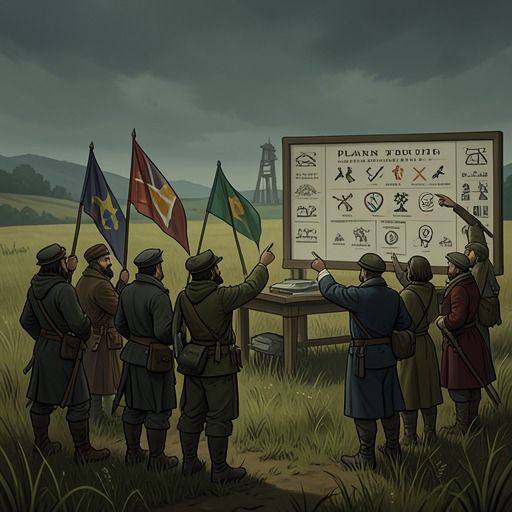
Paine’s proposed alternative begins with representative institutions whose authority is more clearly grounded in the people. He suggests annual assemblies with a president, more equal representation, and domestic responsibilities subject to a Continental Congress. For Congress, he proposes dividing each colony into six, eight, or ten districts, with each colony sending at least thirty delegates and the whole body numbering at least 390. A president would be chosen by ballot from delegates of a colony selected by lot; the colony would then be omitted from the next rotation until all thirteen had taken their turn. He further proposes that a measure require at least three-fifths of Congress to count as a majority.
Because the first move toward such a system raises questions about who has authority to initiate it, Paine proposes an intermediate Continental Conference linking the governed and their prospective governors. Its membership would combine twenty-six members of Congress—two from each colony—two members from each assembly or provincial convention, and five representatives of the people at large from each province. He presents this combination as joining political knowledge with authority conferred by the people, rather than allowing an established body to claim power over the whole without sufficiently broad representation.
The Conference’s task would be to frame a Continental Charter, comparable in function to Magna Carta. It would establish how members of Congress and the assemblies were chosen, when they sat, and how their jurisdictions were divided. It would also secure freedom and property and, above all, the free exercise of religion according to conscience. Once the charter had been framed, the Conference would dissolve, leaving the institutions selected under its rules to govern. The proposal answers Paine’s criticism of royal dominance by making representative authority, clear institutional boundaries, and protected rights the foundations of continental government.
The charter’s public proclamation would make the contrast with monarchy visible. Paine proposes that the charter be placed upon the word of God and crowned, after which the crown itself would be demolished and distributed among the people. The symbolic act declares that, in a free country, the law ought to be king and that there should be no other. Where the British constitution gives the Crown a power that can overbear the Commons, Paine’s design puts authority in a public charter and the law it establishes.
Representation as a Safeguard
Paine’s concern about the Commons also informs his warning against small or unequal representation. He cites a Pennsylvania Assembly petition considered when only twenty-eight members were present: eight members from Bucks County voted against it, and Paine observes that seven more from Chester County could have allowed two counties to govern the entire province. The example gives his constitutional criticism a practical measure. A representative body may claim to speak for the people, but a small attendance and uneven representation can leave the wider community subject to the decisions of a narrow fraction.
He also objects to instructions for provincial delegates that were assembled and approved by only a few people outside the Assembly, then passed in the House on behalf of the whole colony. To Paine, this episode shows how power can be concentrated even without a king: a representative institution may extend its authority beyond what the people have properly entrusted to it. The remedy is not simply to replace Crown with Commons, but to ensure that elections and representation are not monopolized by a limited group or fused into unchecked power.
For the same reason, Paine questions whether a single body should possess both the power of representation and the power of election. Congress had been a necessary and effective response to the immediate crisis, helping preserve the continent from ruin, but emergency convenience should not automatically become a permanent constitutional arrangement. Since Congress would likely continue to exist, the method of choosing its members required scrutiny. Political virtue, he insists, is not hereditary; institutions must therefore be designed so that public authority remains answerable to the people rather than reproducing dependence through inherited status, concentrated patronage, or narrow representation.
Taken together, Paine’s criticism and proposals turn the Crown–Commons relationship into a broader argument about where constitutional power should reside. A legislature cannot guarantee freedom merely by existing alongside a monarch if the monarch controls the means to influence it. Nor does replacing royal authority with representative forms suffice if representation itself is unequal or insulated from popular accountability. Paine’s answer is a continental order in which representatives are broadly chosen, jurisdictions are defined, rights are secured, and law stands above any ruler. The contrast is decisive: the English constitution’s checks leave the Crown with the weight to prevail, while the proposed charter makes the people’s law the source and limit of political authority.