Continental Conference
Common SenseThe Continental Conference is Thomas Paine’s proposed constitutional assembly, designed to bridge the people and their future governors. Rather than leave the colonies dependent on distant British rule or let an existing Congress alone determine the new order, it would combine political experience with authority drawn directly from the public, draft a charter for the united colonies, and then give way to institutions constituted under that charter.
Purpose and Political Setting
Paine introduces the Conference as a way to address the delicate question of how a continental constitution should originate. The proposal follows his argument that hostilities have made earlier plans for reunion with Great Britain obsolete, and that colonial dependence draws America into European conflicts while making it difficult for a distant power to govern a continent fairly. A declaration of independence, he argues, would also allow foreign powers to mediate or treat with America as a nation; continuing to claim British subjecthood leaves the colonies unable to secure those diplomatic possibilities.
The need for a new constitutional process is not, in Paine’s account, a reason to delay independence. It is the practical answer to the uncertainty that independence might otherwise create. Because the Congress and the people stand on opposite sides of the problem of authorization, an intermediate body could gather their interests and turn political separation into a defined, lawful arrangement.
Paine also distinguishes the enduring constitutional task from the provisional means by which the colonies had first organized. The existing Congress had been appointed through the colonial assemblies because urgent circumstances demanded a ready consultation, and its work had helped preserve the continent from ruin. But immediate necessity, he warns, can make a convenient measure oppressive if it is allowed to continue without reconsideration. Since Congress would probably remain necessary, the method for choosing its members required attention; representation and election, he asks, should not automatically belong to the same body.
Proposed Composition and Authority
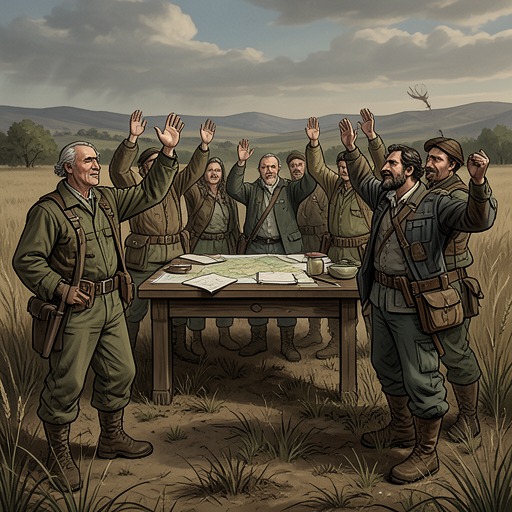
The Conference would combine three sources of participation. It would include twenty-six members of Congress, two from each colony; two members from each House of Assembly or Provincial Convention; and five representatives of the people at large from each province. Those popular representatives would be chosen in the provincial capital or town by qualified voters who chose to attend, or, where that was more convenient, in two or three of the province’s most populous places.
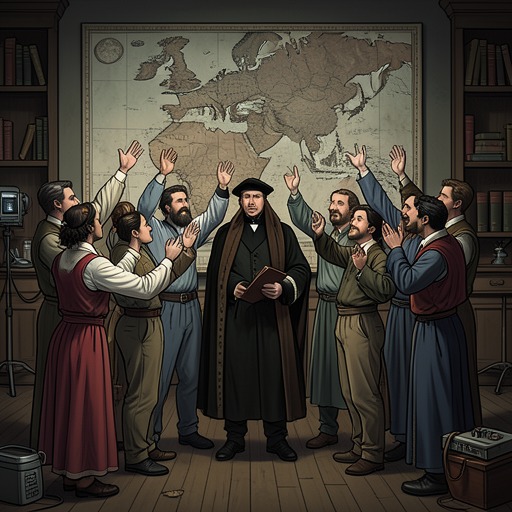
This mixed membership is meant to join what Paine calls knowledge and power. Members of Congress and the colonial assemblies or conventions would bring experience in public affairs; representatives selected by the people would give the gathering legal authority grounded in popular participation. The design thus avoids making either administrative experience or popular authorization sufficient on its own.
The proposal responds to a concrete danger in unequal representation. Paine recalls that when an Associators’ petition came before Pennsylvania’s House of Assembly, only twenty-eight members were present. Eight members from Bucks County voted against it; had seven members from Chester County done the same, two counties alone could have determined the province’s position. He also objects that a small number of people had approved instructions for Pennsylvania’s delegates and that the assembly then passed them in the name of the whole colony. The Conference’s broader basis of representation is intended to prevent a narrow group from speaking for an entire population without adequate authority.
Charter and Constitutional Design
The Conference’s principal work would be to frame a Continental Charter, comparable in purpose to England’s Magna Carta. The charter would set the number of members and the method of choosing both Congress and the colonial assemblies, establish when each body would sit, and draw the boundary between their business and jurisdiction. Paine makes the scale of the arrangement explicit: the colonies’ strength is continental, not provincial.
The proposed division of responsibilities gives colonial assemblies annual sessions, a president, and business confined to domestic matters, subject to the authority of a Continental Congress. For Congress, Paine proposes dividing each colony into six, eight, or ten convenient districts, each sending an appropriate number of delegates, with no colony sending fewer than thirty. On that basis, Congress would contain at least 390 members.
The presidency would rotate among the colonies by lot. At each Congress, one colony would be drawn, and the delegates would elect the president by ballot from that province. At the next Congress, the province just represented would be excluded from the draw; the same process would continue until all thirteen colonies had their turn. To prevent a bare or narrow majority from imposing law, Paine proposes that at least three-fifths of Congress be required for a measure to count as a majority.
The charter would secure freedom and property for all, and, above all, the free exercise of religion according to the dictates of conscience. It would also contain whatever further provisions a charter required. Paine presents these protections not as decorative promises but as the binding terms of union: a charter is an obligation undertaken by the whole to support the rights of every separate part, including religious liberty, personal freedom, and property.
Transition to Government and Political Significance
Once the charter had been framed, the Conference would dissolve. The legislative and governing bodies chosen according to its terms would then govern the continent for the time being. This limited mandate distinguishes the Conference from a permanent legislature: its authority would be directed toward establishing the rules and institutions under which others could govern.
The proposal’s constitutional logic connects political legitimacy to both representation and limits on power. Annual assemblies, broad congressional representation, a rotating presidency, a heightened threshold for lawmaking, and an explicit jurisdictional boundary all address different risks: local domination, concentrated authority, and the confusion of provincial and continental responsibilities. The charter’s guarantees, in turn, define what the union is obliged to protect.
Paine closes the design with a public ceremony declaring the charter. It would be placed upon the divine law, with a crown set upon it to signify that, in America, the law—not a monarch—would reign; the crown would then be destroyed and scattered among the people, whose right it represented. The image condenses the Conference’s purpose: not to install a new ruler, but to create a lawful continental order whose authority derives from the people and whose governing institutions remain bounded by a common charter.