Continental Congress
Common SenseThe Continental Congress is the proposed continental legislature at the heart of Thomas Paine’s constitutional argument in Common Sense. Paine treats it as more than an emergency gathering: it should become a durable, representative authority within a government grounded in the people, bounded by a written charter, and capable of securing independence. Its design joins continental coordination to local representation, while its political legitimacy depends on accountable elections and protections for freedom, property, and religion.
From emergency consultation to permanent government
Paine distinguishes the immediate circumstances that brought the Congress into being from the lasting institutions the continent would need. When America’s calamities required consultation, he says, appointing people from the several colonial assemblies was the readiest and then most appropriate method. The Congress had proceeded with wisdom and helped preserve the continent from ruin. But expedience in a crisis did not make that method a sufficient permanent constitution: Paine expects that the continent will not be without a Congress and insists that the way its members are chosen therefore deserves deliberate consideration.
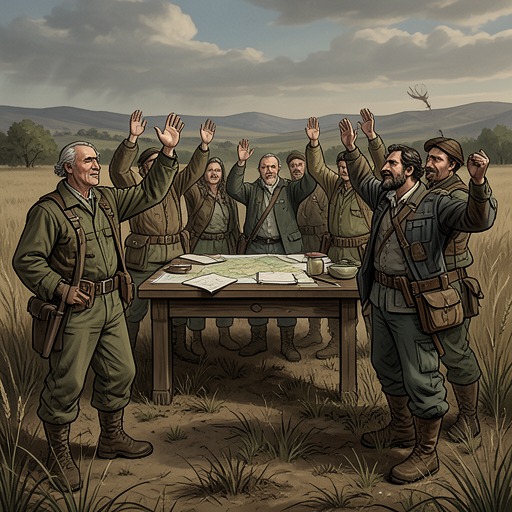
That question is part of a larger progression in Paine’s political reasoning. Society arises from human needs and mutual attachments; government becomes necessary when moral virtue proves insufficient to regulate conduct and protect people. In his account of a colony’s early development, people first assemble beneath a convenient tree, where each man has a natural seat and initial rules rely on public esteem. Growth makes universal assembly impractical, leading the community to entrust legislation to selected representatives. As the community grows further, representation must expand and be apportioned among its parts. Congress is the continental expression of this movement from direct participation toward organized representation, not a substitute for the people as the source of authority.
Paine’s distinction between expedience and right supplies the warning behind this transition. An arrangement suitable in immediate necessity can become oppressive if continued without reconsideration. He asks whether representation and election should be held by one and the same body, framing the problem as a danger of concentrated power rather than merely an administrative detail. The warning is directed toward posterity as well as the present: virtue, he stresses, is not hereditary, so a political system cannot safely rely on the character of its officeholders being passed down or permanently presumed.
Representation, elections, and continental scale
Paine’s proposed structure gives Congress a defined place above assemblies responsible for domestic affairs. Those assemblies would meet annually, have a president only, and conduct business that remained subject to the authority of a Continental Congress. The design thus distinguishes local administration from common continental questions, while making the subordinate status of the assemblies explicit. Paine’s proposal is not simply for a single legislature to absorb every function; it divides responsibility between levels and places their jurisdictions within a constitutional order.
To make continental representation workable, he proposes dividing each colony into six, eight, or ten convenient districts, with each district sending an appropriate number of delegates. Every colony would send at least thirty, producing a Congress of at least 390 members. The figures answer a political concern as well as a practical one: the institutions should be large enough to represent the continent’s parts, rather than allowing a narrow group to speak for the whole. Paine had already described how a growing community could divide into convenient districts and increase its representatives so that the interests of every part received attention; his proposed minimum makes that principle concrete at the continental level.
The presidency would rotate among the thirteen colonies by lot. When Congress assembled, one colony would be drawn, and Congress would elect its president by ballot from that colony’s delegates. At the following Congress, the previous president’s colony would be omitted from the draw; the rotation would continue until all thirteen colonies had their turn. This procedure combines a collective choice with a rule against the office becoming the settled possession of one colony. Paine also proposes that three fifths of Congress, rather than a bare majority, be required for a measure to count as a majority, so that nothing would pass into law unless it had a broader degree of assent.
The frequent-election principle gives representation a further check. Paine argues that elected members should return and mix again with their electors within a few months, preventing them from forming a separate interest and encouraging fidelity to the public. Repeated interchange, in his account, makes representatives’ interests coincide with those of the people and encourages the different parts of the community to support one another. The strength of government and the governed’s happiness, he maintains, rest on that shared interest, not on the name or presence of a king.
A conference and charter to establish authority
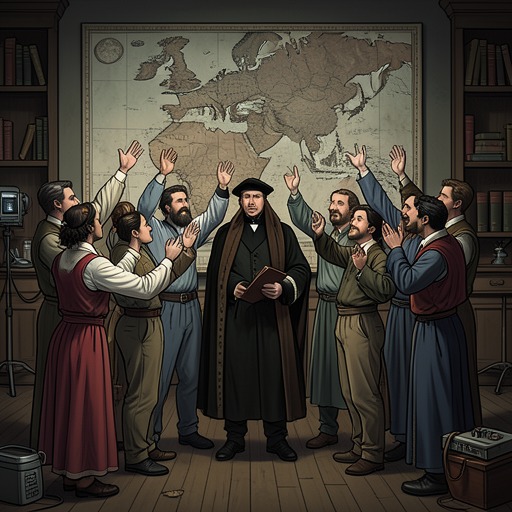
Paine recognizes that the creation of a continental constitution raises a problem of authorization: the work should arise from neither the governed alone nor the existing governors alone, but from an intermediate body connecting Congress and the people. He proposes a Continental Conference for that purpose. Its composition is meant to unite political experience with authority granted by the public, so that the constitution is neither merely an internal decision of existing institutions nor an unsupported declaration by a gathering without legal standing.
The proposed conference would include twenty-six members of Congress, two for each colony; two members from each House of Assembly or Provincial Convention; and five representatives of the people at large from each province. Those public representatives would be chosen in the provincial capital by qualified voters who chose to attend from across the province, or, where more convenient, in two or three of its most populous places. Paine describes the arrangement as bringing together knowledge and power: Congress members and assembly or convention members would contribute experience in national affairs, while representatives chosen by the people would give the conference legal authority rooted in public consent.
The conference’s task would be to frame a Continental Charter, or Charter of the United Colonies, corresponding to what the Magna Carta was called in England. It should determine the number and method of choosing members of Congress and the assemblies, set the dates of their sittings, and draw the line between their business and jurisdictions. Paine insists that the continent’s strength is continental rather than provincial, making the division of powers a means of coordinating the colonies without erasing their distinct representation.
The charter is also a bond to protect rights. Paine calls for security of freedom and property for all, and places the free exercise of religion according to conscience above all other provisions. In his later account, he defines a charter as a solemn obligation undertaken by the whole to support the rights of every separate part, whether those rights concern religion, personal freedom, or property. His image of a firm bargain and a right reckoning presents constitutional obligation as reciprocal: the whole gains durable union by undertaking to defend the parts.
Once the charter had been framed, the conference would dissolve. The Congress and other bodies chosen in accordance with it would then serve as the continent’s legislators and governors. The conference is therefore a constituting body, not a second permanent legislature: its authority is directed toward establishing the rules and institutions under which ordinary government can proceed.
The existing Congress and the hazards of unequal representation
Paine’s institutional proposals are sharpened by his criticism of representation already in practice. He describes a Pennsylvania Assembly vote on the Associators’ petition at which only twenty-eight members were present. Eight Bucks County members voted against the petition; had seven members from Chester County done the same, two counties alone would have governed the whole province. For Paine, the example shows how a small and unevenly present body can turn a local concentration of votes into authority over an entire community.
He also objects to the Assembly’s attempt, in its previous sitting, to claim undue authority over Pennsylvania’s delegates. Instructions for those delegates, he says, were assembled by a very small number of people outside the chamber, then carried into the House and passed in the name of the whole colony. The episode makes representation vulnerable at two points: a few people can claim to instruct representatives for everyone, and a small legislative presence can present its own decision as the will of an entire province. Paine’s demand that people be cautious about trusting power out of their own hands follows directly from this dispute.
He draws a further lesson from an opponent’s criticism. Mr. Cornwall, a Lord of the Treasury, had treated a petition from the New York Assembly with contempt because that body had only twenty-six members, arguing that so small a number could not decently stand for the whole. Paine calls this an involuntary admission of a sound principle: small representation is suspect. His own argument goes beyond numbers alone, however. A body that is both small and unequal is especially dangerous, because it can allow one part of a political community to impose its will on the rest.
Independence, diplomacy, and the Congress’s wider purpose
The case for a lasting Congress belongs to Paine’s wider argument that the colonies must cease to be governed as British subjects and act as an independent continent. He says the hostilities that began on the nineteenth of April have changed the political situation: plans previously directed toward union with Great Britain have been superseded, and reconciliation has lost its influence. Dependence, in his account, also draws America into European wars and quarrels through Britain’s connections, while the distance between the continent and the island makes distant rule slow and ill-informed. He pictures petitions and explanations travelling thousands of miles and taking months to receive answers as an arrangement that cannot provide tolerably convenient government for a continent.
Congress becomes central to independence not only as an instrument of domestic government but as a foundation for relations abroad. While America calls itself a British subject, Paine argues, other powers cannot mediate between the belligerents as they might between two nations at war. France or Spain would have little reason to assist if the purpose were only to repair and strengthen the connection between Britain and America; in foreign eyes, colonists who take up arms while continuing to profess subjection remain rebels. Independence would allow the continent to address foreign courts under its own political standing.
Paine therefore imagines a manifesto sent abroad describing the miseries the colonies have endured and the peaceful remedies they have tried without success, while declaring that they can no longer live safely or happily under the British court. It would also assure other courts of America’s peaceful disposition and willingness to trade. Such a declaration, he says, would do more good than another ship carrying petitions to Britain; under the name of British subjects, the colonies could neither be properly received nor heard abroad. The argument makes constitutional formation and diplomatic recognition interdependent: a representative continental authority would help the colonies act together, while independence would let their case be heard as that of a political community among nations.
The Congress’s ultimate purpose is consequently more than administrative continuity. It is to give a diverse continent a representative means of governing itself, to keep authority answerable to electors, to coordinate common affairs without eliminating local institutions, and to establish a lawful basis for freedom and security. Paine’s proposed charter turns those aims into a public obligation, while the proposed conference supplies a route by which that obligation could be authorized. Together, they mark the shift from emergency consultation to self-government: a Congress made durable not by inherited rank or distant command, but by representation, constitutional limits, and the consent of the people.