House of Commons
Common SenseThe House of Commons is the elected, republican element in Thomas Paine’s account of England’s mixed constitution, but it is also an institution whose independence he regards as compromised. In Common Sense, Paine measures it against a more demanding standard: representatives should remain answerable to the people, and political authority should serve freedom and security rather than hereditary power.
Place in the English Constitution
Paine divides the English constitution into three components: the surviving monarchic power of the king, the aristocratic power of the peers, and the “new republican materials” represented by the House of Commons. The Commons’ virtue, he argues, is where England’s freedom depends. Yet the king and peers inherit their positions and are therefore independent of the people; in a constitutional sense, Paine says, they contribute nothing to the state’s freedom.
He rejects the familiar description of the constitution as three powers checking one another. The supposed balance is internally contradictory: the Commons may withhold supplies to check the king, but the Crown can reject the Commons’ other bills. The arrangement thus treats the Commons as wiser than the king when it grants them a checking role, then treats the king as wiser when it gives him a veto. For Paine, this is not a coherent safeguard but a self-defeating structure.
Dependence and Decline
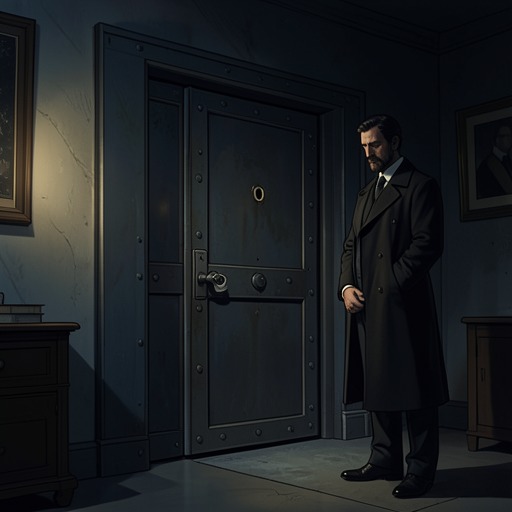
The Commons’ formal place in the constitution does not, in Paine’s view, secure its practical independence. The Crown’s control of offices and pensions gives it an overbearing influence, while the power of royal veto lets it obstruct legislation. England may appear to have shut and locked the door against absolute monarchy, Paine writes, yet it has left the Crown holding the key.
Paine describes the Crown’s influence as having swallowed the Commons’ power and eaten away its virtue. The result is a government approaching monarchy despite the presence of an elected chamber. England’s comparative safety, he insists, comes from the constitution of its people, not from the constitution of its government. The Commons therefore embodies a republican promise that the political structure repeatedly frustrates.
Representation and Accountability
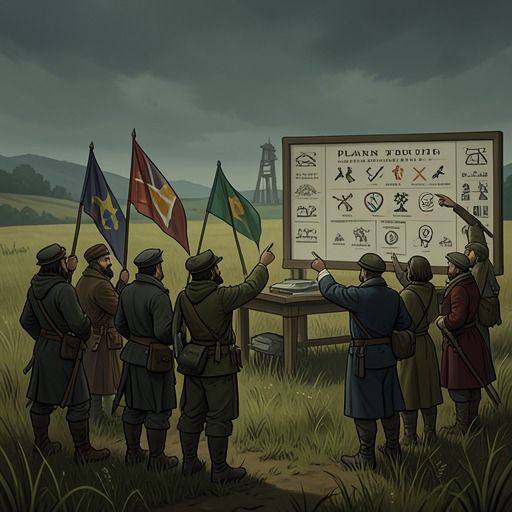
Paine’s alternative begins from the principle that representatives should not form an interest separate from those who elect them. In his account of government’s origins, a small community could meet beneath a tree, with every person holding a seat in its first parliament. As population and public business grew, the community could delegate legislative work to selected representatives; dividing the colony into parts would allow each area to send its own number.
Frequent elections would keep elected representatives connected to their electors. Returning to the general body within a few months, representatives would have reason to consider the public interest rather than make a “rod for themselves.” Paine locates governmental strength and the people’s happiness in this shared interest, not in the mere name of a king.
For a continental government, he proposes annual assemblies with a president, more equal representation, and domestic business subject to a Continental Congress. Each colony would be divided into six, eight, or ten districts and send at least thirty delegates, producing a Congress of at least 390 members. Its president would be selected by ballot from delegates of a colony chosen by lot; the colony would rotate from Congress to Congress, with the previous president’s colony omitted from the next draw. A three-fifths majority would be required for legislation.
A Continental Constitutional Framework
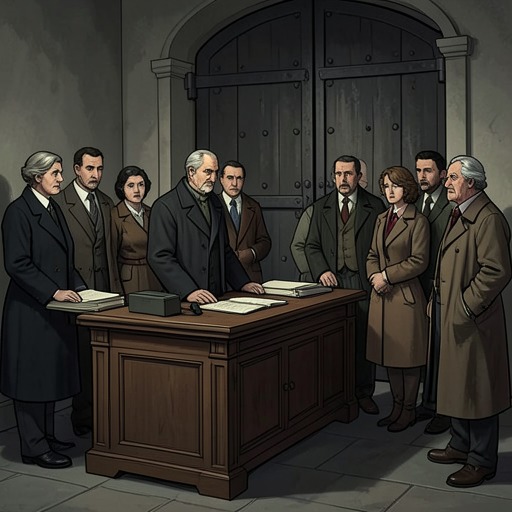
Paine proposes a Continental Conference as an intermediate body between the governed and their governors. It would include twenty-six members of Congress, two from each colony; two members from each House of Assembly or Provincial Convention; and five representatives of the people at large from each province. Those popular representatives would be chosen by qualified voters meeting in the provincial capital or, where more convenient, in two or three populous locations. The conference would unite political experience with authority derived from the people.
Its task would be to frame a Continental Charter for the United Colonies, analogous to Magna Carta. The charter would specify how members of Congress and assemblies were chosen, when they sat, and how their respective jurisdictions were divided. It would secure freedom and property, and, above all, the free exercise of religion according to conscience. After completing the charter, the conference would dissolve, leaving the bodies constituted under it to govern.
This proposed design answers the weakness Paine sees in the House of Commons: political representation cannot be trusted simply because it bears a republican name. It must be broad, regularly renewed, and tied to the people whose interests it is meant to serve. In his constitutional vision, authority rests not in a monarch but in law, and representation is legitimate only when it remains accountable to the community.