
The Electors’ Rival Camps
ConclaveThe Conclave’s ideological divisions turn theological differences into shifting alliances, tactical bargaining, and a struggle over the Church’s direction.
increasing Bearing strength in each event
 decreasing
Bearing strength in each eventdecreasingA Divided College
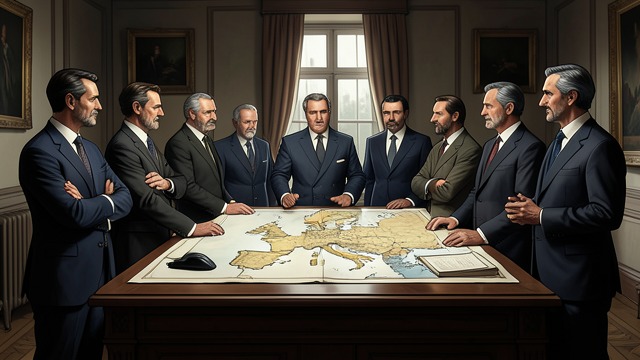
A Divided College
Broad competing visions
Progressives and traditionalists debate the future of the Church while electors gather in Rome. The late Pope’s appointments have brought new voices into a College still shaped by older European power.
A quiet surface
The preliminary congregations pass without open controversy, but Lomeli knows that calm does not mean agreement. The election will expose the divisions more sharply.
Tedesco’s Argument

Tedesco’s Argument
Tradition as unity
Goffredo Tedesco argues that abandoning Latin has made communication harder and weakened a shared Catholic culture. He links liturgical and institutional change to a broader loss of Roman identity.
Reform as fracture
Lomeli rejects the argument, but avoids a public dispute. The exchange makes clear that the papal election is also a struggle over whether diversity strengthens or dissolves the Church.
Bellini’s Reform Platform

Bellini’s Reform Platform
Toleration and participation
Bellini supports respect for other faiths, greater authority for bishops, and more administrative responsibility for women. He rejects a return to pre-conciliar liturgy and discipline.
Strategic limits
His campaign team worries that discussing women’s roles will alienate undecided electors. The caution reveals how a broad reform agenda can be narrowed by the arithmetic of an election.
The African Candidate

The African Candidate
Hope and scrutiny
Adeyemi’s rise draws support from African electors and attention from those who see the historic possibility of a first black Pope. His social views, however, make coalition-building uncertain.
Identity and policy
Some liberals hesitate to criticize his conservative positions because they interpret them as cultural rather than political. His candidacy exposes the tension between representation and agreement on doctrine.
The Final Ideological Clash
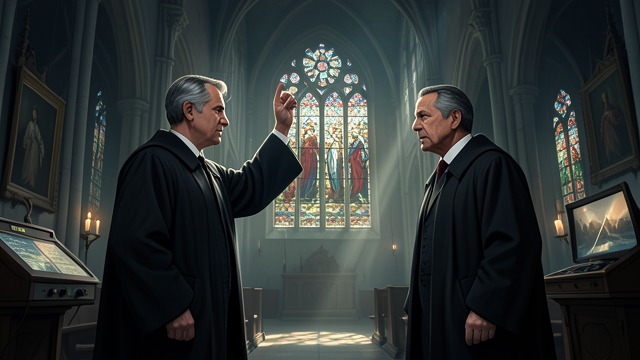
The Final Ideological Clash
A call for strength
Tedesco argues that violence proves the Church needs firmer leadership and resistance to liberal change. Benítez counters with the suffering he has witnessed in Iraq and Africa.
A moral division
The exchange contrasts a politics of retaliatory strength with a witness to Christian nonviolence. The cardinals’ applause for Benítez’s response signals a change in the contest’s moral center.
The weeks of meetings before the election
Dinner on the first night
Dinner on the first night
The second and third ballots
At lunch after the terrorist attacks
