
The Struggle Over the Report
ConclaveLomeli’s discovery of financial evidence forces the electors to weigh justice, privacy, and the legitimacy of exposing a candidate during a secret vote.
increasing Bearing strength in each event
 decreasing
Bearing strength in each eventdecreasingA Search for Proof
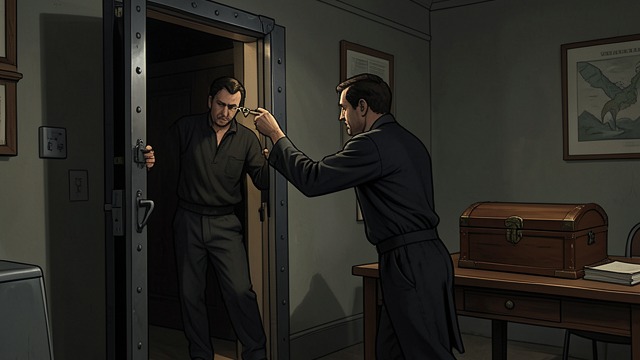
A Search for Proof
Breaking the seal
Lomeli enters the late Pope’s sealed apartment because he believes Tremblay may have engineered Adeyemi’s downfall. He searches for evidence rather than relying on rumor.
A boundary crossed
The symbolic seals break, and Lomeli knows his investigation itself may be condemned. The evidence he finds will not absolve him of the method used to obtain it.
A Financial Archive

A Financial Archive
Wealth and discrepancy
The concealed papers list property values, occupancy figures, and personal bank balances of senior churchmen. They suggest extensive financial opacity within the Church.
A larger scandal
The information turns the election from a contest over individuals into a confrontation with institutional wealth and accountability. Lomeli sees his own name among the records and cannot treat the matter as distant corruption.
A Simony Report

A Simony Report
Payments to electors
The report alleges that Tremblay’s department distributed cash to cardinals in ways designed to advance his candidacy. Names are recorded, and the possible offense carries severe canonical consequences.
Evidence with limits
The report is compelling but incomplete: it does not prove how each recipient used the money or how each voted. Its discovery creates a duty to act without producing certainty.
Redacted Copies

Redacted Copies
Disclosure by design
Lomeli asks Sister Agnes to make copies and blacks out the names of eight cardinals. He wants the College to know the allegation without publicly naming the recipients.
An irreversible act
The sealed reports reach the electors before voting. Lomeli has chosen transparency over private pressure, accepting that his method may damage the very institution he hopes to protect.
Judgment Left to Others

Judgment Left to Others
Refusing to name recipients
Tedesco asks Lomeli to identify the cardinals who received money. Lomeli refuses, saying each man must examine his own conscience.
Accountability without a verdict
Lomeli presents the evidence but declines to pronounce the recipients guilty. The choice avoids one form of public shaming while leaving the College responsible for deciding what the report means.
The night before the eighth ballot
During the nighttime search
Before dawn on the third day
Before breakfast on the third day
During the confrontation in the dining hall
