
The Three Worldly Aspirants
Csongor és TündeThis flow presents the Kalmár, Fejedelem, and Tudós as competing answers to Csongor’s search for fulfillment.
increasing Bearing strength in each event
 decreasing
Bearing strength in each eventdecreasingThe Merchant’s Confidence
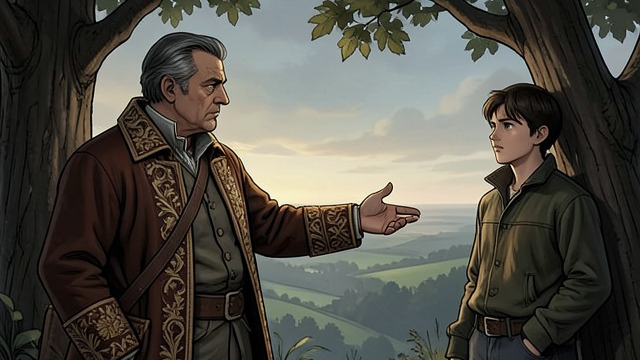
The Merchant’s Confidence
Wealth as a destination
The Kalmár boasts that distant markets and ships place the world’s riches within reach. He imagines using wealth to command comfort, friendship, and even love.
A failed answer
When Csongor asks for directions to Tündérhon, the Kalmár treats the question as foolish and points instead to money. His confidence exposes a limit: possession cannot provide the particular beloved or spiritual purpose Csongor seeks.
The Ruler’s Ambition
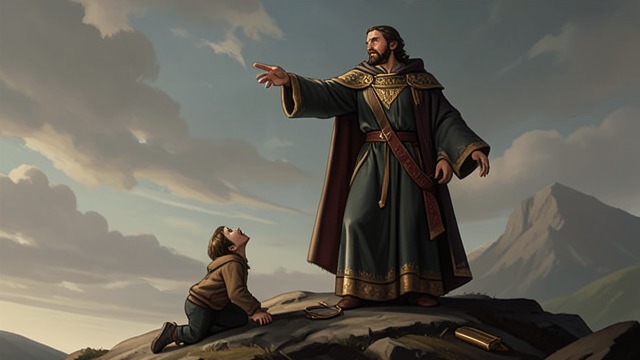
The Ruler’s Ambition
Power without a boundary
The Fejedelem imagines extending his rule until day follows day across the whole earth. His ambition transforms political dominion into a fantasy of controlling even nature and time.
Power’s emptiness
He cannot direct Csongor to Tündérhon and offers conquest as a substitute for the quest. His answer makes authority appear immense yet emotionally barren: command can enlarge a ruler’s territory without satisfying his inward need.
The Scholar’s Uncertainty

The Scholar’s Uncertainty
Knowledge at its limit
The Tudós can catalogue natural phenomena, yet admits that neither nature’s essence nor the soul’s identity has yielded to his investigations. His intellectual honesty is striking, but it supplies no route to the place Csongor seeks.
A bleak counsel
Instead of affirming the quest, the Tudós calls the fairy world a dream and advises Csongor to accept or escape ordinary reality. Csongor refuses: even an uncertain hope is more sustaining than a life stripped of desire.
The Aspirants’ Reversal
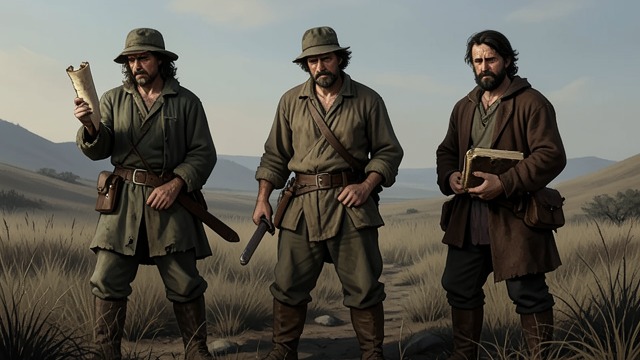
The Aspirants’ Reversal
Fortune undone
Much later, the Kalmár appears impoverished, the Fejedelem stripped of power, and the Tudós still tormented by questions. Their altered circumstances expose the fragility of the pursuits each once trusted.
A living argument
Csongor recognizes them as warnings rather than guides. Their reversals sharpen the contrast between external achievement and inward fulfillment, while showing that his own quest has not yet escaped suffering.
The Question of Fulfillment
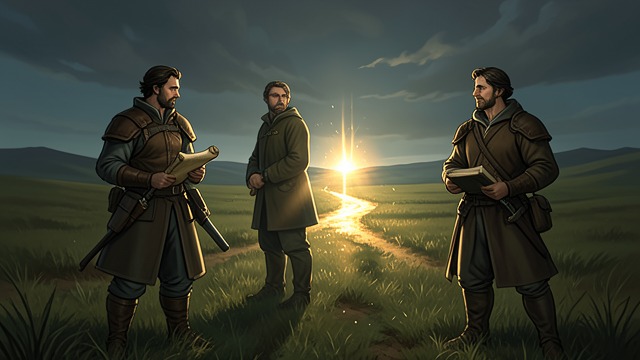
The Question of Fulfillment
Three inadequate models
Wealth, political rule, and accumulated knowledge each promise mastery over some part of life. None can tell Csongor where to find Tünde, and each traveler’s later distress demonstrates the limits of that promise.
Desire as an alternative
The drama does not simply dismiss labor, power, or learning; it measures them against the human need for connection and purpose. Csongor’s continued pursuit becomes an experiment in whether love can offer what the three worldly projects cannot.
At the first crossroads encounter
After the Kalmár departs
After the Fejedelem leaves the crossroads
During their later return as ruined travelers
After the three travelers reappear
