
Love as an Answer to Isolation
Csongor és TündeThis flow explores how the play contrasts loneliness and self-enclosure with forms of love that make shared life possible.
increasing Bearing strength in each event
 decreasing
Bearing strength in each eventdecreasingCsongor’s Inner Exile
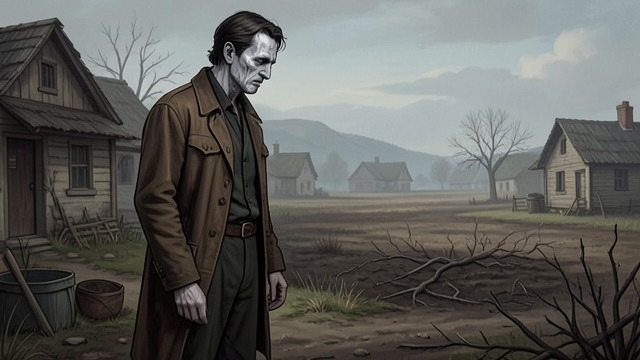
Csongor’s Inner Exile
The world emptied by absence
After Tünde leaves, Csongor describes the world as barren and directionless. His grief makes familiar surroundings feel like an extension of his isolation.
Connection as need
The intensity of his response reveals that his quest is not simply for a place but for a relationship. Without another person to meet, even a vast world becomes emotionally empty.
The Fejedelem’s Solitude

The Fejedelem’s Solitude
Rule without intimacy
The Fejedelem imagines himself sovereign over an immense realm, yet describes himself as painfully alone. His power cannot create the reciprocal affection that might answer that solitude.
A contrast with love
His life warns that mastery over territory is not the same as companionship. Csongor’s refusal of the offer of service places human connection above political absorption.
The Tudós’s Isolation

The Tudós’s Isolation
The self as a question
The Tudós struggles to grasp the soul that thinks, desires, and feels within him. His inquiry reaches the boundary where observation cannot deliver self-knowledge.
A missing listener
He is eager for an audience, suggesting that knowledge itself seeks relation and recognition. Yet his counsel offers Csongor little companionship, and the gap between thought and shared life remains unresolved.
Balga’s Domestic Attachment
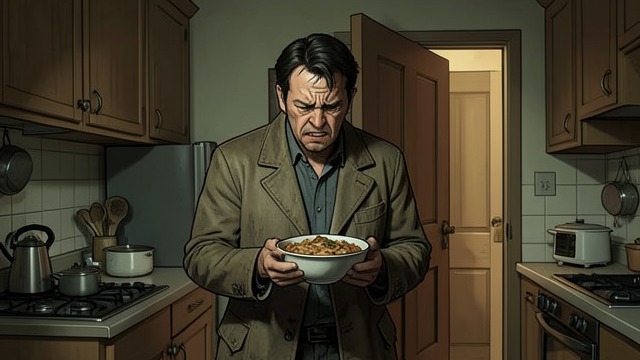
Balga’s Domestic Attachment
Love in ordinary language
Balga expresses his loss through complaints about food, labor, and a wife who has gone away. His vocabulary is comic, but his decision to follow Ilma gives the feeling practical force.
Companionship beyond ideals
Balga’s marriage offers an ordinary counterpart to Csongor’s idealized love. Its affection survives through daily need and shared irritation rather than grand declarations.
The Lovers’ Common Home
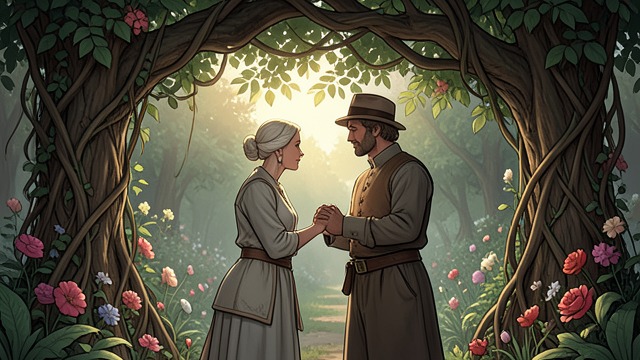
The Lovers’ Common Home
A place made relational
The garden becomes a home when Csongor and Tünde meet there again. Its renewed beauty matters because it frames a life they will share rather than a treasure possessed alone.
Isolation overcome
Their embrace answers the loneliness that marked the long search. The play presents love as a way to inhabit an uncertain world with another person, not as a guarantee against every future loss.
After his first meeting with Tünde ends
At the Fejedelem’s speech near the crossroads
At the Tudós’s meditation on the soul
During Balga’s account of Ilma’s departure
At the ending in the renewed garden
