
The Three Roads of Aspiration
Csongor és TündeThis flow develops the crossroads as a framework for evaluating wealth, political power, knowledge, and the less certain path of love.
increasing Bearing strength in each event
 decreasing
Bearing strength in each eventdecreasingThe Crossroads Image
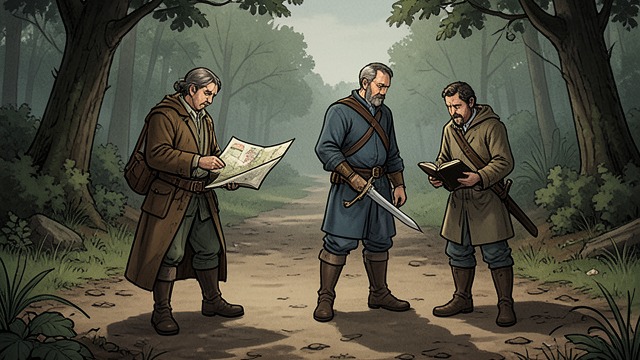
The Crossroads Image
Choice without a clear center
Csongor sees roads meeting and separating, but cannot determine which one truly leads to his goal. The physical junction becomes an image of a life in which direction is uncertain.
A test of orientation
His question is not simply where to walk, but what kind of value can guide a person. The encounters that follow turn the crossroads into a debate about how happiness should be pursued.
The Road of Wealth
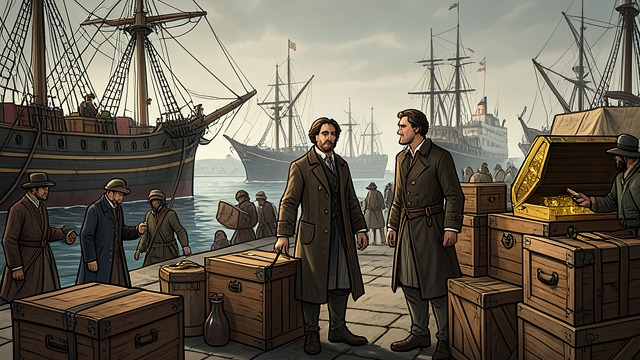
The Road of Wealth
A measurable goal
The Kalmár presents wealth as a tangible route toward comfort and social power. Ships and trade appear to make distant abundance manageable.
A rejected direction
Csongor will not take money as a substitute for the beloved he seeks. The encounter distinguishes what can be counted and owned from what must be encountered in another person.
The Road of Power
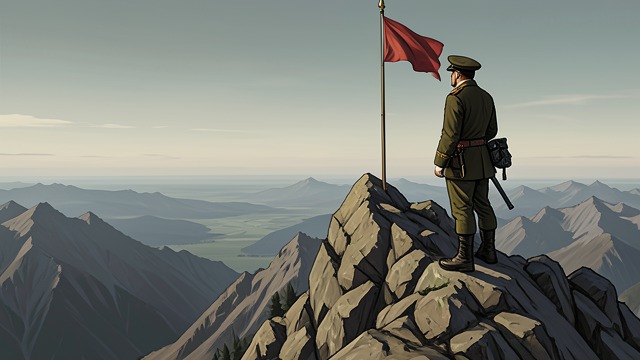
The Road of Power
Expansion without limit
The Fejedelem wants to command a world large enough to keep night from arriving. His ambition imagines happiness as the successful removal of every boundary.
The lonely summit
The speech also reveals the isolation that accompanies his rank. The road of power can produce obedience, but it cannot answer Csongor’s need for a freely returned love.
The Road of Knowledge
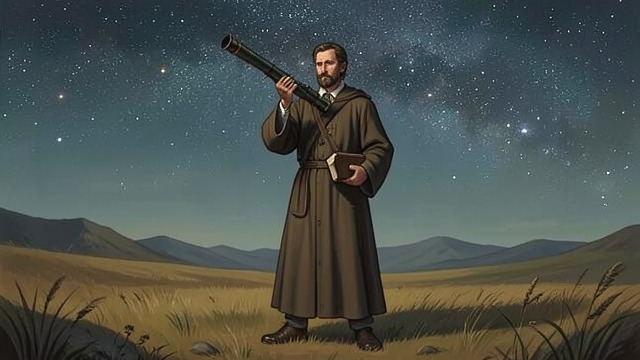
The Road of Knowledge
Inquiry’s achievements
The Tudós has studied the heavens, nature, and life, and can describe many of their workings. His learning represents a serious human effort to make the world intelligible.
The boundary of explanation
He still cannot settle what the soul is or whether a fairy world is real. Knowledge illuminates the limits of its own authority and does not automatically provide a way to happiness.
The Unmarked Road of Love
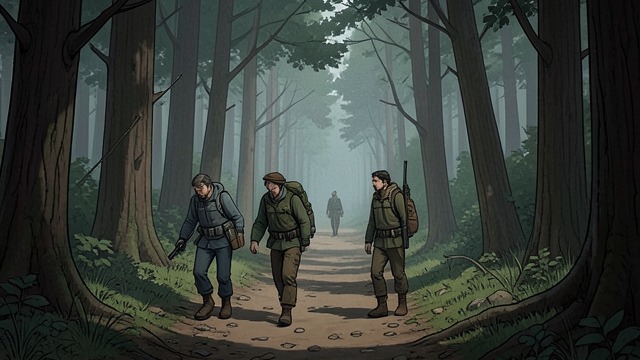
The Unmarked Road of Love
No reliable map
The three travelers cannot show Csongor the way to Tünde. Their examples make his chosen path look less secure than wealth, authority, or systematic study.
Commitment without guarantee
Csongor continues because his goal is a person rather than an abstract achievement. The play leaves the road of love uncertain, but finally connects it to a shared life rather than to possession or mastery.
When Csongor first reaches the Hármas út
At the Kalmár’s appearance
At the Fejedelem’s appearance
At the Tudós’s appearance
After the three travelers have departed
