Ilma
Csongor és TündeIlma is Tünde’s attendant and Balga’s wife, a companion whose changing name and repeated entrances bind the play’s fairy-tale plot to its comic domestic life. First identified through her service to Tünde and marriage to Balga, she is later named as Böske’s transformed counterpart: Csongor tells Balga that Böske is now Ilma and has moved to Tündérhon. Her appearances alongside Tünde keep her present through the changing fortunes of the central pair, while the play’s final movement returns her to the verbal sparring that marks her relationship with Balga.
Identity and Background
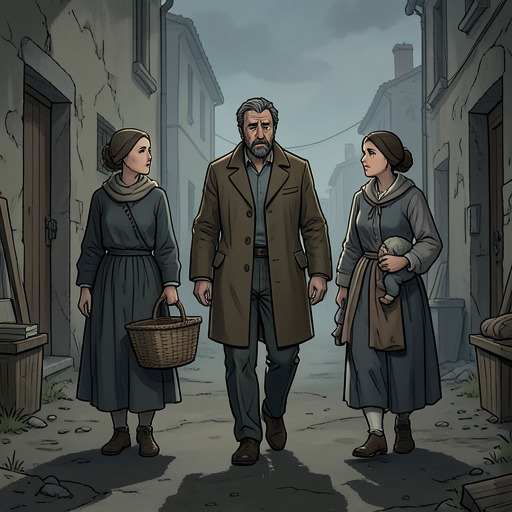
The play introduces Ilma through a concise social description: she is Balga’s wife and Tünde’s servant. Those two bonds place her between the human and fairy spheres from the outset. She belongs to the comic couple formed with Balga, but also accompanies Tünde, the fairy woman at the center of the romance. The text’s identification gives no separate account of her earlier life; her place in the action is established through these relationships.
Her name carries a small but consequential transformation. When Csongor addresses Balga, he says that the woman formerly called Böske is now Ilma, and that she has moved to Tündérhon. The exchange makes the name change part of Balga’s story as well as Ilma’s: the new name and fairy-country destination signal that his wife has crossed into Tünde’s world. The available evidence presents the change directly, without explaining its circumstances further.
Appearances Beside Tünde
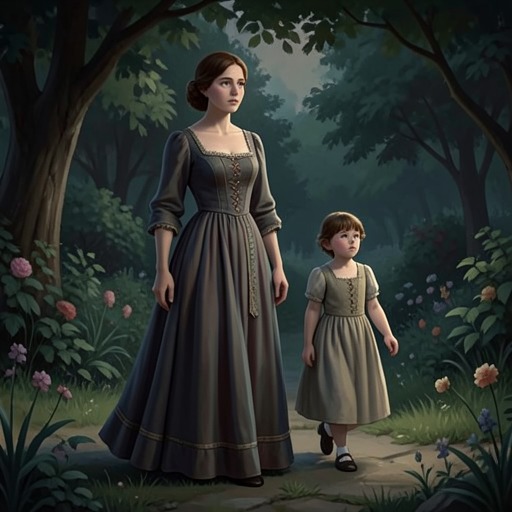
Ilma repeatedly enters in Tünde’s company. In an early scene the stage direction brings Tünde and Ilma on together; the same paired entrance recurs later, reinforcing that Ilma accompanies Tünde rather than appearing as an isolated figure. Their association is also reflected in the character description, which defines Ilma by her service to Tünde. These repeated appearances make the attendant a continuing presence alongside the fairy heroine as the play moves between encounters and settings.
The pairing persists into the fifth act. There, the stage direction places Tünde and Ilma in a desolate landscape, carrying their companionship into a setting that is explicitly bleak. The evidence establishes that they arrive together, though it does not specify in this stage direction what brought them there. At another point Tünde speaks to Ilma with affectionate impatience, remarking on how much she can chatter. The moment gives their established bond a conversational texture: service and companionship coexist with familiar teasing.
Marriage and Comic Counterpart
Ilma’s marriage to Balga gives her a second defining relationship, one that ties her to the play’s comic strand. Csongor’s explanation of the Böske-to-Ilma change is addressed to Balga and connects Ilma’s new name and move to Tündérhon directly with his wife. The change therefore does not simply rename a figure in Tünde’s company; it reshapes the situation Balga must understand, bringing his marriage into the fairy plot.
Near the end, Ilma responds to Balga’s threat to beat someone until he turns into a lump by asking what kind of endless quarrel is taking place. Her intervention registers the comic argument as a continuing verbal altercation rather than a resolved dispute. It also places her back beside the same marital counterpart with whom the play first defines her. The final evidence does not give a fuller account of their reconciliation or future, but it does leave their relationship audible as banter and conflict.
Role and Significance
Ilma’s narrative function rests on connection: as Tünde’s attendant, she accompanies the fairy plot; as Balga’s wife, she belongs to its human comic pairing. The play makes that double position concrete through entrances with Tünde, the report that she has moved to Tündérhon, and her response to Balga’s quarrelling. Her name change is a hinge between the two spheres, while her recurring presence helps sustain the play’s contrast between romantic enchantment and everyday marital comedy.