
Barbara Franklin's Death
CurtainBarbara's plan to poison her husband is reversed by a switched coffee cup, while Poirot shapes an inquest verdict to protect innocent people.
increasing Bearing strength in each event
 decreasing
Bearing strength in each eventdecreasingA Prepared Explanation
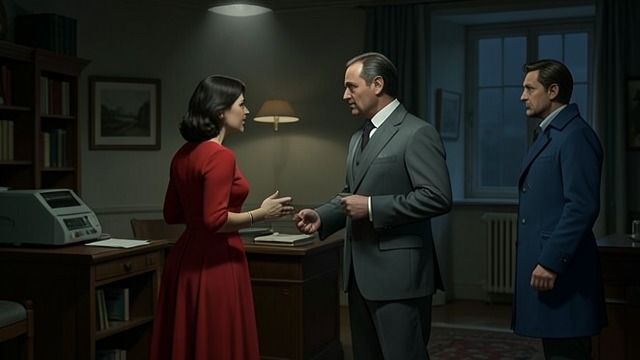
Planting a Future Story
A husband's dangerous work
Barbara tells the household that Franklin may test Calabar-bean poison on himself. The account makes a possible future poisoning sound like an occupational accident rather than an attack.
A second role
She alternates between self-sacrificing wife and lively companion to Boyd Carrington. Poirot later reads these performances as preparation for a life after Franklin's death.
The Poisoned Solution
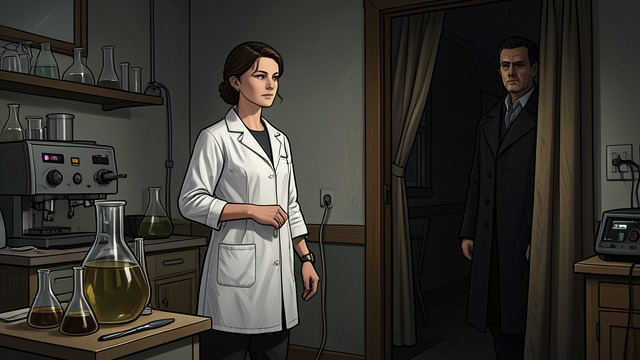
Poison Removed from the Laboratory
Access to the studio
Franklin's Calabar-bean alkaloid solution is diluted with water, and Barbara has had access to the laboratory. Her plan depends on using a substance associated with Franklin's research.
A hidden intent
The evidence later establishes poison in her body, but the scene initially encourages suspicion of accident or suicide. Poirot recognizes that Barbara had intended the dose for her husband.
The Cups Exchanged
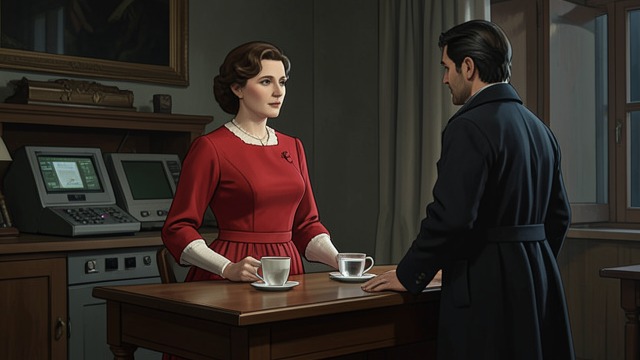
A Fatal Switch
A moment of separation
When the household goes to the balcony to watch shooting stars, Hastings remains by the bookcase. Barbara's coffee and Franklin's coffee are positioned on opposite sides of the table.
The wrong drink
The cups are exchanged, and Barbara drinks the poisoned coffee intended for Franklin. Poirot later understands that the plan failed through the switch, while Hastings's movements help explain why he never noticed it.
The Suicide Inquest
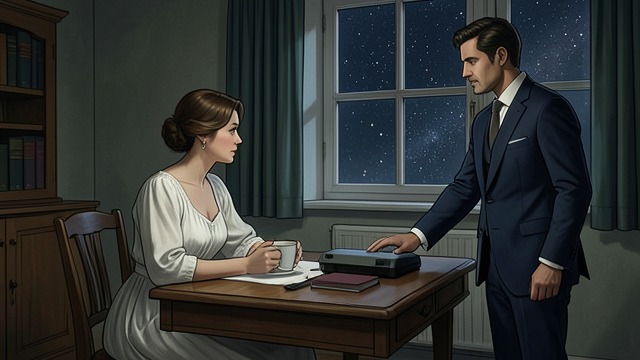
A Verdict Shaped by Evidence
The official account
The inquest hears of Barbara's depression, her remarks about ending life, and Poirot's claim that she left the laboratory with a bottle. The jury rules that she died by suicide while temporarily of unsound mind.
Poirot's intervention
His testimony is deliberately persuasive, though he does not believe the verdict. He wants to prevent suspicion from falling on Franklin or Judith, who are innocent of Barbara's death.
The Calabar Reversal
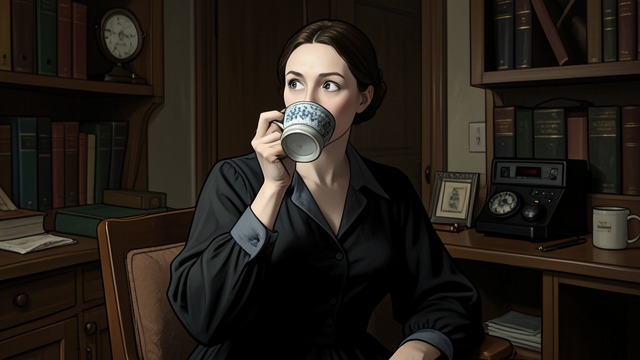
The Intended Victim Survives
A lethal mistake
Poirot explains that Barbara planned to kill Franklin, but drank the poisoned cup herself. The substance intended to take an innocent life instead killed the person who had prepared the poison.
Truth concealed for protection
Poirot keeps the death officially labeled suicide because a public murder investigation would endanger Franklin and Judith. His decision protects them while leaving Hastings to confront the limits of justice and proof.
Before June 10, during Barbara's conversations about Franklin
Before the evening coffee, on June 10
On the evening of June 10, during the shooting-star distraction
Two days after Barbara's death
In Poirot's final account to Hastings
