
Mercy, Usefulness, and Killing
CurtainCharacters defend or contemplate killing as release, social good, or professional necessity, while the consequences expose the danger of treating people as disposable.
increasing Bearing strength in each event
 decreasing
Bearing strength in each eventdecreasingMargaret's Supposed Sacrifice

Freedom at a Terrible Price
A tyrant removed
Margaret Litchfield is said to have killed her father so her sisters could escape a life of confinement. Her action appears selfless, and she accepts punishment rather than fleeing.
Compassion becomes accusation
The case asks whether a benevolent purpose changes the nature of murder. Elizabeth's later doubt reveals that even the story of sacrifice may have been manipulated by Norton.
Judith's Argument

The Duty to Decide
Mercy as responsibility
Judith argues that a strong person may need to end the suffering of someone too weak to decide. She refuses to treat fear of punishment as more important than responsibility.
A principle made dangerous
Her reasoning sounds compassionate, but it grants one person enormous authority over another's life. Norton's later manipulation shows how easily apparent selflessness can conceal desire or coercion.
Franklin's Measure of Life
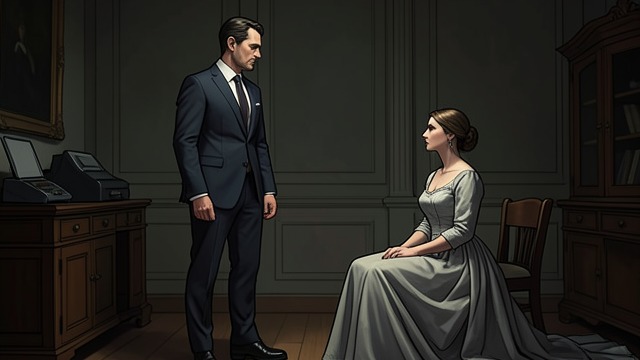
Improving Life, Not Merely Preserving It
A scientific priority
Franklin says he values the improvement of living more than merely extending every life. He speaks bluntly about illness and what he calls unfit or impaired existence.
The danger of abstraction
His language can sound ruthless, yet he is not the murderer the household suspects. The distinction between theoretical judgments and actual violence becomes central to evaluating every character's words.
Barbara's Planned Mercy

A Wife Plans Her Husband's Death
A practical motive beneath care
Barbara presents herself as worried that Franklin may experiment on himself, but she plans to poison him with the research substance. Her concern creates cover for the danger she intends.
Mercy mixed with ambition
Poirot reads her as seeking a future with Boyd Carrington as well as an escape from an unsatisfactory marriage. Her plan is not an uncomplicated act of mercy; it joins self-interest to a prepared narrative of care.
Poirot's Final Exception

Killing to Prevent Killing
An impossible legal remedy
Poirot believes Norton will continue manipulating people and that no conventional proof can stop him. After Norton's observation threatens others, Poirot acts rather than wait for another victim.
No easy moral victory
Poirot's decision saves lives in his judgment but violates the principle he has upheld. He leaves the question unresolved, presenting necessity as a burden rather than a triumphant justification.
When Hastings reads the Litchfield case summary
During the euthanasia discussion before Barbara's death
During his conversation about medical research
On June 10, before the poisoned coffee is served
Before Poirot's death, after Norton's danger becomes immediate
