
The Shape of Poirot's Clues
CurtainPoirot plants clues that appear trivial during the investigation but later expose both Norton's identity and the detective's own concealed role.
increasing Bearing strength in each event
 decreasing
Bearing strength in each eventdecreasingThe Locked Dispatch Box
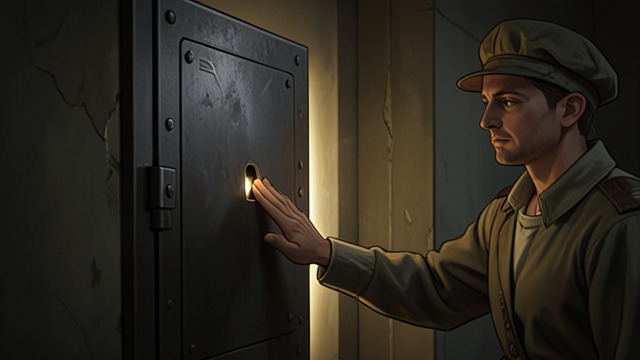
A Case Kept Under Lock
Papers assembled
Poirot keeps summaries and newspaper accounts in a locked dispatch box, showing that his suspicion rests on months of comparison rather than a sudden intuition.
A future safeguard
He later promises Hastings that the box will contain indications if he dies. Its contents become the only route to understanding a case Hastings was never allowed to see in full.
The Missing Case Files
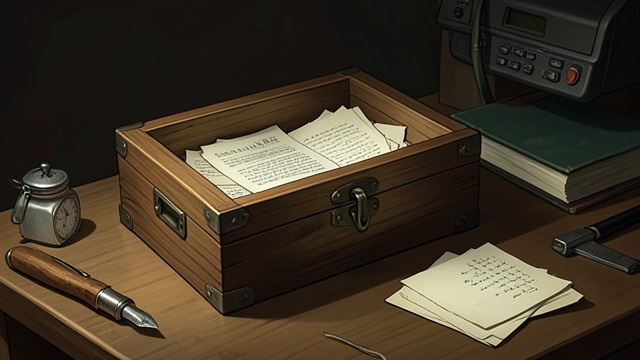
An Empty Space in the Evidence
A disturbing absence
The dossiers on X's earlier cases are gone. Hastings concludes that X has searched the box, though Poirot may also have controlled what remained.
Clues instead of a solution
The box contains books and a note rather than a plain explanation. Poirot has designed a trail that requires Hastings to reconstruct the truth rather than simply read it.
The Note to Georges
A Valet's Name
A small instruction
A slip in the play directs Hastings to talk to Georges. At first Hastings expects the valet to possess a code or a direct message.
A clue to Poirot himself
Georges instead reveals facts about Poirot's departure and hair. The instruction redirects the investigation from the guests to the detective's constructed identity.
Two Plays, Two Roles
Iago and the Instigator
The Detective in the Evidence
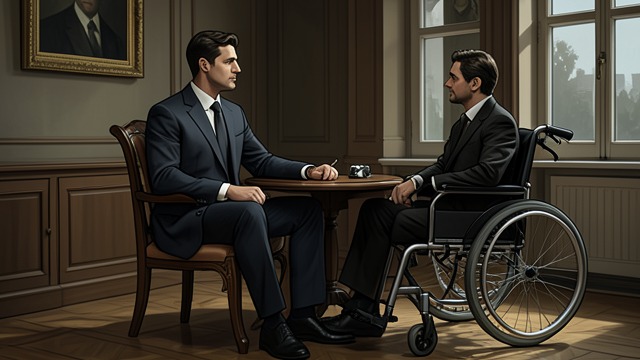
The Clues Point Back to Poirot
A chain of small facts
The duplicate key, Georges's departure, the wig, the wheelchair, and the centered wound form a coherent explanation. Poirot had supplied each detail without naming its significance.
A final self-indictment
The same evidence that reveals Norton's method reveals Poirot's murder. The detective has made himself discoverable, but only by a reader willing to distrust the apparent helplessness he performed.
During Hastings's first visit to Poirot's room
After Poirot's death, when Hastings opens the box
While Hastings turns through John Ferguson
After Hastings reads the manuscript's literary explanation
At the final reconstruction of Norton's death
