
The Cost of Looking After Others
CurtainCare becomes a contested force across the novel: it may protect, restrict, manipulate, or disguise self-interest, depending on who claims authority over another life.
increasing Bearing strength in each event
 decreasing
Bearing strength in each eventdecreasingCare as Dependence
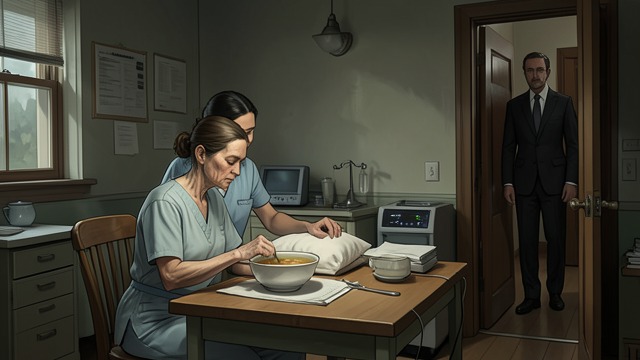
The Patient and Her Attendants
A household organized around illness
Barbara's poor health requires attention from Franklin and Nurse Craven. Her symptoms shape meals, work, and social plans.
Care interpreted as control
Some guests believe she trades on illness; others see genuine fragility. The uncertainty makes care itself a form of power, because those around her must decide whether to serve, resist, or doubt her.
Care as a Father's Duty

Protection Turns Into Control
A parent assumes responsibility
Hastings believes he must prevent Judith from suffering because her mother is dead and he is the remaining parent. He treats her choices as problems he must solve.
Harmful intervention
His concern nearly leads him to kill Allerton. The episode shows that protective love can be manipulated when it refuses to recognize the other person's agency.
Care as a Moral Argument

The Strong Decide for the Weak
Judith's claim of duty
Judith argues that a capable person may have to end another's suffering. Her language transforms killing into responsibility and compassion.
The danger of unilateral judgment
The claim assumes that the decision-maker can know what another person needs. Norton's influence and Barbara's plan reveal how readily care language can conceal ambition or personal desire.
Care as a Cover Story

Concern Concealing Harm
A plausible warning
Barbara worries aloud that Franklin may test the poison on himself. Her concern encourages everyone to imagine his possible death as scientific risk.
A plan hidden inside tenderness
Poirot concludes that Barbara is preparing to poison Franklin herself. The language of protecting a husband becomes a cover for removing him and pursuing another future.
Care Without Possession

A Gentler Kind of Help
Support rather than command
Poirot asks Hastings to trust Judith and help Elizabeth escape the shame attached to her family history. His final advice is to offer support without controlling another person's choices.
Responsibility with humility
He does not promise that care can prevent all pain. Instead, it can make truth and companionship possible, while recognizing that another person's life cannot be managed like a case.
During early conversations about Barbara's health
During Hastings's crisis about Judith
During Judith's euthanasia debate
When Barbara explains her fear about Franklin's experiments
In Poirot's last message to Hastings
