
The Work of Making Art
Dark Lies the IslandCaoimhin and Patrick approach artistic work through failure, uncertainty, and attention, finding that creative progress cannot be commanded into existence.
increasing Bearing strength in each event
 decreasing
Bearing strength in each eventdecreasingCaoimhin’s Long Silence
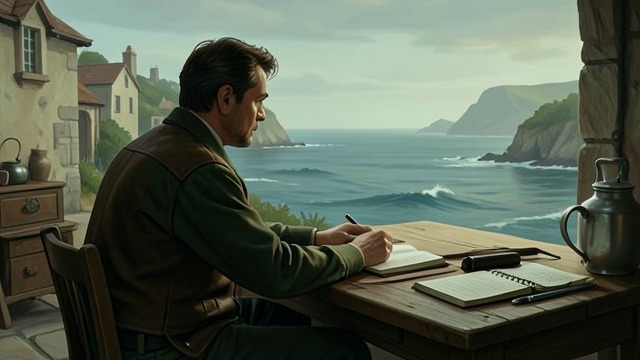
Poetry Without Movement
A hoped-for landscape
Caoimhin leaves the city believing that the coast and mountain air may renew his writing. Instead, the hotel consumes his attention, and the weather and isolation intensify his negative thoughts.
He has gone years without a new collection and finds that sitting at a page makes him want to cry. The countryside has not supplied the poetic transformation he expected.
Failure of the retreat
Caoimhin recognizes that changing place has not settled the deeper pressures within him. The romantic language of a westward flight has given way to the repetitive duties and bleak views of his daily work.
His silence becomes a test of whether he can accept a life that does not conform to his plans. The flood later makes that acceptance possible, though it cannot guarantee that poems will follow.
Silvija’s Advice About Work
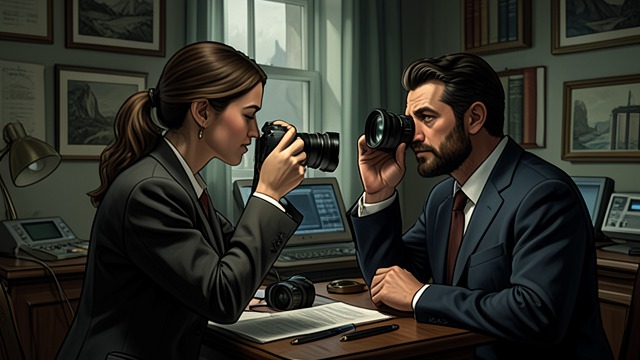
Art Beyond the Front Mind
A theory of creation
Silvija tells Patrick that artistic work happens when the conscious mind stops forcing it. Anxiety can mean that a person is working, she says, because the story may be forming in the subconscious rather than arriving as a finished idea.
Her advice rejects a simple formula for producing good work. The artist can remain available, but cannot command luck or decide exactly when a story will come.
Patrick as apprentice
Patrick wants a concise explanation and a guarantee that his writing will improve. Silvija offers neither, instead asking him to tolerate uncertainty and let experience accumulate.
The lesson connects her photography to his prose. Both depend on looking closely at life without reducing it to a marketable object or a controlled performance.
A New Idea in the Flood
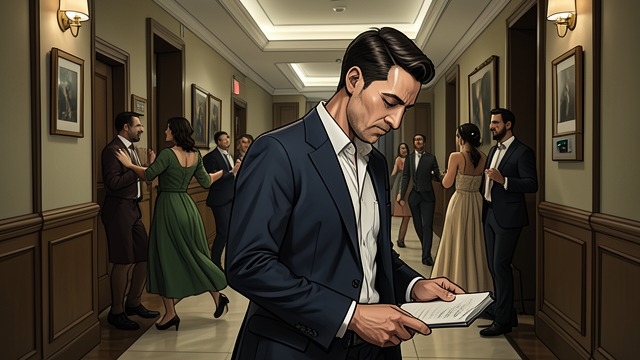
Creative Attention Returns
Acceptance before inspiration
Caoimhin reaches a point at which he accepts the possibilities of loss, failure, and uncertainty. He makes this decision while surrounded by guests dancing in a threatened hotel, rather than while alone with the landscape.
Only after loosening his demand that life produce a particular outcome does he begin to notice phrases and images arriving. He searches for a notebook as the possibility of writing returns.
Work as receptivity
The moment does not mean that the flood has cured his silence or that a successful poem is assured. Instead, it changes his relationship to the silence: he can receive what comes without insisting that it justify the move west.
The story’s account of artistic renewal is therefore modest and contingent. Creative work begins not as mastery but as availability to experience.
Eight months after he moves to Killary
Mid-summer 2005, on a Berlin street after selling passports
Near the end of the flood night at Water’s Edge Hotel
