Ernestine and Kit’s child-abduction spree
Dark Lies the IslandErnestine and Kit’s child-abduction spree is a pair of increasingly disturbing attempts to take a small child, first at a castle and later from an Asda customer-services desk. The first attempt collapses when Allie’s brother instinctively points out where she is; the second succeeds, only for Ernestine and Kit to decide the toddler is not worth the risk and leave the child beneath hawthorn bushes. Together, the episodes turn the women’s language of tenderness into a chilling instrument of deception and show how their plans combine rehearsal, opportunism, and abrupt abandonment.
The Castle: An Opening in the Crowd
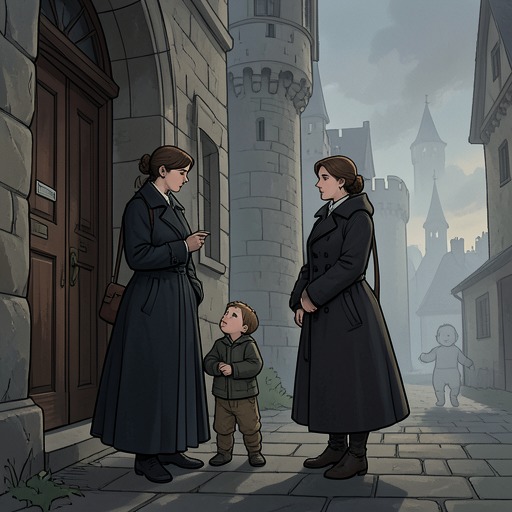
Ernestine and Kit wait at a distance while a family finishes eating, hoping to have encountered them at the beginning rather than the end of their visit. When the family heads into the castle instead of the car park, the women follow them through its cool passageways and blend into the stream of visitors near the chain mail, heraldic crests, and dark stone walls. The setting offers the turns and sudden twists of a labyrinth, and the child’s parents allow their little girl to wander far enough away that she is briefly forgotten. Ernestine feels a flush rise from her shoulders to her neck as the opportunity takes shape.
The family’s attention fractures further during a quarrel. The father shouts at the boy, absorbed in a video game rather than Ireland’s heritage; the mother scolds the father, and the little girl slips from notice again. Kit tells Ernestine to move. Ernestine takes a tube of wine gums from her bag and approaches with a smile, hoping to bring the child’s warmth briefly into her life. The gesture is an unmistakable blend of appetite and performance: the sweets and affectionate manner make a calculated approach look harmless.
Allie Discovered, the Abduction Interrupted
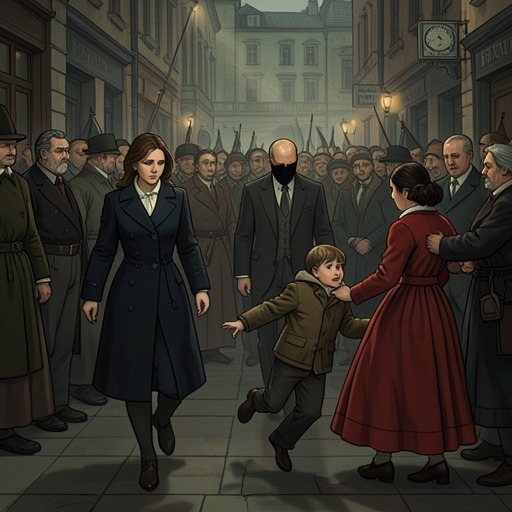
The women move from approach to attempted seizure when Ernestine tells Kit to take Allie. Kit draws the girl into an embrace that doubles as a restraint, placing her forearm across the child’s mouth and lifting her close. Ernestine presses Kit forward and urges her to go. At that exact moment, Allie’s brother draws her back into the family’s argument. He instinctively knows where his sister is and points her out, complaining that she is allowed to do as she pleases. The parents turn and see Allie in the arms of the woman with the tight perm.
The mother screams Allie’s name. Kit responds with a practiced emergency maneuver: she pinches the soft flesh behind the child’s knees, making her shriek and cry. The distress gives Ernestine and Kit a plausible pretext to present themselves as concerned strangers helping a lost child. They coo over Allie and talk as though they are calming her and returning her to her mother. Their performance works; the family gratefully thanks them, and the reunion leaves Allie with her parents, still weeping.
The women leave with fond smiles and waves, then turn directly for the car park. They barely get away before the father appears in the rearview mirror’s sightline, too late to stop them. Even if he records the car’s registration, the plates are false, fitted that morning at the garage attached to their bungalow. Ernestine drives at speeds twenty, thirty, and forty kilometres over the limit through Sligo, County Leitrim, and County Cavan. They do not let themselves speak until they cross the bridge from Blacklion into Belcoo, using the border and the separate jurisdiction of Northern Ireland as part of their escape. Ernestine then admits that the danger has left her worried about her blood pressure.
A Second Opportunity at Asda
The spree continues after a stretch of failure. Ernestine and Kit go sulkily through Asda, loading their trolley with screw-top New Zealand Cabernet Sauvignon, frozen mince in five-kilogram packages, and the large kitchen-towel rolls they consume in quantity. The fluorescent glare, refrigerated aisles, piped music, and their tiredness make the shopping trip oppressive; the day seems to confirm that their luck will not turn. Near the customer-services desk, however, an announcement says that a toddler has been found and asks the parents to come forward. The child is panicked. Ernestine and Kit take the opportunity boldly.
Ernestine rushes to the desk and flings herself onto the toddler, while Kit watches her back. Kit knows they may have only a minute, even in a store as vast as Asda. Ernestine soothes the screaming child by describing the incident as a small shock. Kit performs gratitude, and the customer-services worker, pleased to have reunited what she takes to be an odd family and eager to be rid of the screaming child, waves them on. The women exploit the worker’s wish to help and move the toddler away under the appearance of a reunion.
Kit holds the child in a firm lock with her steel-wire arms as the women hurry across the car park, leaving their trolley behind in the air-conditioned aisle. Ernestine guns the Toyota through town. The abandoned groceries and sudden departure mark how quickly the supposed shopping trip becomes a getaway. The toddler is no longer a child briefly separated from its parents but a captive being carried off by two adults who have made a public service desk part of their deception.
Abandonment and the Pattern of Their Method
In the car, Kit wonders whether they have an itinerant child on their hands. After considering the toddler, the women decide the child is not worth the effort or the risk. The decision changes the episode’s outcome from concealment and flight to deliberate abandonment. Kit lifts the toddler from the back seat, carries the child across a ditch, and leaves it beneath hawthorn bushes beside a lay-by. The women frame the shade as a kindness against the still-hot sun, but that small provision does not alter what they have done: they drive away, relieved to be rid of the child, and head home to their bungalow, whose windbreak pines stand over ground described as adept at hiding things.
As evening wears on, the toddler sits silently beneath the hawthorn, stunned and too exhausted to cry. Midges rise from the lake and feed on the child; a pair of hooded crows stalk nearby, waiting for the toddler to weaken and close sore eyes in sleep. The account’s attention shifts from the women’s hurried calculations to the helpless child they have left behind. That shift makes the final consequence explicit: the pair’s decision to abandon the toddler exposes the child to isolation, insects, and predatory birds, without any assurance of rescue.
Across both attempts, Ernestine and Kit rely on brief lapses in adult attention, friendly talk, and an improvised appearance of care. At the castle, Allie’s brother interrupts the plan before the women can escape with her, and the false plates protect their getaway after they stage a comforting reunion. At Asda, a public announcement and a worker’s relief at resolving the situation give them another opening; this time they leave with the toddler, then discard the child when the risk seems too great. Affectionate names and soothing gestures do not soften the pattern. They are the surface of an opportunistic method whose consequences fall on the children.