Escape from Evan’s caravan
Dark Lies the IslandEscape from Evan’s caravan is the unnamed narrator’s escape from days of captivity at Evan the Head’s farmyard near Gort, achieved by turning the caravan’s decayed floor into an exit and driving away in a Fiesta. The episode moves from confinement and physical weakness to a narrow, uncertain passage beneath the vehicle and into the night; the memory of May-Anne at Garrettstown accompanies the flight, giving the sound of a damaged tyre the refrain “kiss-me-quick.”
Captivity and the Caravan
The escape follows the narrator’s arrival at Evan the Head’s property. The farmhouse is in poor condition, and Evan says the narrator would be better off outside in the caravan. Its lock is broken, but a chain and padlock hold the door shut. The dogs in the yard are large but fearful, retreating as the narrator passes. What first appears to be makeshift accommodation becomes a place of confinement.
The narrator is held there for days and nights, losing count. The windows are rusted shut, and Evan and the others bring no food or water. The narrator grows weak; the dogs, tethered on the same length of chain, seem to register his condition. By day, Elsie and Suze come to the door and whisper, while Evan makes tapping noises on the roof at night. The episode presents the caravan as a space controlled from outside: its chained entrance, sealed windows, and the narrator’s dependence on others leave no ordinary way out.
Finding a Way Through
A chance discovery briefly restores the narrator’s ability to think clearly. Crawling beneath the sink, he finds two old tins of Campbell’s Cream of Tomato Soup, drinks them cold, and then becomes sick. The food does not resolve his weakness, but for a short time his thoughts seem clearer. While using the chemical toilet, he notices that years of spillage have rotted the floorboards and that a section has been replaced with plywood. The detail transforms the caravan’s neglect into a possible route of escape.
The narrator waits until the farmhouse is dark and quiet. After Evan has been on the roof making his usual taps, he unhooks the chemical toilet and lifts it away. The plywood comes loose easily, and he opens a gap roughly two to two and a half feet wide. He squeezes through, passes an axle, and crawls along the wet ground beneath the caravan. The dogs watch from close to the ground but make no sound. He emerges, rests against the vehicle until his heart slows, and walks to the Fiesta.
Flight from the Farmyard
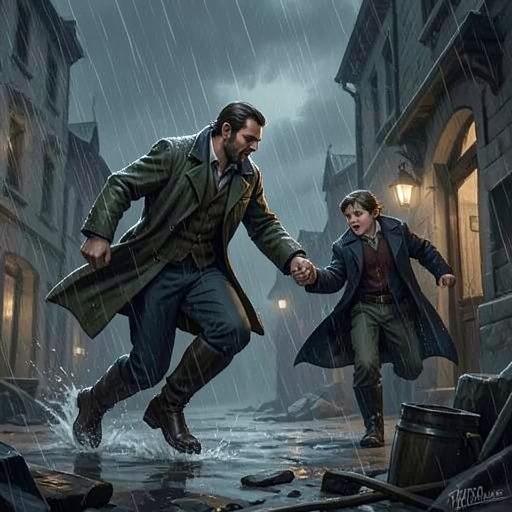
The narrator gets into the Fiesta and removes the panel covering its wires, knowing how to connect them to start the car. No lights come on in the farmhouse as he sets off. He is only partway down the crooked boreen when the house lights switch on and voices, doors, and footsteps signal that the escape has been discovered. Keeping his eyes ahead, he continues toward the road. A tyre catches on rocks and is torn, but he keeps driving into the night rather than stopping.
The damaged tyre’s repeated slap becomes a rhythm the narrator hears as “kiss-me-quick, kiss-me-quick.” As the sounds of pursuit fade, he associates them with May-Anne, his sweetheart, before they too recede. The road carries him to a rise from which the lights of Gort are visible below. The escape therefore ends not with a return to safety fully described, but with distance from the farm and a clear view of the town.
Memory, Space, and Narrative Function
During captivity, the narrator recalls a summer day at Garrettstown with May-Anne. They run together on the windy beach, and he buys her a 99 before their bus back to town. At a seaside shop she repeats “kiss-me-quick” in a cartoon duck’s voice; he pecks her cheek, and she squeals. In the escape, the same words return through the tyre’s rhythm. The remembered phrase links an affectionate shared moment to the narrator’s urgent movement away from confinement without erasing the difference between the two scenes.
The episode’s spatial logic turns on barriers and improvised passages. A chained door and shut windows make the caravan a prison; a weakened patch of floor supplies an opening; crawling beneath the vehicle brings the narrator into the yard; the Fiesta and boreen carry him from the farm toward Gort. His escape depends not on outside assistance but on noticing damage, waiting for darkness, and using practical knowledge to start the car. The abrupt shift from close confinement to the moving car makes the escape a decisive change in circumstance, while the repeated phrase from the beach memory carries the emotional trace of a life beyond the farmyard.