Gort
Dark Lies the IslandGort is a rural waypoint where escape and refuge prove inseparable: the unnamed narrator reaches the town while hiding from people seeking him, only to find himself confined outside it by Evan the Head. Its surrounding countryside offers both concealment and a route out, making the place a turning point in the narrator’s movement through danger rather than a secure home.
Setting and Routes
The narrator’s account places Gort at the end of a flight from Cork. After becoming involved in bringing in a drug described as brown crack, and with people looking for him, he takes a bus and travels through rain and rural towns before Evan meets him in Gort. Evan drives him past wet fields and stone walls, then along a crooked lane to an isolated farmhouse. The sequence sets Gort within a network of roads and rural passages: the town is reachable by bus, while the final approach to the farmhouse leads away from public routes and into a more secluded space.
That isolation changes the meaning of arrival. Evan offers the narrator a place to stay, presenting the offer as help between friends, but the farmhouse and yard do not provide ordinary shelter. The narrator is assigned a caravan outside the house, and the dogs in the yard and the caravan’s restraints make the outskirts of Gort a place of confinement rather than safety.
The Narrator’s Refuge and Captivity
The narrator is living in the caravan a few miles outside Gort, hidden from those looking for him and separated from his daughter, May-Anne, whom he has not seen for eight months. His recollection of her photograph makes clear that this refuge is also a condition of painful estrangement. The dogs are chained outside, while the caravan door is secured with a chain and padlock; the setting’s physical boundaries reflect how little freedom the narrator has after accepting Evan’s help.
The caravan itself is in poor condition, and its lock is broken even though the door has been fastened shut from the outside. The narrator eventually discovers that the floor beneath a replacement piece of plywood has rotted. At night, he removes the chemical toilet and loosens the plywood to make a hole wide enough to crawl through. He passes beneath the caravan and reaches Evan’s unplated Fiesta, using the wiring to start it. The escape depends not on an open doorway but on finding a weakness in the structure that confines him.
Escape and Significance
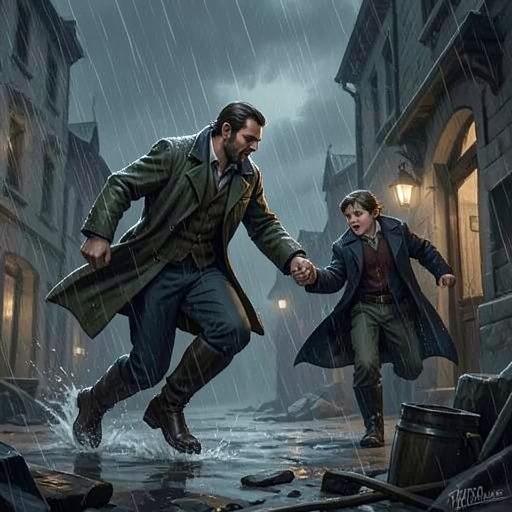
The narrator is already driving down the crooked lane when lights come on at the farmhouse and voices and footsteps signal that his departure has been noticed. A tyre is damaged as he drives over rocks, but he continues until the lane reaches a road. From a high point, he sees the lights of Gort below him. The town thus reappears at the end of the escape as a visible landmark, while the narrator’s immediate movement carries him away from the isolated property.
Gort’s narrative significance lies in this reversal: arriving there does not end the narrator’s danger, and leaving the farmhouse does not erase the precarious circumstances that brought him to Evan. The town marks a brief interval between flight and renewed movement, with the countryside’s seclusion first enabling concealment and then intensifying confinement. Its position in the episode is defined by that double use of space: a refuge can become a trap, and escape begins when the narrator finds a route under its boundary.