Jonathan
Dark Lies the IslandJonathan is the first-person narrator whose account moves between the promise of a happy marriage and the volatility of his protective response as a father. His recollections of Saoirse and their early life together establish the intimate history behind the marriage, while his confrontation over seventeen-year-old Ellie exposes how fiercely, and recklessly, he acts when he believes she may be harmed.
Identity and Background
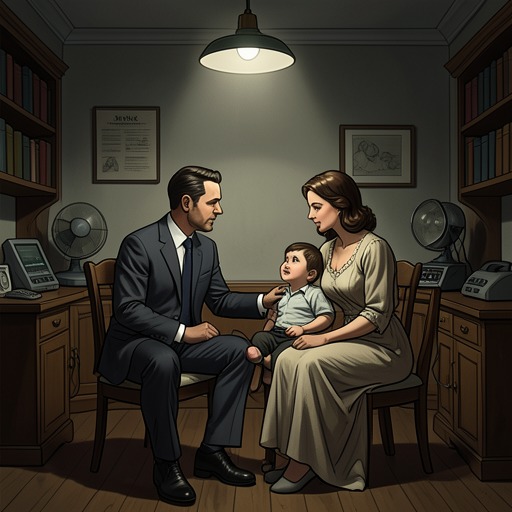
Jonathan introduces his marriage as the story of a couple who were teenage sweethearts. Saoirse was seventeen when they began their relationship, and Jonathan was a couple of years older. He describes himself in youth as moderately poetic and rebellious but diligent in his studies; three months after college, he had secured a comfortable position in the civil service.
They married when Saoirse was twenty-one and Jonathan was twenty-three, in the late 1980s. In his recollection, their good fortune included a strong start in the property market: they bought an old terraced house in Dún Laoghaire with a view of the seafront. From bed, they could watch ships travel across Dublin Bay at night. The remembered domestic scene gives his later account of the marriage its initial warmth and ease.
Marriage and Narrative Frame
Jonathan’s opening description of the book as the story of a happy marriage is immediately complicated by a projection of its ending: he says that his face will be pressed against a Volvo bonnet, his hands cuffed behind him, while an officer reads him his rights in a car park at a big-box retail unit on Dublin’s Naas Road. The arrest is presented before the early courtship and marriage that follow, giving the recollection a foreboding frame without explaining, in this evidence, what leads to it.
His account of Saoirse is affectionate and openly idealizing. He recalls her as beautiful, spirited, discerning, and able to understand him; looking back with middle-aged modesty, he adds that there may not have been much to understand. This self-deprecating contrast makes the early romance more than an uncomplicated portrait of bliss: it is remembered through an older narrator who can both cherish its intensity and gently undercut his younger self’s self-image.
Fatherhood and Conflict
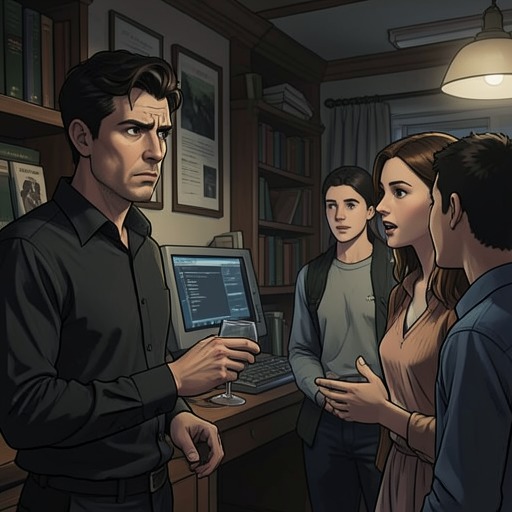
Jonathan’s protectiveness toward Ellie comes into sharp focus when he argues that she should be confronted about her relationship with a boy. Another speaker counters that Ellie is seventeen and questions what, exactly, such a confrontation would accomplish. Jonathan’s concern centers on the possibility that she may be hurt, but the exchange shows that his response is not shared by those around him, who regard his proposed intervention as unreasonable.
He nevertheless acts. During the confrontation, Jonathan restrains the boy by the elbow, threatens to kill him if he hurts Ellie, and slaps him once. He tells him that youth passes quickly and speaks about the darkness that can enter a life, drawing on his own experiences of images and voices he has witnessed or heard. He also invokes Saoirse’s experience of being plagued by evil faeries and describes Ellie as someone he would protect with his life. The boy responds that he has Type 1 diabetes and cannot deal with the situation; the exchange makes clear the gulf between Jonathan’s urgent, threatening performance of protection and the boy’s fear.
Change and Significance
The episode ends with a squad car appearing. That arrival connects the immediate consequences of Jonathan’s intervention to the earlier warning of his arrest, although the available account does not establish whether this is the same arrest or explain what follows. The juxtaposition is significant: Jonathan’s defense of Ellie is expressed as an act of love, yet it takes the form of physical aggression and a death threat, drawing him toward the legal danger forecast at the outset.
Jonathan’s narrative therefore holds tenderness and instability together rather than allowing either to cancel the other. The young couple’s remembered domestic happiness and his later ferocity as a father belong to the same retrospective voice, one that frames love as both sustaining attachment and a force capable of carrying him into confrontation.