Tee-J
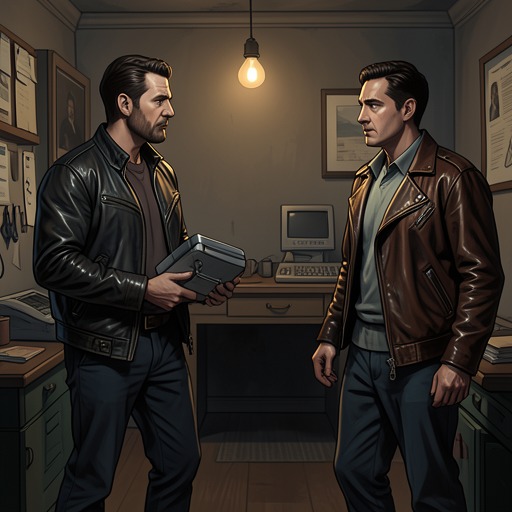
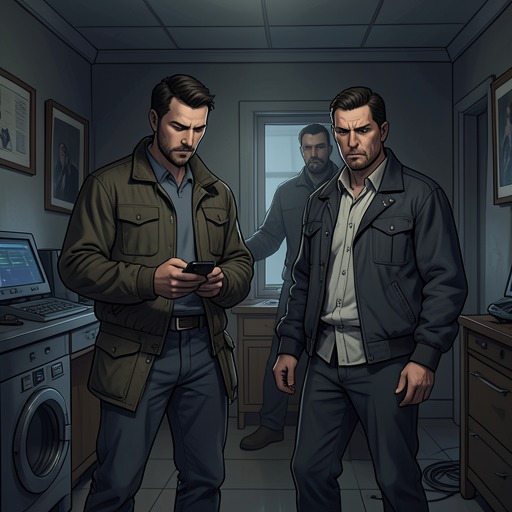
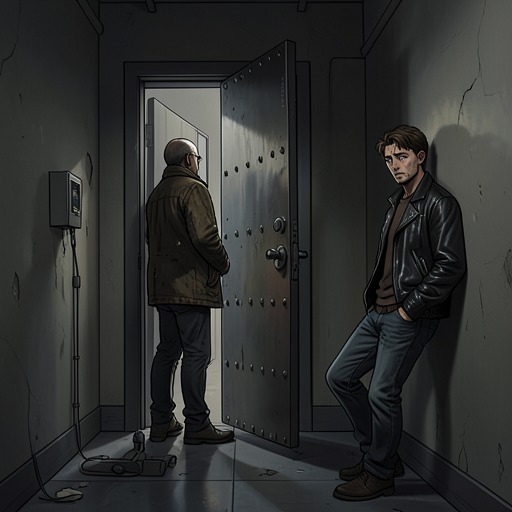
Dark Lies the IslandTee-J is Patrick Mullaney’s younger brother, a barely seventeen-year-old with a reputation for reckless bravado whose bond with Patrick persists through juvenile detention, homelessness, and a succession of unstable schemes. His story is not a clean passage from delinquency to reform: Patrick brings him home after serving as the person who sent him into custody, yet the brothers’ return to life together leaves the same dangers close at hand.
Identity and Background
Tee-J is also known as T-Jay and Teedge; his given name is Thomas John. Patrick, thirty-six, usually calls him Teedge, a nickname that irritates the younger man. Their shared family history is marked by loss: Patrick thinks of most of their relatives and companions as dead, imprisoned, confined in a secure ward, or gone to England, and describes Tee-J as his one remaining brother.
Tee-J has already acquired a local legend. He stole an Isuzu Trooper belonging to a guard’s wife and drove it through three counties while the same guard pursued him; the chase ended when the guard hit a ditch. The account says the vehicle was reputed to have reached the third-highest speed ever recorded in County Roscommon. Patrick admires the exploit even as he recognizes its danger: at the time, he feared that without the protection of custody Tee-J might end up dead.
Detention and Reunion
Tee-J serves the full six months in a juvenile detention unit. Patrick’s plan to collect him is entangled with his own precarious circumstances: he hopes to recover the white Hitachi van, avoid confrontation with a girl’s father, and deal with stolen DVDs and wire cutters hidden beneath the van’s boards. He has only a little over €270, while the clampers’ release fee is at least €300. By the time he reaches the detention unit, he cannot even afford a bottle of Coke for Tee-J, though the van still has three-quarters of a tank of petrol and the hidden DVDs remain aboard.
At reception, Tee-J refuses to make eye contact with Patrick and tells the supervisor that he wants his brother to leave. Patrick replies that the detention had been for Tee-J’s own good; the supervisor sides with him. Tee-J’s estrangement is not resolved by that explanation. He eventually comes out to the van because the alternative is walking along the dual carriageway, then sits in silence for about ten minutes. The brothers’ habitual inability to sustain silence eventually reasserts itself, but the scene leaves the hurt visible rather than presenting their reunion as uncomplicated.
Patrick had turned Tee-J in after the Isuzu chase, believing that custody might keep him alive. The decision felt to Patrick like a scene from a film, complete with an imagined soundtrack, but its purpose was practical and protective. Tee-J’s rejection at the unit shows the cost of that choice: Patrick understands it as an act of care, while Tee-J initially experiences his brother as someone who has abandoned him.
Life on the Road
Before the detention visit, Patrick remembers a brief stretch when he and Tee-J had access to an empty executive apartment overlooking the Shannon. The two bedrooms, balcony, heating, and other comforts made it a rare period of stability. They watched DVD box sets and ate pizza each night, but the apartment did not belong to them, and its owners eventually arrived with tyre irons. The brothers were forced back into the white Hitachi van, continuing a pattern of shelter that never lasts.
They spend the winter driving to quiet places. On one trip they go past Boyle and through the hills to Keash, where they look around caves and consider staying there. The caves do not become a home: instead, the brothers spend time at a counterculture camp outside Manorhamilton. There, Tee-J sees apparitions of their dead mother in the van. Patrick treats the experience as frightening enough to end their use of the mushrooms they had been given. The episode places Tee-J’s vulnerability beside his daring public image and links their unstable living conditions to the family losses that haunt the brothers.
The camp brings further trouble when Patrick misreads a woman’s intentions and makes an unwelcome advance. A dispute follows, involving a crowbar, a man from Gloucester, and a three-legged pit bull. Afterward, the brothers travel east to Longford and take work mending fence posts for a farmer whose shaking condition prevents him from doing the work himself. Patrick and Tee-J last only three days at it. Their attempts to settle into work and shelter repeatedly give way to flight, conflict, or exhaustion.
Health, Risk, and Patrick’s Plans
During the drive after Tee-J’s release, he tells Patrick that a doctor said he had wet-brain thinking and should stay away from alcohol. The disclosure introduces a specific health warning into a relationship otherwise shaped by jokes, bravado, and movement. Patrick does not turn it into a cure or a settled change in Tee-J’s habits; the brothers continue listening to death metal in the van and head toward Doggie Mannion’s place because they need food and have nowhere more secure to go.
Patrick says he intends to change their lives: no more stealing DVDs from warehouses, no more high-speed journeys in stolen vehicles, and no more risky entanglements. His resolve is sincere, but the circumstances undermine it. At the end of the account, the van is still their shelter and is making severe choking sounds; Patrick thinks that repairing the exhaust could make it fully functional, even as he recognizes the one-way direction of their troubles. He also worries about the wire cutters left inside, the prospect of returning to Castlerea prison, chest pains and stress, Tee-J’s likelihood of becoming involved in more fights, and the brothers’ lack of a roof.
Narrative Role and Significance
Tee-J’s character is defined by the mismatch between the legend Patrick makes of him and the precarious young man Patrick is trying to keep safe. The record-breaking speed attributed to the stolen Isuzu becomes an emblem of the brothers’ outlaw mythology, but Patrick’s decision to report him exposes the fear beneath that admiration. Their jokes and shared movement do not erase the consequences of detention, poverty, bereavement, and the threat of further arrest.
The narrative also refuses to treat Patrick’s protective purpose as a reliable solution. Tee-J’s release brings the brothers back together, yet it does not provide stable housing, remove the tools and stolen goods in the van, or guarantee that he will avoid alcohol or conflict. His place in the story rests in that unresolved tension: he is both the reckless brother whose exploits Patrick recounts with pride and the vulnerable person whose safety Patrick believes depends on limits he himself struggles to enforce.