The Abduction and Abandonment of the Toddler
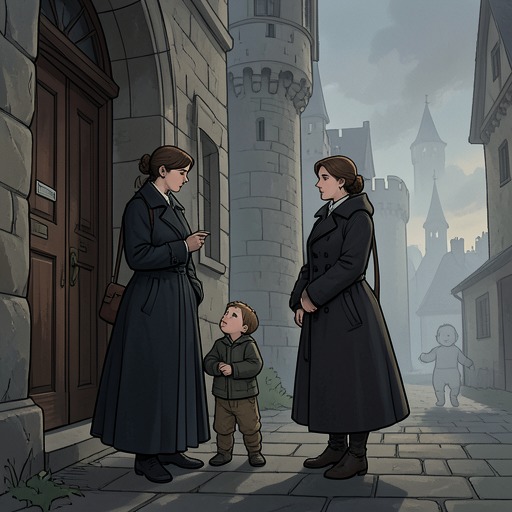
Dark Lies the IslandThe Abduction and Abandonment of the Toddler is the episode in which Ernestine and Kit seize a lost child from an Asda customer-services desk, briefly present themselves as her family, and then leave her beneath hawthorn bushes beside a lay-by. Its decisive turn is the reversal from an apparent reunion to abandonment: the women exploit the store’s wish to return the screaming toddler to her parents, but retreat when they weigh the effort and risk of keeping her. The final image holds the child in the open, too exhausted to cry, as crows gather nearby.
Background and Opportunity
Ernestine and Kit arrive at Asda in the midst of a weary, heavily provisioned shopping trip. They move sulkily through the aisles, filling their trolley with New Zealand Cabernet Sauvignon, frozen mince in five-kilo packages, and unusually large rolls of kitchen towel. The passage emphasizes their fatigue: the aisle lights glare, the refrigeration drones and chills, and the piped music cheeps pointlessly. Their day feels weighted by failure, and neither the stockpile of wine nor the routine of shopping has changed that mood.
The opportunity comes as they near the customer-services desk. An announcement says that a toddler has been found and that the parents should come forward at once; the child is panicked. The timing converts an otherwise ordinary supermarket errand into a chance encounter. Ernestine and Kit do not search for the child or receive any indication that they have a legitimate claim. Instead, they decide to act on the announcement and pass themselves off as the family the staff are expecting.
The False Reunion
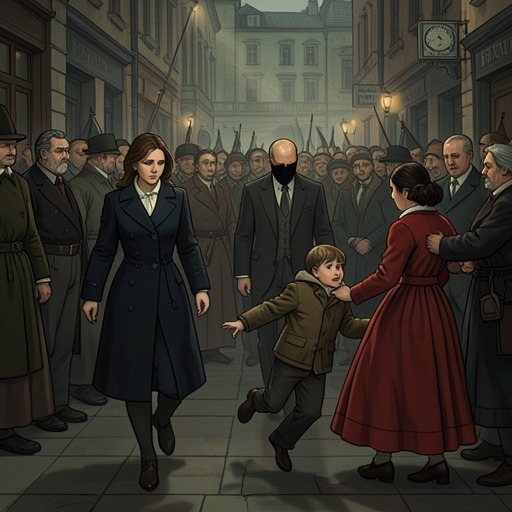
Ernestine makes the first move, dashing to the desk and throwing herself onto the child with an affectionate cry of recognition. Kit follows and keeps watch. The narrator makes clear that their window is brief: Kit judges that they may have a minute at most, even in a store as vast as Asda. The speed of the performance matters. They have little time to persuade the staff, so Ernestine supplies the conspicuous maternal display while Kit monitors the surroundings.
The child continues screaming, but the women frame that distress as the ordinary upset of a child who has received a shock. Kit thanks the customer-services worker, and Ernestine soothes the toddler. Their explanations make the scene legible as a successful reunion rather than a theft. The worker accepts the appearance of an odd family and asks whether the child’s name is Allie. Ernestine’s earlier call has already supplied that name; the worker calls it pretty and, apparently relieved to be rid of the screaming, waves them on. The adult’s relief and the women’s performance briefly align, allowing the abduction to proceed under the cover of an apparently completed act of care.
Flight from the Store
Once away from the desk, the pretense gives way to force and haste. Kit holds the toddler in a firm lock with her steel-wire arms as the child burbles and cries. Ernestine and Kit carry the child quickly across the car park, leaving their trolley behind in the air-conditioned aisle. The abandoned trolley marks the abruptness of their escape: the shopping trip is interrupted, and the attempt to take the child outweighs the goods they had been gathering.
Ernestine drives the Toyota through the busy town and accelerates away. The car takes the pair out of the public space where their performance worked and toward the countryside. Their flight is not described as a carefully planned journey; the narrative emphasizes pace and departure, carrying the child away from the people who might have recognized that she was not with her parents. The apparent reunion at the desk therefore becomes a practical means of removing her from the store.
Reversal and Abandonment
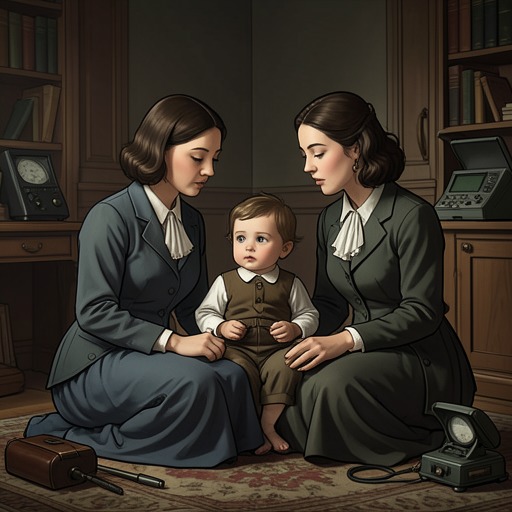
In the car, Ernestine and Kit reconsider what they have done. Kit agrees with the judgment that a child such as this is not worth the effort or the risk, and the decision is made. The sudden reversal exposes the limits of their attempted attachment: they have taken the toddler, but they do not sustain the responsibility or danger that keeping her would entail. The practical calculation replaces the maternal language used at the desk.
The Toyota pulls into a lay-by. Kit lifts the toddler from the back seat, carries her across a ditch, and leaves her beneath hawthorn bushes. The shade is described as a kindness because the sun is still hot, but it does not undo the abandonment. The car departs with relief and heads home to the bungalow, passing back toward the windbreak pines planted in soil that conceals things efficiently. That return closes the immediate action for the women while leaving the child outside their protection.
The Child Left Behind
As evening advances, the toddler remains beneath the hawthorn. She sits silently, stunned, and blinks at midges rising from the lake. She has no strength left to cry. The account does not show anyone returning to find her or establish what ultimately happens to her; its endpoint is the child’s exposed, helpless condition rather than a rescue or resolution.
A pair of hooded crows watches and stalks around her, waiting for her to weaken and for her sore eyes to close. The birds are rendered through the language of human political violence, as if they were jackbooted agents of a brutal regime. This grotesque comparison makes the scene’s danger vivid without turning it into a confirmed attack: the crows wait, and the toddler is left vulnerable. The episode’s movement from the bright, chilled supermarket aisles to the lay-by and its watching birds strips away the reassuring frame of the false reunion. A name spoken at a service desk, a wave from a relieved worker, and a claimed gesture of kindness have facilitated an act whose final consequence is a child abandoned alone.