Water’s Edge Hotel
Dark Lies the IslandWater’s Edge Hotel is an old hotel on Killary Fjord whose precarious position makes it the setting for both the narrator’s hopeful attempt at a new life and a flood that turns hospitality into emergency shelter. Set against Mweelrea across the water, it gathers locals and visitors in its lounge bar before rising water breaches the harbour wall and forces everyone upstairs. The hotel’s rooms, sloping floors, attic stores, and function room shape the course of the crisis: a place bought as a romantic refuge becomes a temporary island, where a disco offers fellowship even as water climbs the stairs.
Setting and Structure
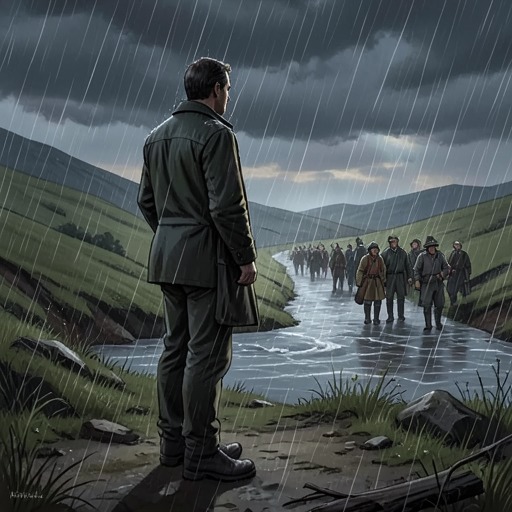
The narrator buys the hotel after eight months in the area, at a point when the place has nearly convinced him it will be the death of him. It stands hard by the harbour wall, with Mweelrea across the water beneath persistently grey skies. The account gives the weather a precise, oppressive measure: it rains 287 days of the year. The narrator describes a particularly violent night of rain while locals in the lounge bar ignore his alarm, treating him as a fretful outsider not yet suited to life in the west of Ireland.
The hotel has twenty-three bedrooms and lists westward. Its tilt is so pronounced that a can of peas set down in almost any bedroom rolls slowly towards the Atlantic. The narrator bought it after an estate agent’s brochure presented it as a traditional coaching inn, complete with original beams and an association with Thackeray. The embellished heritage appealed to what he calls his romantic nature; its actual slant and exposure make the building less an ideal refuge than a structure already leaning towards the water.
The Flood and the Hotel as Refuge
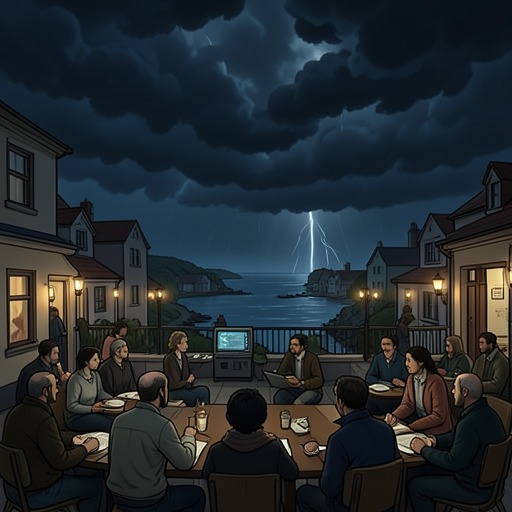
As the rain intensifies, reports spread along the fjord that the water has risen and breached the harbour walls. Emergency services are alerted, and people speak of sandbagging, but the response comes late. The lounge bar fills with the hotel’s locals, six of the nine Belarusian visitors, and two elderly couples who had been in the library. The narrator offers everyone a round of drinks, recognizing that they may be stuck there for some time; the applause marks a change in his confidence, as he begins to inhabit the role of host rather than merely complain about the weather.
The building’s ordinary contents become improvised flood defences. The Belarusians carry boxes of old curtains down from the attic to block the doorways, but as soon as the final box reaches the bottom of the stairs, doors pop open and the waters of Killary enter the hotel. The attempted barrier fails at the threshold: the water is no longer an external danger but an intrusion into the shared interior.
The narrator moves the group upstairs to the function room, used for occasional weddings and equipped with a full bar and working disco lights. Looking back while bringing the last people up the stairs, he sees the darkness outside as a scene of impending death. He urges the group onward, then switches off the harsh strip lights and turns on the room’s softer, moving disco illumination. Emergency services are being moved out, while the rain continues to beat on the hotel. Opening the bar, he makes the function room a place to wait together rather than simply a higher floor.
The Flood Disco
Instead of treating the upstairs room only as a shelter, the narrator puts on familiar records by ABBA, The Pretenders, and Bryan Adams and calls for a disco. The group dances through the night: slowly to “Chiquitita,” with nostalgia to “Brass in Pocket,” and with exuberance to “Summer of ’69.” The music brings back old dance steps and a sense of shared time, briefly turning the hotel’s threatened function room into a communal celebration. The scene’s levity does not mean the danger has passed; it exists alongside the steadily rising water.
When the narrator goes out onto the landing, the six Belarusians are sitting at the top of the stairs, and the water has reached halfway up them. Footstools, toilet rolls, placemats, and phone books drift through the lobby below. The contrast between the disco upstairs and the flooded rooms beneath gives the hotel’s hospitality an improvised, finite quality: there is still music and company, but the building is being overtaken from below.
Narrative Significance
Water’s Edge Hotel concentrates the tension between an idealized idea of place and its material conditions. The narrator buys it on the strength of a romanticized history, yet the hotel is visibly tilted, exposed to a fjord, and set beside a harbour wall that cannot keep the flood out. Its location is not backdrop: weather and rising water determine what the people inside can do, which rooms remain usable, and when the group must move.
At the same time, the hotel’s communal spaces let the narrator respond to danger through acts of hosting. The bar, attic, stairs, and wedding function room become successive parts of a collective refuge, while the narrator’s offer of drinks and decision to start a disco turn his role into something more active. The flood does not resolve the danger; the water reaches the stairs even as the dancing continues. The hotel’s significance lies in that double image of shelter and exposure, where fellowship is made possible without making the place safe.