A kopeck forged with a three-kopeck nail
Dead SoulsA kopeck forged with a three-kopeck nail is an image of wealth made through punishing effort, one coin at a time. In the novel it first appears as advice about beginning at the bottom; later, Chichikov makes it the emblem of his own repeated recoveries and of the labor he believes entitles him to a fortune. Its recurrence gives the proverb both practical force and moral ambiguity: endurance is real, but so is the crookedness with which he pursued success.
Meaning and Advice
In a conversation about making money, the speaker argues that honest thousands are harder to accumulate than millions, which can be secured by someone powerful enough to extend his reach and outmatch rivals. Against that account of wealth gained from a position of strength, he insists that a person must begin with a single kopeck, not with a rouble or an inherited fortune. Starting at the bottom teaches a person the people and conditions among whom a career must be made, and the rough encounters of life cultivate the wariness needed to avoid ruin.
The image of the three-kopeck nail makes that lesson more than a call for patience. A kopeck must be beaten out at a cost greater than its face value: each small gain represents effort, hardship, and resistance. The proverb’s compact paradox turns frugality into a form of forging, while the accompanying insistence on beginning from the beginning frames experience—not mere possession—as the source of practical judgment.
Chichikov’s Claim to the Proverb
The advice strikes Chichikov personally. He responds that he will become rich because, as he recalls, he began with nothing. The remark links the principle of starting with a kopeck to his ambition in the present conversation, where he has been thinking of the dead souls. It also reveals how readily he interprets a general rule about labor as confirmation of his own plans.
Later, Chichikov gives the image a history. He says he has had to begin life afresh three times, each time losing everything and restarting with a single kopeck, at moments when others might have surrendered to despair and drink. He describes every coin as something won through the full exertion of his strength, forged with an iron, tireless perseverance. The proverb thus returns as his explanation of both repeated loss and repeated accumulation.
Perseverance and Moral Ambiguity
Chichikov does not present his fortune as the reward of entirely honest work. He admits that he used devious methods when he thought the straight road would not serve his purpose, and says his appetite for those methods grew as he labored. He distinguishes himself from villains who draw thousands from the Treasury while despoiling the poor, but that comparison does not erase his admission that he pursued crooked routes. The proverb dignifies his effort without settling the question of what that effort served.
His defense culminates in the contrast between his nearly amassed capital—almost three hundred thousand roubles—and the sudden storm that has wrecked his prospects. He mourns a three-storied house he considered almost his and the country estate he says he could have bought twice over. The barque tossed by waves extends his language of hardship into an image of fortune overturned just as its harvest seemed within reach; the forged kopeck remains, for him, proof that he had earned the right to expect a different outcome.
The Image’s Final Return
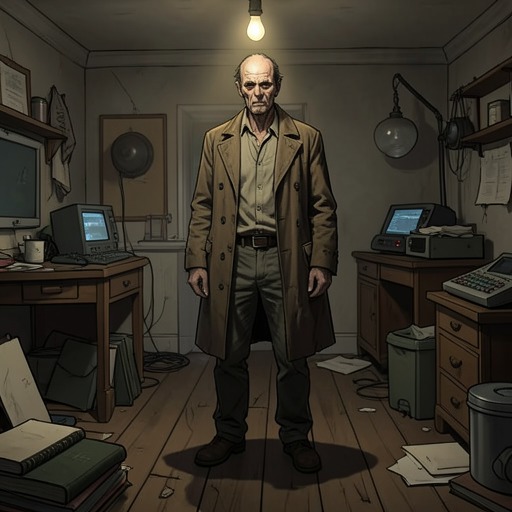
In the aftermath of his lament, the proverb’s metaphor becomes physical. Chichikov sobs, sinks into a chair, tears the remaining ragged pieces of his frockcoat from his shoulders, and pulls handfuls of hair, as if bodily pain might deaden his mental agony. The composed, worldling-like figure gives way to a man disheveled by the collapse of the fortune he had spent years assembling.
The saying therefore holds two meanings in tension. It names the persistence required to start over, and Chichikov’s repeated losses make that persistence concrete; but his own account also binds it to a growing appetite for deception and to his conviction that patience should guarantee reward. The nail can signify disciplined labor, yet the speech cannot make the crookedness disappear. What remains is an image of effort that is both formidable and morally compromised.