Committee of Estate Management
Dead SoulsThe Committee of Estate Management is a newly formed administrative body in the Colonel Koshkarev episode of Dead Souls. Its power to absorb personnel from other offices leaves routine business suspended, and its reach provokes a clash between the Colonel’s ideal of orderly estate management and the machinery supposed to serve it.
Formation and Reach
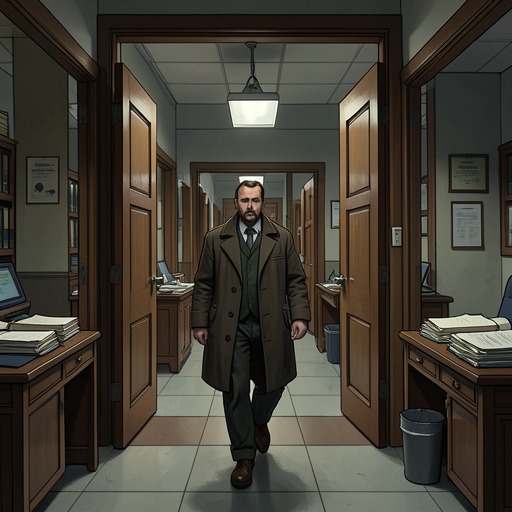
The Committee enters the narrative through a failed attempt by Chichikov to pursue business at Koshkarev’s estate. The Committee for the Reception of Reports and Returns has shut its doors because its director was transferred to the newly formed Committee of Estate Management and his successor was annexed by the same body. Personnel movement, rather than a clear division of responsibility, is the only explanation offered for the vanished office.
The Committee’s influence extends beyond that one office. When Chichikov and his escort knock at the Department of Estate Affairs, they find its quarters under repair; the only person who answers is a drunken peasant, unable to provide intelligible assistance. The escort complains that the Committee takes men away from their proper work and assigns them elsewhere, while insisting that everything gets done only through the Committee. The contradiction is central: the body is described as indispensable even as its interference leaves offices empty and business unattended.
Encounter with Chichikov and Koshkarev
Curiosity leads Chichikov to accompany the Commissioner on this circuit of offices. He returns to Colonel Koshkarev and reports that the Office for the Reception of Reports and Returns has ceased to exist. The discovery transforms a practical errand into an indictment of the estate’s administration: the Committee’s organizational reach has rendered the office Chichikov sought unavailable.
Koshkarev responds not by resolving the transaction directly but by drafting eight searching questions under three headings. He challenges the Committee of Management’s authority to issue orders to officials outside its jurisdiction, asks why a chief manager allowed his predecessor to follow him to another department, and demands to know why the Committee of Estate Affairs allowed the reporting office to lapse. His questions reveal a struggle over jurisdiction and personnel, while his immediate reaction—anticipating a row—shows how the Committee’s disorder generates further procedural conflict.
Institutional Significance
The Committee is defined less by a stated mission than by the consequences of its intervention. It draws officials into a new structure, displaces them from existing duties, and becomes the alleged channel through which all work must pass. The distinction between an administrative body and the offices it disrupts grows blurred: the Committee claims practical centrality without ensuring that a visitor can reach the service he needs.
That failure sharpens the episode’s satire of bureaucratic organization. Chichikov’s estate business is caught between closed doors, an office under repair, and a drunken attendant; Koshkarev answers this paralysis with an expanding list of formal questions and a promise to put the matter in better hands. The Committee therefore stands as a comic emblem of administration that multiplies structures and disputes authority while leaving ordinary work unresolved.